

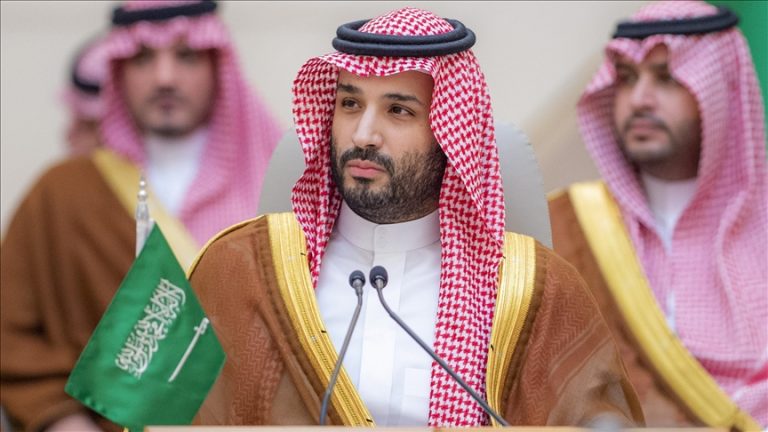
Saudi Crown Prince Mohammed bin Salman’s announcement of a $600 billion investment in the United States over the next four years has sparked renewed debate about the country’s economic trajectory.
Mohammed bin Salman revealed the ambitious proposal during a phone conversation with President Donald Trump, highlighting the kingdom’s intention to capitalize on what he described as “unprecedented economic prosperity” anticipated under Trump’s leadership.
However, the timing of this announcement, coming alongside the unveiling of Trump’s $500 billion Stargate initiative to bolster artificial intelligence (AI) infrastructure, has led to speculation about deeper motivations. Analysts and critics believe that this proposal reflects pent-up demand from international investors who have been hesitant to engage with the U.S. economy in recent years, attributing this hesitance to the impact of progressive or Leftist policies during the Biden administration.
Register for Tekedia Mini-MBA edition 20 (June 8 – Sept 5, 2026).
Register for Tekedia AI in Business Masterclass.
Join Tekedia Capital Syndicate and co-invest in great global startups.
Register for Tekedia AI Lab.
Trump’s Stargate initiative—a partnership involving OpenAI, Oracle, and SoftBank—aims to establish Texas as a global hub for AI development, cementing U.S. leadership in emerging technologies. The project’s massive $500 billion investment underscores the scale of ambition, with a focus on infrastructure that will drive advanced AI applications.
Saudi Arabia’s investment pledge dovetails with this push, with some observers suggesting that it could be a strategic move to align with the U.S.’s renewed emphasis on technological and economic competitiveness.
However, the overlap in timing has also fueled speculation that investors like Saudi Arabia had been wary of committing large-scale investments under the policies of the Biden administration, which they argue prioritized regulation, higher corporate taxes, and environmental mandates over economic growth.

Critics of progressive economic policies point to what they describe as a stifling environment for business and investment under the Biden administration. They argue that increased regulation, higher taxes, and a focus on climate change initiatives at the expense of traditional economic drivers have created uncertainty for investors.
The $600 billion Saudi pledge, combined with Trump’s Stargate initiative, is seen by some as a reaction to these policies, with proponents of Trump’s approach claiming that his deregulation-focused and business-friendly governance offers a more stable and lucrative environment for foreign investors.
Saudi Arabia’s investment pledge also aligns with its Vision 2030 initiative, which seeks to diversify the kingdom’s economy away from oil dependency and focus on innovation and technology. This alignment with U.S. priorities in AI infrastructure suggests a mutual interest in forging stronger economic ties.

Trump’s Economic Legacy and Renewed Saudi Ties
The investment proposal also underscores Trump’s longstanding ties with Saudi Arabia, cultivated during his presidency. In 2017, Trump’s first official visit abroad was to Riyadh, where he secured a $450 billion trade agreement, which included substantial arms sales. Trump has frequently cited this deal as a testament to his ability to negotiate significant foreign investments.
In a recent call, Trump suggested he would consider making Saudi Arabia his first foreign destination once again if the kingdom commits to purchasing $500 billion worth of American products. The president emphasized the importance of trade reciprocity, saying, “I did it with Saudi Arabia last time because they agreed to buy $450 billion worth of our product. I said I’ll do it, but you have to buy American products, and they agreed to do that.”
Saudi Arabia’s previous investments in Trump’s post-presidency ventures, including a $2 billion commitment to Jared Kushner’s private equity firm, further highlight the deep economic ties between the two parties.
The Crown Prince reportedly praised Trump’s vision, expressing confidence in the U.S.’s potential to lead the next wave of global economic growth. However, he stopped short of specifying how the $600 billion would be funded or allocated, leaving questions about the proposal’s viability.
The interplay between U.S. domestic policy and international investment is believed to have been responsible for some economic setbacks in the US, discouraging foreign capital inflows. For example, several prominent industry voices have cited the Inflation Reduction Act and aggressive climate policies as disincentives for investment in traditional industries. Meanwhile, supporters of these policies argue that they are necessary to transition to a more sustainable economy.
A Turning Point for U.S. Economic Strategy?
The convergence of the Stargate project and Saudi Arabia’s investment proposal may represent more than just a financial boon. Analysts believe it could mark a shift in the narrative around the U.S. economy, particularly if the perception that Leftist policies have deterred investment gains traction.
The challenge, however, lies in execution. Experts note that the U.S. and Saudi Arabia must navigate geopolitical hurdles to ensure that these ambitious projects deliver tangible benefits.