

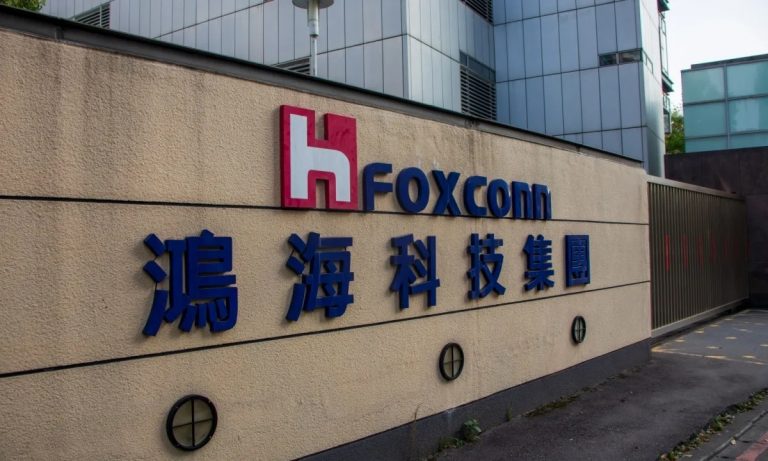
SoftBank has quietly purchased Foxconn’s former General Motors factory in Lordstown, Ohio. Once earmarked for electric vehicle production, the shuttered plant is now expected to serve as an assembly hub for AI servers — a critical component of the vast “Stargate” project, a trillion-dollar-plus plan unveiled earlier this year by SoftBank together with OpenAI and Oracle.
Over the past decade, SoftBank has evolved from a high-risk investor to a key architect of AI’s global infrastructure. The unstable era of Silicon Valley startups like WeWork and Uber left the company reeling, prompting a fresh approach built around AI-centric investments and infrastructure ownership. Today, its Vision Fund boasts stakes in giants like NVIDIA and OpenAI and has pivoted toward tangible assets like data centers and chipmaking pipelines.
The Lordstown facility acquisition seems to crystallize this shift: it provides a physical base in the U.S. for server manufacturing or co-located data center development, enabling SoftBank to accelerate Stargate’s early deployment where it needs infrastructure the fastest.
Register for Tekedia Mini-MBA edition 20 (June 8 – Sept 5, 2026).
Register for Tekedia AI in Business Masterclass.
Join Tekedia Capital Syndicate and co-invest in great global startups.
Register for Tekedia AI Lab.
The Stargate Vision Runs Deep — and Long
Announced at the White House early this year by Donald Trump, the Stargate initiative is SoftBank’s boldest bet yet — a $500 billion plan to build AI infrastructure across the United States, including ten data centers starting in Texas and potentially expanding globally.
SoftBank plays the role of financial anchor in the venture while OpenAI holds operational leadership. Oracle and MGX, among others, join as co-investors, while OpenAI has committed $30 billion a year in computing contracts with Oracle, one of the largest cloud deals ever signed in AI infrastructure. That agreement alone powers the center in Abilene, Texas, eventually scaling to multiple gigawatts of GPU-wattage and hosting millions of AI chips.
The Lordstown site may well become the first domino to fall toward delivering tangible assets from this speculative, high-conviction project.

SoftBank’s renewed financial health makes this play possible. After suffering massive losses during its speculative heyday, its Vision Fund rebounded strongly in 2025, reporting quarterly profits of $2.9 billion, bolstered by AI-favored holdings like NVIDIA and Coupang.
These gains are fueling not only Wall Street’s renewed enthusiasm for SoftBank’s story but also its ability to invest directly, building and owning the physical infrastructure that enables AI to scale.
Risks Remain as Execution Lags
SoftBank has publicly acknowledged Stargate’s challenges, including delays in funding, alignment with partners, and site selection. Industry insiders note that six months after the project was launched, not a single operational data center has launched, giving rise to skepticism about what scale SoftBank can actually deliver.

On top of that, the broader geopolitical landscape — from export controls on semiconductors to rising U.S. scrutiny of foreign capital — casts a long shadow over any plans reliant on rapid hardware deployment.
The Strategic Play—and What to Watch Next
SoftBank’s Ohio buy is a tangible sign it’s anchoring AI infrastructure with real-world assets. Analysts now see Lordstown not just as a factory, but as a foothold in the U.S. AI backbone. Some believe that its success will depend on SoftBank’s ability to follow through, unlocking partner financing, clearing regulatory hurdles, and delivering usable data center or compute capacity, fast.
If it does, the Lordstown plant will stand not as a failed EV dream, but as the launchpad for the next industrial age: one powered not by horsepower but by exaflops and artificial intelligence.