

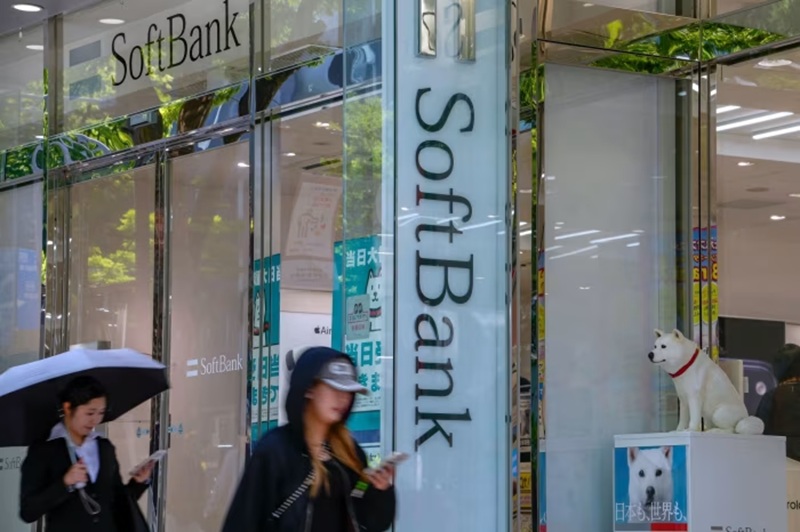
SoftBank Group is turning to the high-yield bond market to raise more than $11 billion, underscoring the enormous financial demands of its aggressive artificial intelligence strategy.
The Japanese investment conglomerate is using debt financing to support major AI investments, including its multibillion-dollar commitment to OpenAI, while positioning itself at the center of the rapidly expanding AI economy.
The bond sale highlights a significant shift in how the AI boom is being financed. While technology companies have traditionally relied heavily on equity markets and venture capital.
Register for the next Tekedia Mini-MBA.
Register for Tekedia AI in Business Masterclass.
Join Tekedia Capital Syndicate and co-invest in great global startups.
The enormous cost of developing AI models and infrastructure is increasingly bringing credit markets into the equation. Data centers, advanced semiconductors, electricity infrastructure and computing capacity require vast amounts of capital, creating opportunities for companies and investors in the debt markets.
SoftBank’s offering is particularly notable because of its size and borrowing cost. The company raised roughly $11.1 billion through dollar- and euro-denominated senior notes. The dollar portion consisted of multiple maturities carrying interest rates ranging from 8.625% to 9.75%, while the euro-denominated debt also carried relatively high coupons.
Such yields demonstrate that investors are demanding substantial compensation for lending to SoftBank. High-yield bonds, commonly known as junk bonds, generally carry higher interest rates because investors perceive greater credit risk compared with investment-grade securities.

For SoftBank, borrowing at these rates creates a significant interest expense, making the eventual performance of its AI investments increasingly important to the company’s financial position.
The financing is closely connected to SoftBank’s expanding relationship with OpenAI. SoftBank has committed tens of billions of dollars to the artificial intelligence company, reflecting founder Masayoshi Son’s conviction that AI could become one of the most transformative technological and economic forces of the coming decades.
The strategy requires SoftBank to mobilize enormous amounts of capital. Rather than relying exclusively on asset sales or issuing additional equity, debt allows the company to raise funds while maintaining its existing ownership structure.

The trade-off is that bondholders must be paid regardless of whether SoftBank’s investments generate returns in the short term. Investor demand for the bonds nevertheless appeared strong.
Reports indicated that orders significantly exceeded the amount SoftBank initially sought to raise. Strong demand allowed the company to access the market despite the relatively expensive borrowing costs, suggesting that investors remain willing to provide capital to major companies with substantial exposure to the AI sector.
The transaction arrives as concerns about the cost of the AI infrastructure boom are becoming more prominent. AI developers require increasingly powerful computing systems, while hyperscale data centers require enormous quantities of electricity, networking equipment and specialized chips.
Financing these projects could require hundreds of billions of dollars across the industry. That creates a complicated environment for investors. The potential economic value of AI is enormous, but the capital required to build its infrastructure is equally substantial.
If AI revenues and productivity gains accelerate, companies financing the expansion could generate significant returns. If adoption or monetization falls short of expectations, heavily leveraged investors and companies could face greater financial pressure.
SoftBank’s bond sale therefore provides a window into the financial architecture developing around artificial intelligence. The AI revolution is increasingly being funded not only by venture capital and public equities but also by corporate credit.
The calculation is straightforward but consequential: borrow heavily today in anticipation of much larger economic opportunities tomorrow. The success of that strategy will depend on whether the returns from its AI investments can ultimately justify the cost of the capital being deployed.