

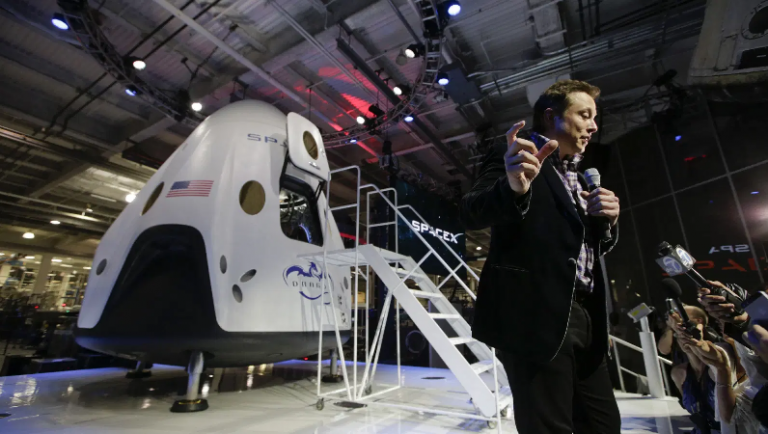
The trajectory of SpaceX’s technology that culminated in a public listing frenzy didn’t just disrupt the aerospace industry; it fundamentally rewrote the economics of space access and helped spark an entirely new commercial space economy.
Now, Elon Musk’s flagship venture is on its most ambitious transition yet: becoming a publicly traded company in what could be the largest IPO in history. In an exclusive interview with CNBC just before the investor roadshow began, SpaceX President and COO Gwynne Shotwell reflected on the decision to go public, acknowledging it was not always a foregone conclusion.
“I wasn’t sure we would go public. It actually feels like the right time now,” she said.
Register for the next Tekedia Mini-MBA.
Register for Tekedia AI in Business Masterclass.
Join Tekedia Capital Syndicate and co-invest in great global startups.
Shotwell, who joined SpaceX in its first year in 2002 and has overseen day-to-day operations ever since, emphasized that staying private allowed the company to pursue long-horizon goals without the distraction of quarterly earnings pressure. With roughly 22,000 full-time employees, she has managed everything from Falcon 9 development to the rapid scaling of Starlink and, more recently, the integration of xAI.
“Elon jokes that we make the impossible, we just make it late,” Shotwell said. “Look at our track record, look at our history. We do really difficult things. We do bring them to product level. In fact, xAI is definitely starting to be product-focused.”
The IPO, targeting $75 billion at a $1.75 trillion valuation with shares priced at $135, would rank SpaceX as the seventh-most valuable company in the U.S., ahead of Meta and even surpassing Musk’s other public venture, Tesla, in market capitalization. At that level, it would trade at roughly 94 times projected 2025 revenue — a premium that reflects investor appetite for Musk’s vision but also invites skepticism from those focused on traditional metrics.

The Roadshow Pitch: Rockets, Starlink, and Orbital AI
SpaceX’s investor presentations have centered on three core pillars: its dominant position in space launch, the growing profitability of Starlink, and an ambitious push into orbital artificial intelligence infrastructure.
The company dominates orbital launches, accounting for roughly 80% of global mass sent to orbit since 2023. Last year alone, SpaceX completed 165 orbital missions, with 157 utilizing reused Falcon 9 boosters. This reusability has slashed launch costs by more than 90% compared to the Space Shuttle era, fundamentally changing the economics of space access.
Starlink, the satellite broadband constellation, has become the company’s clear profit engine. With over 10 million subscribers and roughly 9,600 satellites in orbit (and growing), the connectivity business generates strong margins and cash flow that funds other initiatives. Starlink Mobile (direct-to-cell) and Starshield (the defense variant) further expand its reach.

The most forward-looking element of the pitch is orbital AI compute. SpaceX claims it is “the only company with a commercially viable path to building orbital AI compute at scale,” targeting a potential $23 trillion market opportunity. By placing solar-powered data centers in space, the company aims to bypass Earth’s constraints on power, land, and regulatory hurdles.
Musk has described the first AI satellites as using Nvidia chips with computing power equivalent to a GB300 rack, with initial demonstrations now eyed for late 2027 — ahead of the 2028 timeline in the IPO filing.
Shotwell acknowledged the technical challenges but expressed confidence.
“The AI satellites are, to some extent, simpler than the next-gen V3 Starlink satellites. I’m not saying it’s a slam dunk by any stretch but I’m not worried about the development of the AI satellites,” she said.
Starship: The Critical Enabler
Much of SpaceX’s future hinges on Starship, the fully reusable super-heavy rocket designed to carry humans and cargo to the Moon, Mars, and beyond. Recent test flights of the V3 version have shown progress, though the vehicle remains years behind Musk’s original timelines.
Shotwell said the company is producing one fully assembled Starship per month and aims to reach two per week. Orbital flights are targeted for the end of this year, pending regulatory approval.
Starship’s success is essential for making orbital data centers economically viable. The vehicle is expected to reduce launch costs by another 95% compared to Falcon 9, unlocking the scale needed for massive space-based infrastructure.
Convergence with Musk’s Broader Empire
The IPO comes as SpaceX increasingly intersects with Musk’s other ventures. The company acquired xAI earlier this year in a deal valuing the AI startup at $250 billion. It has also struck a deal with coding platform Cursor (with a potential $60 billion stock option) and is collaborating with Tesla on the Terafab semiconductor project and AI-optimized manufacturing. Starlink Mini terminals are being integrated into Tesla’s Cybercab fleet, and SpaceX even purchased $131 million worth of Cybertrucks last year.
Shotwell acknowledged natural synergies but stressed focus, noting: “There’s no question that there are synergies between Tesla and SpaceX in our futures. There’s a convergence of what we’re all trying to accomplish in the future, but right now I’m focused on keeping the lights on here.”
The governance structure, which gives Musk supermajority voting control and final say on his own removal, has raised some eyebrows but is defended by Shotwell as essential for long-term vision.
“The company would not collapse without Elon, obviously, but it would by no means be the same. It’s incredibly important that he is the CEO,” she said.
Winning the Valuation Debate and Investor Confidence
At $1.75 trillion, SpaceX’s valuation implies rich multiples, but investors appear willing to underwrite the premium given Musk’s track record of turning ambitious ideas into reality. The IPO includes a significant retail allocation of up to 30%, tapping into Musk’s dedicated following. Proceeds will fund Starlink expansion, AI infrastructure, and other growth initiatives.
Skeptics point to the fact that only Starlink is consistently profitable, with other segments still burning cash. However, the combination of proven launch dominance, a scaling broadband network, and a compelling vision for space-based AI has generated strong demand — roughly $150 billion in indications, according to earlier reports.
“I do not want to focus on quarterly earnings. I’m not saying we’re not going to do right by our investors, but what folks who invest in SpaceX need to know is that what we’re doing is very futuristic,” Shotwell said, emphasizing the long-term horizon for new public investors.
SpaceX’s public debut represents more than a financial milestone — it is seen as a referendum on Musk’s multi-decade vision of making humanity multiplanetary while building the infrastructure for an AI-powered future. From reusable rockets that slashed launch costs to Starlink’s global connectivity and now orbital data centers, the company has repeatedly turned “impossible” into operational reality, albeit often later than initially promised.
Thus, as it steps into the public markets, SpaceX carries the weight of extraordinary expectations. Besides shaping investor portfolios, its success or struggles are expected to influence the trajectory of humanity’s expansion into space and the future of computing itself.