

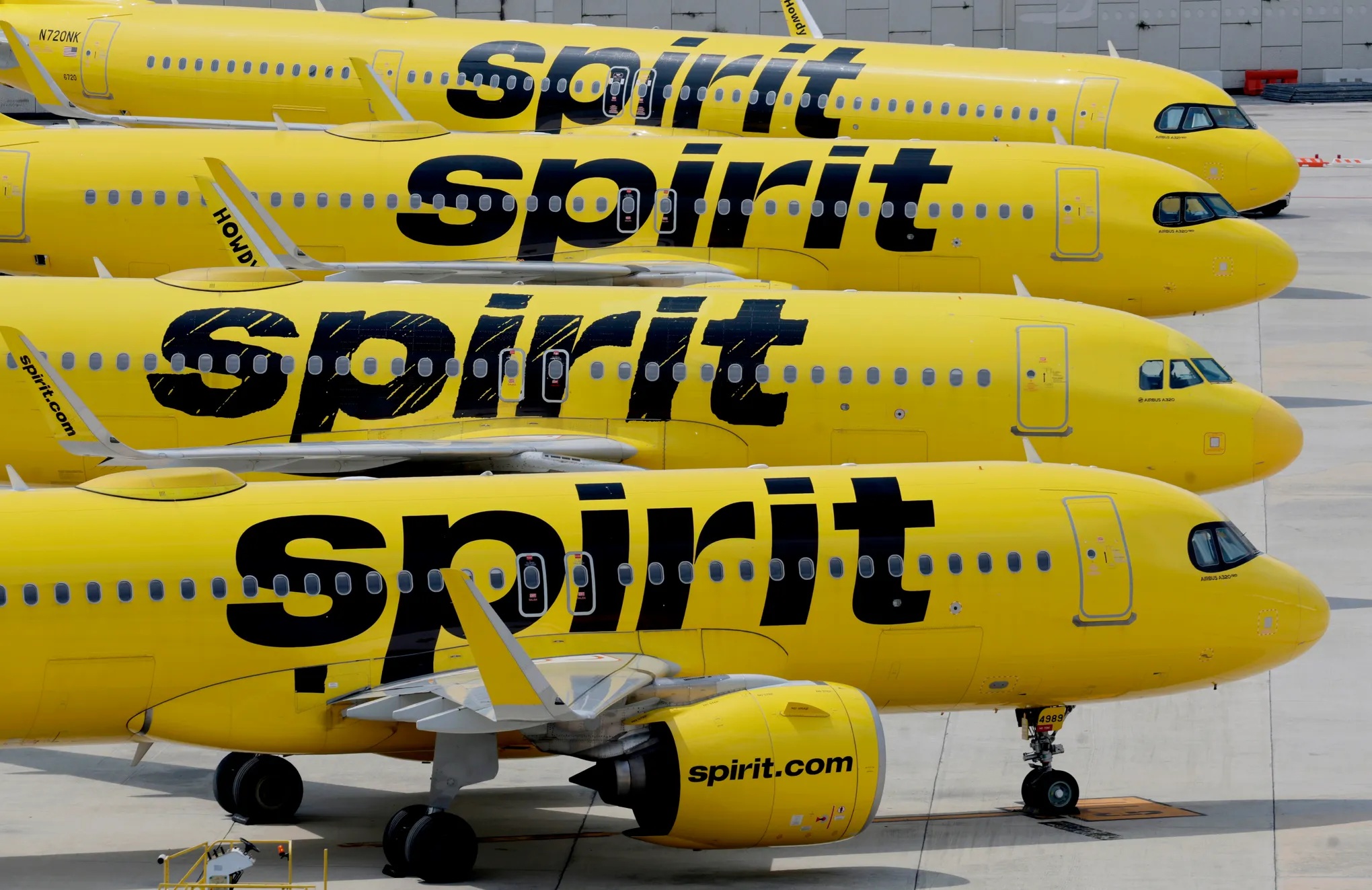
Spirit Airlines has collapsed, abruptly ending one of America’s most recognizable ultra-low-cost carriers, triggering widespread travel disruption, intensifying debate over airline consolidation, and exposing how vulnerable budget aviation has become amid rising fuel costs.
Spirit ceased operations on Saturday after beginning what it described as an “orderly wind-down” of the airline, canceling all flights with immediate effect and telling passengers not to travel to airports. The shutdown strands thousands of travelers across the United States, the Caribbean, and Latin America while marking the most significant U.S. airline collapse since the pandemic-era shakeup of the aviation industry.
The closure also removes one of the few remaining carriers built almost entirely around bare-bones, low-fare travel, a model that helped millions of lower-income Americans access air travel over the last three decades.
Register for the next Tekedia Mini-MBA.
Register for Tekedia AI in Business Masterclass.
Join Tekedia Capital Syndicate and co-invest in great global startups.
Spirit was to many travelers, not merely a discount airline but an economic necessity.
On social media platforms including Reddit and X, customers described the carrier as one of the last viable options for families unable to afford traditional airline pricing.
“They truly were one of the last cheap — ‘get me there as fast and cheap as possible’ — options,” one Reddit user wrote following the shutdown announcement.

Another traveler said the difference between Spirit fares and tickets on larger airlines could exceed $1,000 for a family trip, making vacations and visits to relatives financially impossible without the carrier.
The emotional reaction highlights a broader shift taking place across the U.S. aviation sector. Since the pandemic, airlines have increasingly prioritized premium travelers, loyalty programs, business-class seating, and higher-margin services rather than competing aggressively on low fares. That transition left airlines as Spirit squeezed between rising costs and customers increasingly willing to pay for comfort and reliability.
The airline’s collapse was years in the making, but the recent energy shock tied to the Iran war sharply accelerated its decline. A surge in fuel prices placed enormous pressure on low-cost carriers whose profitability depends on extremely tight margins and high aircraft utilization. Unlike premium airlines that can pass higher costs onto wealthier travelers, ultra-budget carriers have far less pricing flexibility.

Spirit was already weakened by a series of setbacks before fuel markets turned volatile. The company had not reported an annual profit since 2019. A manufacturing defect involving Pratt & Whitney engines grounded a significant portion of its newer fleet, constraining capacity and disrupting scheduling. At the same time, the airline became trapped in a prolonged merger saga that ultimately failed to deliver a lifeline.
In 2022, Spirit initially agreed to merge with Frontier Airlines before JetBlue intervened with a $3.8 billion counteroffer. The Biden administration moved to block the JetBlue acquisition, arguing the merger would reduce competition and lead to higher fares.
A federal judge sided with the Justice Department in January 2024. At the time, then-Attorney General Merrick Garland called the decision “a victory for tens of millions of travelers who would have faced higher fares and fewer choices.”
Former President Joe Biden similarly described the ruling as “a victory for consumers everywhere who want lower prices and more choices.” Now, critics of the decision argue the outcome may have produced the opposite effect.
Transportation Secretary Sean Duffy blamed the previous administration’s antitrust posture for Spirit’s collapse.
“Yet another mess the traveling public has to inherit thanks to the radical policies of Joe Biden and Pete Buttigieg,” Duffy said. “In blocking the JetBlue/Spirit merger in 2024, they turned their backs on the American consumer and our great aviation workforce.”
The Collapse Stirs, Job and Travel Crisis
The collapse is reigniting a longstanding debate in aviation policy: whether it makes sense to preserve competition if weaker carriers cannot survive independently.
Industry analysts say Spirit’s disappearance could strengthen pricing power for larger airlines, particularly on domestic leisure routes where the carrier historically pressured rivals to keep fares low. Budget airlines have long exerted influence beyond their own market share because their ultra-cheap tickets forced competitors to lower prices in overlapping markets. With Spirit gone, travelers may increasingly face higher average fares even when flying on traditional airlines.
The immediate scramble among competitors underscores how important Spirit’s route network had become.
According to the Department of Transportation, airlines including American Airlines, United Airlines, Delta Air Lines, Southwest Airlines, JetBlue, Allegiant Air, Avelo Airlines, and Breeze Airways have begun offering capped fares, emergency discounts, or expanded route coverage for displaced passengers. Frontier Airlines is offering discounts of up to 50% on base fares through May 10, while Allegiant said it would freeze prices on routes previously served by Spirit.
At Orlando International Airport, one of Spirit’s largest operational hubs, departure boards reportedly filled with cancellation notices overnight as passengers searched for alternatives.
The collapse also creates uncertainty for thousands of employees. Pilots, cabin crew, maintenance workers, and operational staff now face a highly competitive labor market, even as other airlines begin recruitment efforts to absorb experienced personnel. Several major carriers have reportedly established dedicated hiring portals for former Spirit workers.
Passengers holding unused tickets, vouchers, or loyalty points face a more complicated situation. Spirit has directed customers into the bankruptcy claims process managed by Epiq, though the Department of Transportation says travelers who paid by credit card should first pursue charge-backs for services not rendered under federal consumer protections.
Travelers with insurance policies covering insolvency may also have claims available. Holders of Free Spirit miles and unused travel credits are likely to be treated as unsecured creditors in bankruptcy proceedings, meaning recovery could be limited or nonexistent.
Beyond the immediate disruption, Spirit’s shutdown may prove to be a defining moment in the post-pandemic restructuring of the airline industry. The economics that once fueled ultra-low-cost aviation are becoming increasingly difficult to sustain amid volatile fuel markets, higher borrowing costs, supply-chain disruptions, aircraft shortages, and growing consumer demand for reliability and comfort.
The Iran war’s impact on global energy prices has already strained airlines worldwide, but carriers operating at the extreme low end of pricing were especially exposed. Fuel is typically among the largest expenses for airlines, and even modest increases can erase profitability for discount operators.