

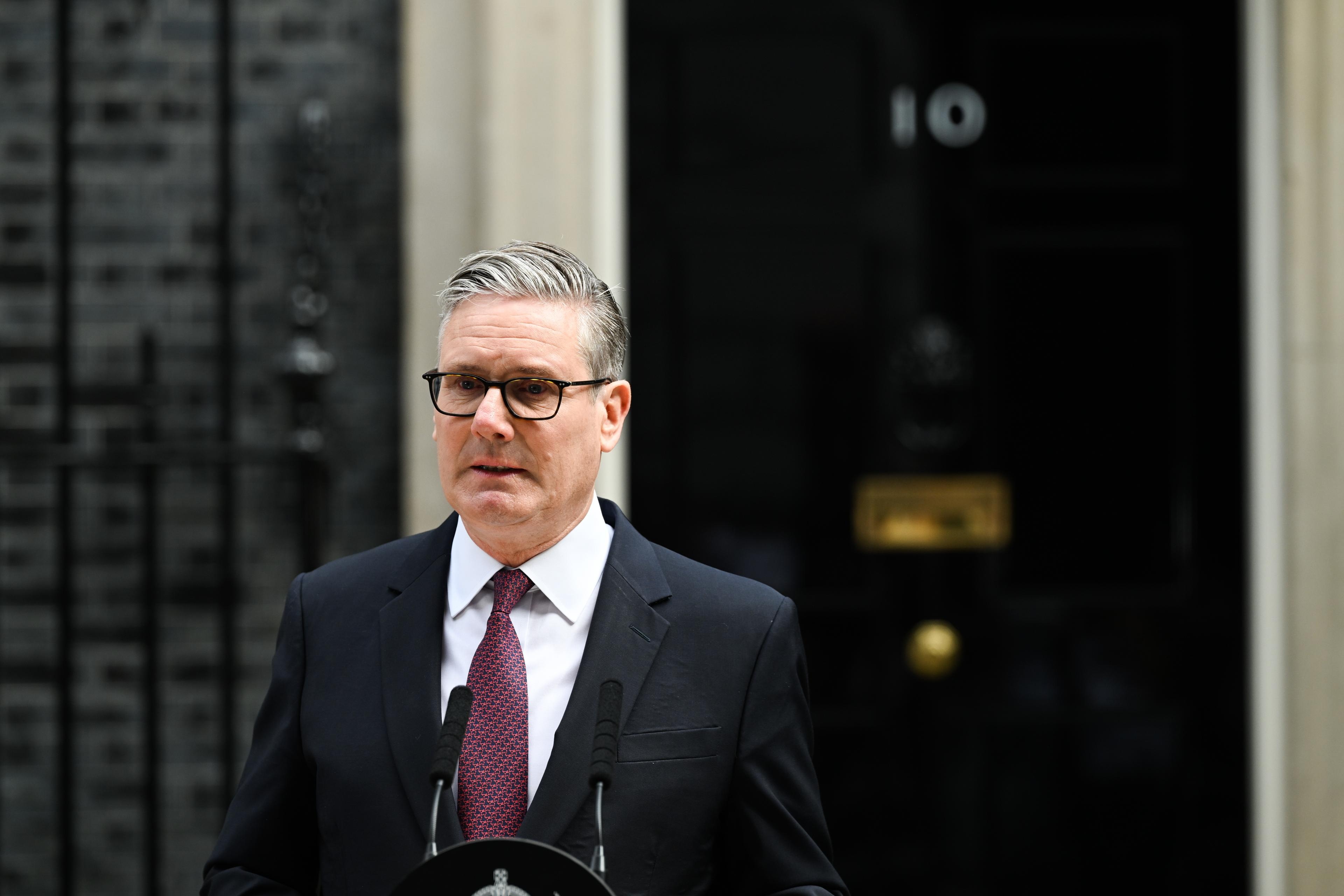
British Prime Minister Keir Starmer on Monday announced he would step down as Labour leader and prime minister, capping a turbulent period that saw his government move from commanding political authority after a landslide election victory to confronting internal rebellion, weakening public support, and mounting economic anxieties.
The resignation opens a new chapter in British politics and injects fresh uncertainty into financial markets already grappling with elevated borrowing costs, stubborn inflation, and concerns over the future direction of government spending.
Standing outside 10 Downing Street, a visibly emotional Starmer said entering government had been “the proudest moment of my life,” pointing to efforts to restore Britain’s international standing, attract investment, and strengthen workers’ rights.
Register for the next Tekedia Mini-MBA.
Register for Tekedia AI in Business Masterclass.
Join Tekedia Capital Syndicate and co-invest in great global startups.
However, he acknowledged that confidence within his own party had eroded.
“I have heard the answer from my parliamentary party. I accept that answer with good grace. I will resign as leader of the Labour Party,” Starmer said.
His departure comes less than two years after leading Labour to one of the largest parliamentary majorities in modern British history in the 2024 general election, a victory that many analysts believed would usher in a prolonged period of political stability after years of Conservative rule.

Instead, Labour’s dominance unraveled rapidly.
The immediate trigger was a wave of dissatisfaction following heavy losses in local elections in May, combined with increasingly vocal criticism from Labour lawmakers over economic policy, welfare reforms, and broader questions about leadership.
Compounding the pressure was the emergence of Andy Burnham as a powerful alternative voice within Labour. Burnham’s decisive victory in a special election on June 18 transformed him into a serious contender for the party leadership and potentially the next occupant of Downing Street. His success intensified speculation that Labour MPs were preparing for a post-Starmer future.

Financial markets responded cautiously to the news.
Sterling slipped 0.19% against the dollar to $1.3207, reflecting concerns about political uncertainty rather than panic. Meanwhile, the yield on Britain’s benchmark 10-year government bonds, known as gilts, remained broadly unchanged at 4.8452%, suggesting investors are taking a wait-and-see approach until the contours of the leadership race become clearer.
Yet beneath the surface, the resignation has reignited a debate about Britain’s economic direction. Under Starmer, the government pursued a strategy centered on fiscal discipline, international engagement, and economic credibility. His administration secured new trade agreements, sought closer cooperation with allies, and attempted to rebuild investor confidence after years of political instability.
Economist Kallum Pickering of Peel Hunt noted that Britain achieved approximately 1.5% real GDP growth under Starmer and succeeded in reopening itself to global investment and trade.
However, those gains failed to shield the government from growing frustration over living standards. Britain continues to face some of the highest borrowing costs among G7 economies, while inflation has remained persistently elevated compared with many of its peers. Households have continued to grapple with expensive mortgages, higher food prices, and weak wage growth after inflation.
“The market now has to price in what a Burnham premiership looks like,” Pickering told CNBC shortly after the resignation announcement.
That question is now central to investor thinking.
Burnham has spent recent months attempting to reassure financial markets after earlier comments suggesting Britain had become “in hock to the bond markets,” remarks that alarmed investors concerned about fiscal discipline. Although he has since moderated his tone, markets remain sensitive to any indication that a future Labour leadership could embrace significantly higher spending at a time when Britain’s public finances remain stretched.
The fiscal challenge confronting Starmer’s successor is substantial. Public debt remains elevated, borrowing costs are high, and demands on government spending continue to rise across healthcare, defense, welfare, housing, and infrastructure.
Additionally, Britain faces sluggish productivity growth and an economy still struggling to generate the kind of expansion needed to sustainably improve living standards.
Internal Labour tensions reflected those pressures.
Starmer and Finance Minister Rachel Reeves increasingly faced resistance from within the party over spending decisions and welfare reforms. The controversial appointment of Peter Mandelson as ambassador to the United States also generated friction among Labour members, while opponents argued that the government had become disconnected from voters who expected faster improvements in public services and household finances.
Public sentiment deteriorated accordingly.
An Ipsos poll published on Friday found that 52% of Britons believed Starmer should step down as prime minister, up five percentage points from May. Only 35% believed he should remain in office. Those numbers underscored how dramatically public perceptions had shifted since Labour’s sweeping electoral triumph.
For investors, the significance of Starmer’s departure extends beyond politics. The leadership transition comes as global markets are already confronting multiple risks, including geopolitical tensions, volatile energy prices, uncertainty over central bank policy, and slowing growth across several major economies.
Against that backdrop, market participants will closely scrutinize the leadership contest for clues about future tax policy, public spending plans, regulatory priorities, and the government’s relationship with financial markets.
The reaction in bond markets may ultimately prove more important than movements in sterling. Investors remain highly sensitive to any signal that future governments could weaken fiscal discipline, particularly after episodes of market turmoil in recent years demonstrated how quickly confidence can deteriorate when borrowing plans appear unsustainable.
Labour’s leadership contest is now expected to become a referendum on the party’s future direction.
Some members believe that Starmer moved Labour too close to the political center and failed to deliver sufficient economic change. Others fear that a shift toward more aggressive spending policies could undermine market confidence and damage Britain’s financial credibility. The backdrop is expected to make the outcome of the leadership race a spectacle, with spectators including not only Labour members but also investors, businesses, and international partners.
For now, Starmer will remain in office until a successor is chosen. Yet his resignation marks the end of a political project that began with ambitions of restoring stability after years of Conservative rule.
The immediate reaction in financial markets may have been calm, but the bigger test is expected when Labour chooses its next leader and reveals how it intends to address Britain’s persistent economic challenges. The market’s attention is no longer focused on what Starmer achieved. It is now focused on what his successor might do differently.