

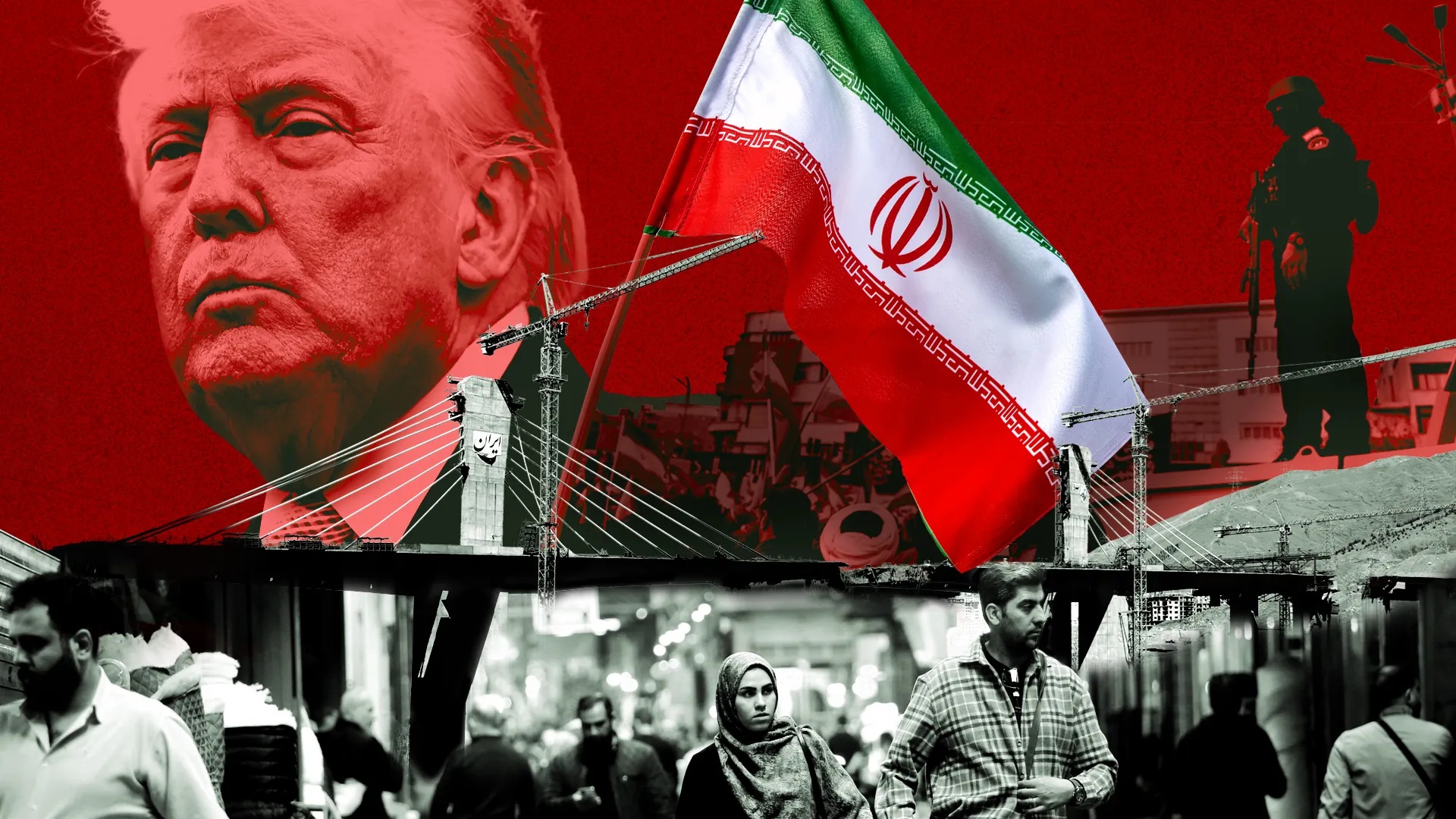
The conflict between the United States and Iran intensified sharply on Sunday after both sides exchanged large-scale missile and drone strikes across the Gulf, widening the geographical scope of the war and raising fresh concerns over global energy supplies, commercial shipping and inflation.
The latest attacks mark one of the most significant escalations since the war began on February 28, when U.S. and Israeli forces launched strikes against Iranian targets. Since then, the conflict has evolved beyond direct military confrontation to include repeated attacks on commercial shipping and competing claims over control of the Strait of Hormuz, one of the world’s most strategically important maritime chokepoints.
The renewed hostilities also further undermine hopes of reviving the interim U.S.-Iran agreement signed last month, which had sought to reopen the strait and provide a 60-day diplomatic window to negotiate a broader settlement. Those prospects have deteriorated after President Donald Trump declared last week that he considers the agreement “over,” even as he said the United States remains open to further negotiations.
Register for the next Tekedia Mini-MBA.
Register for Tekedia AI in Business Masterclass.
Join Tekedia Capital Syndicate and co-invest in great global startups.
Iran launched missiles and drones targeting U.S. military facilities in several Gulf states on Sunday, extending attacks beyond previous flashpoints and signaling a broader regional campaign.
The strikes reached Qatar, which has played a central role as a mediator between Washington and Tehran and had not been attacked since April. The United Arab Emirates also reported missile and drone threats, marking its first direct targeting since early May.
The UAE said its air defenses intercepted incoming projectiles, while Bahrain reported shooting down several Iranian aerial attacks. Jordan also reported missile strikes, and Oman said it was targeted by drones.

Qatar said three people, including a child, were injured by falling debris and accused Tehran of bearing full legal responsibility.
“Iran was fully legally responsible” for the attack, Qatari authorities said.
The attacks mark Iran’s willingness to expand military pressure across countries hosting U.S. forces, increasing the risk that the conflict could draw more regional states into direct confrontation.

Competing Claims Over The Strait Of Hormuz
The latest military exchanges have been accompanied by an intensifying dispute over the Strait of Hormuz, through which roughly one-fifth of global oil and liquefied natural gas shipments passed before the war disrupted maritime traffic.
Iran said it had again closed the strategic waterway after firing what it described as warning shots at vessels traveling without authorization.
Iranian authorities said they had struck one commercial vessel on Saturday before disabling a second ship on Sunday as part of efforts to enforce a new system requiring ships to obtain Iranian permission before transiting the strait.
The recently established Persian Gulf Strait Authority said passage remained suspended because of “recent illegal movements of the United States military forces in the region.”
The authority added that navigation permits would be issued “as soon as stability and calm are restored.”
The United States immediately rejected Iran’s claim that it controls the waterway.
Speaking during NBC’s Meet the Press, President Donald Trump said commercial shipping remained open.
“The Strait of Hormuz is open” to commercial traffic, Trump said.
U.S. Central Command echoed that assessment.
“Iran does not control the strait. Traffic is flowing.”
The command added that American forces remained “positioned and prepared” to safeguard freedom of navigation against what it described as Iranian “aggression, harassment, threats, and arbitrary declarations.”
The U.S. Navy-led Joint Maritime Information Center also advised that vessels could continue transiting through an expanded southern shipping route near Oman, although it warned that security threats remain severe.
Washington said its military campaign has significantly expanded. According to U.S. Central Command, American forces struck 140 Iranian military targets on Saturday and more than 300 targets over the past three nights, focusing on facilities used to threaten commercial shipping and maritime security.
The military said the operations were intended “to degrade Iran’s ability to attack civilian mariners and commercial vessels freely transiting the strait.”
Iranian state media reported explosions in several port cities and said an Iranian military officer had been killed in what it described as joint U.S.-Israeli strikes. Iran’s Islamic Revolutionary Guard Corps responded by claiming responsibility for attacks against multiple U.S.-aligned military facilities across the region.
According to the Guards, Iranian forces destroyed a command-and-control center and drone facilities in Jordan, struck a U.S. radar installation in Kuwait, attacked U.S. aircraft carrier support and refueling infrastructure in Oman, and hit a jet maintenance facility and command center in Qatar.
Shipping Disruptions Deepen
The deteriorating security environment is having immediate consequences for commercial shipping. India said one of its nationals remains missing following an attack on the container vessel GFS Galaxy off the coast of Oman.
Omani authorities said 23 crew members had been rescued.
Qatar advised all maritime traffic, including commercial vessels, fishing boats and recreational watercraft, to suspend operations until conditions improve.
The repeated attacks have prompted shipping companies, insurers, and energy traders to reassess operations throughout the Gulf, raising the prospect of higher transportation costs even if the strait remains partially navigable.
Diplomatic Efforts Continue Under Pressure
Despite the renewed fighting, diplomatic contacts have not completely ceased. Iranian Foreign Minister Abbas Araqchi met Omani Foreign Minister Badr Albusaidi on Saturday in Muscat, with discussions focused largely on arrangements for shipping through the Strait of Hormuz.
Iran said those negotiations are expected to continue with participation from Qatar. Araqchi also spoke by telephone with Pakistani Foreign Minister Ishaq Dar, whose government has continued efforts to mediate between Washington and Tehran.
However, diplomatic momentum has weakened considerably following Washington’s decision earlier this week to revoke the license permitting sales of Iranian crude oil after attacks on commercial tankers linked to Qatar and Saudi Arabia.
Although Iran has not formally acknowledged responsibility for earlier attacks on merchant shipping, many analysts believe Tehran has used maritime pressure as leverage in negotiations with the United States and its regional partners.
Iranian Parliament Speaker Mohammad Baqer Qalibaf reinforced that message in a post on X.
“The era of one-sided deals is OVER,” he said, adding, “We told you: keep your word or pay the price. Reality is knocking.”
The renewed military escalation has heightened concerns across global financial markets because of the Strait of Hormuz’s central role in international energy trade. Any prolonged disruption to shipping through the waterway threatens to reduce crude oil exports from major producers, including Saudi Arabia, the United Arab Emirates, Kuwait, Iraq, and Qatar.
Oil prices have already surged in recent days as investors price in the possibility of sustained supply disruptions. Higher crude prices are expected to feed through to gasoline, diesel, aviation fuel, and petrochemical products, increasing inflationary pressures worldwide.
For the United States, rising fuel prices carry additional political significance ahead of November’s congressional elections, as higher gasoline costs could weigh on consumer spending and complicate the Federal Reserve’s efforts to contain inflation.
With both Washington and Tehran continuing military operations while maintaining only limited diplomatic contacts, the conflict appears to be entering a more dangerous phase. The expansion of missile strikes across multiple Gulf states, competing claims over control of the Strait of Hormuz, and growing disruption to commercial shipping all point to an increasingly regional confrontation.