

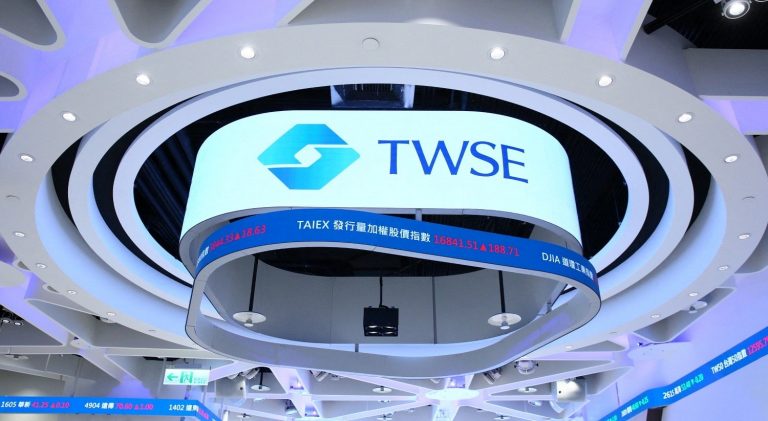
Taiwan’s tech-heavy equities are showing no signs of fatigue, even as anxiety about overstretched AI valuations dents sentiment in global markets.
The island’s benchmark Taiex is now within striking distance of the symbolic 30,000 mark — a level investors say could be crossed in early 2026 — extending a blistering rally that has nearly doubled the market over three years, Reuters reports.
The surge rides on a simple reality: Taiwan sits at the heart of the global AI supply chain. And local investors, unlike their global counterparts, aren’t second-guessing that advantage.
Register for Tekedia Mini-MBA edition 20 (June 8 – Sept 5, 2026).
Register for Tekedia AI in Business Masterclass.
Join Tekedia Capital Syndicate and co-invest in great global startups.
Register for Tekedia AI Lab.
Foreign funds have spent much of the year worrying about what many see as an overheated AI trade. But at home, Taiwanese investors have doubled down, latching onto what they describe as structural, long-run opportunities that outsiders may be underpricing.
“The momentum is tied to Taiwan’s role as the world’s semiconductor hub,” said Piter Yang, fund manager at Fuh Hwa Securities Investment Trust. “Taiwan is a major beneficiary of the AI market.”
The rally has endured even as geopolitical tension with Beijing simmers — a factor that has historically spooked global money managers. Domestic investors have shrugged off these concerns, focusing instead on earnings, semiconductors, and a pipeline of new AI-related work that continues to swell.

GPUs and TPUs as Taiwan’s dual advantage
One of the main pressure points in global markets has been the question of whether Nvidia can keep its extraordinary dominance in AI computing. Google’s tensor processing units — or TPUs — have emerged as a cheaper alternative for some customers, sparking fears that Nvidia’s revenue curve could flatten.
But in Taiwan, this shift is seen not as a threat, but as a cushion.
Taiwan is deeply embedded in the manufacturing ecosystem behind both Nvidia’s GPUs and Google’s TPUs. That gives the island a rare dual advantage: competition between the two chip standards still funnels orders back to Taiwanese firms.

“Even rising rivalry between chip architectures ends up supporting Taiwan,” one Taipei-based analyst said. “It ensures more design work, more advanced packaging, more manufacturing runs — all of which benefit companies like TSMC.”
TSMC, the world’s top contract chipmaker, remains the center of that ecosystem and the largest single holding in many Asian portfolios. HSBC strategists wrote this month that the average Asian fund has 10 percent of its portfolio concentrated in TSMC — a level they described as “crowded” but consistent with the chipmaker’s unmatched influence.
Unlike the Nasdaq or Japan’s Nikkei, Taiwan’s market has not seen a valuation blowout. The Taiex trades at a price-to-earnings ratio of about 21 — elevated, but relatively stable given the scale of gains.
“We are not worried about an AI bubble,” said Li Fang-kuo, chairman of the securities investment arm of Uni-President. “We are comfortable with where the valuations stand.”
Li pointed to healthy earnings from Taiwan’s leading chip and component makers and contrasted them with the dot-com era, when many companies had little revenue and almost no profits.
“Several of the ‘magnificent seven’ in the U.S. have gross margins of 70% or above. It’s not comparable to 2000,” he said.
Goldman Sachs echoed that view. “The current industry context does not constitute a full-fledged bubble,” their strategists said in a recent report. Goldman remains overweight tech and predicts hyperscaler capital expenditure will soar to $552 billion in 2026 and $644 billion in 2027 — a flood of investment that feeds directly into Taiwanese supply chains.
Local investors powering the rally as foreign money flees
For all the optimism, foreign money has been heading for the exit. Overseas investors have dumped a net T$533.8 billion ($17 billion) of Taiwanese stocks this year, after T$695.1 billion in net outflows in 2024.
The outflows reflect caution over trade friction, profit-taking after huge gains in past years, and soft concerns about a slowdown in global AI hardware profitability.
But domestic investors have more than made up the difference. Taiwanese funds, retail investors, pension vehicles, and insurance firms have poured billions into equities, especially semiconductor and AI-related names.
“Sentiment at home remains strong,” said one Taipei-based strategist. “Local investors see Taiwan’s ecosystem as irreplaceable.”
Kieron Kader, associate portfolio manager at London-based Alquity, agreed: “The ecosystem’s proximity to TSMC creates a competitive moat that is very difficult to replicate.”
Why analysts still expect more upside
The Taiex is up 22 percent in 2025, matching the Nasdaq’s performance. It trails South Korea’s Kospi, Hong Kong’s Hang Seng, and Japan’s Nikkei — three markets that have enjoyed surges driven by corporate reforms and region-specific catalysts — but analysts argue Taiwan’s rally is built on more durable long-term foundations.
Goldman expects the index to reach about 30,200 over the next 12 months — roughly 7 percent above current levels — fueled by AI servers, advanced packaging, high-end semiconductors, and a steady expansion in hyperscaler orders.
Uni-President’s Li sees the 30,000 mark being crossed in the first half of 2026, led by heavyweights such as TSMC, Foxconn, Elite Material, and other component manufacturers tied into AI computing demand.
“Looking ahead to 2026, the structural demand story around AI and high-end semiconductors remains intact,” said Gina Kim, portfolio manager for emerging markets at Nordea Asset Management. “This points to continued long-term strength.”
Analysts acknowledge risks — including potential pressure on AI hardware margins if customers shift from high-end chips to cheaper alternatives, and any major escalation in U.S.–China tension. Some also warn that heavy reliance on a handful of companies leaves Taiwan vulnerable if demand cycles turn.
Even so, the strength of current order books, the scale of 2026–27 hyperscaler spending projections, and Taiwan’s position as a manufacturing and packaging powerhouse leave most investors confident the rally still has room to run.
In short, global markets may be debating whether the AI boom is too hot to handle. In Taiwan, investors are leaning the other way — betting that the next leg of growth in the global AI economy will still run through the island.