

Tesla is set to launch its ambitious in-house AI chip manufacturing project, known as the Terafab (or “TeraFab”), imminently. Elon Musk announced via X that the “Terafab Project launches in 7 days,” which points to March 21, 2026.
Tesla aims to build a “gigantic” semiconductor fabrication facility (fab) to produce custom AI chips in-house. This addresses supply constraints from external foundries like TSMC and Samsung, which Musk has said won’t meet Tesla’s massive future demand for AI compute. The project is described as vertically integrated, combining logic processing, memory, and advanced packaging.
Projections include: Targeting 100,000 wafer starts per month initially, with potential scaling to much higher volumes. Annual production of 100–200 billion AI and memory chips. Estimated cost around $20 billion; though some analyst views suggest it could reach hundreds of billions long-term.
Primarily to power Tesla’s autonomous driving tech (Full Self-Driving software), Robotaxi and Cybercab fleet, Optimus humanoid robots, and Dojo supercomputing for AI training. Likely at or near Giga Texas in Austin (North Campus expansion), though no official confirmation on the exact groundbreaking site has been detailed yet.
Register for Tekedia Mini-MBA edition 20 (June 8 – Sept 5, 2026).
Register for Tekedia AI in Business Masterclass.
Join Tekedia Capital Syndicate and co-invest in great global startups.
Register for Tekedia AI Lab.
Musk first floated the idea of a massive in-house fab in late 2025, emphasizing the need for vertical integration to avoid bottlenecks in AI chip supply. Tesla has reportedly begun hiring for the Terafab in Austin, with roles spanning factory design, construction, and production ramp-up. This marks a concrete step forward.
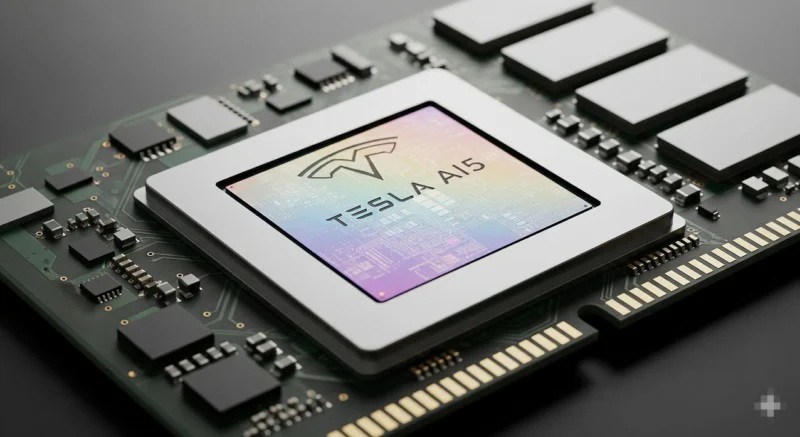
This move positions Tesla to reduce reliance on third-party manufacturers and accelerate its AI ecosystem including Dojo supercomputers and next-gen chips like AI5/AI6. It’s being hailed as potentially Tesla’s “Gigafactory moment” for AI—bold, high-risk, and transformative if executed successfully.
xAI’s AI hardware plans center on building the world’s most powerful and rapidly scalable AI compute infrastructure to train and run frontier models like Grok. Unlike Tesla’s focus on in-house chip fabrication (e.g., Terafab for massive AI chip production), xAI prioritizes hyperscale GPU clusters, dedicated power solutions, and emerging custom silicon design—while heavily relying on Nvidia GPUs for now.
This approach emphasizes speed of deployment, vertical integration in compute and power, and long-term efficiency to outpace competitors in the race toward superintelligence.

The Core of xAI’s Hardware Strategy
AI’s flagship is the Colossus supercomputer cluster in Memphis, Tennessee built in a repurposed factory shell. It’s described as the world’s largest AI training system by scale and coherence. Initial Build: Launched in 2024 with 100,000 Nvidia H100 GPUs in just 122 days—far faster than industry norms.
Doubled to 200,000 GPUs (mix of H100/H200) in 92 days. By 2025–2026, it evolved into Colossus 1 (230,000 GPUs, including early Blackwell GB200s) and Colossus 2 (gigawatt-scale, targeting 500,000+ Blackwell GPUs like GB200/GB300).
Reports indicate 450,000–550,000+ GPUs active, with Colossus 2 operational as the first gigawatt-scale coherent AI training cluster; power draw ~1 GW, with upgrades to 1.5–2 GW planned soon. The full Memphis campus including expansions like “MACROHARD” and “MACROHARDRR” buildings targets ~2 GW total capacity and 1 million+ GPUs.
Massive memory bandwidth; 194 PB/s at 200k GPUs, high-speed Nvidia Spectrum-X Ethernet networking, and liquid cooling for efficiency. Primary 1.2 GW natural gas power plant plus grid, Tesla Megapacks, and potential solar. xAI is addressing energy as the emerging bottleneck after chips.

This “Gigafactory of Compute” enables simultaneous training of multiple Grok models and powers Grok’s advancements. xAI is developing its own AI accelerators to reduce reliance on external suppliers: Active hiring since mid-2025 for custom silicon engineers to co-design “from silicon to software compilers to models.”
Rumored efforts include inference-optimized chips and training accelerators. Deals and discussions with foundries like TSMC and Samsung, plus Broadcom for large custom ASICs. Optimize for Grok workloads, improve power efficiency/performance over off-the-shelf GPUs, and handle extreme scale.
xAI continues massive Nvidia purchases; billions spent on H100/H200/Blackwell GPUs and plans orders from Nvidia/AMD at scale. Elon Musk has praised Nvidia while noting xAI/SpaceX/Tesla will buy heavily from them. Elon Musk targets xAI having more AI compute than everyone else combined within ~5 years, with roadmaps to 1M+ GPUs and far beyond.
This includes potential international hyperscale builds; Saudi Arabia partnership for nationwide Grok deployment with new GPU data centers. Exploration of space-based/orbital data centers via SpaceX synergies for solar-powered, low-cost compute to bypass Earth’s energy limits.
Raised tens of billions to fuel GPU buys, data center builds, and power plants. Emphasis on owning infrastructure outright vs. leasing. xAI’s hardware push is aggressive and execution-focused—turning compute bottlenecks into advantages through speed, scale, and partial vertical integration.
It’s tightly coupled to advancing Grok toward superintelligence, with energy and custom chips as next frontiers.