

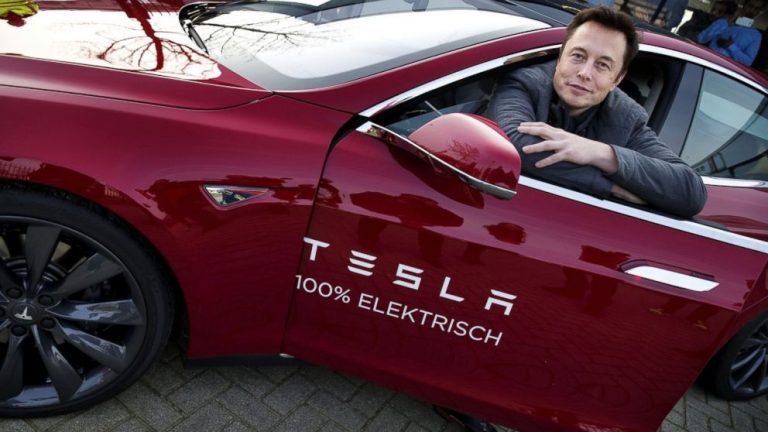
Tesla is preparing to close a defining chapter in its history, ending production of its Model S and Model X vehicles and repurposing the Fremont, California, factory to build Optimus humanoid robots.
The decision, which marks a sharp strategic turn away from Tesla’s oldest passenger cars and deeper into robotics and artificial intelligence, is seen as a declaration that the company’s next act — and Elon Musk’s personal financial upside — will be driven less by cars and more by robots.
On Wednesday’s fourth-quarter earnings call, Musk said Tesla will wind down the Model S and X programs and repurpose the Fremont, California, factory to build Optimus humanoid robots at scale. The move comes as Musk has just secured approval for a reworked compensation package valued at up to $1 trillion, a deal that explicitly hinges on Tesla achieving extraordinary market capitalization and operational milestones far beyond what traditional auto manufacturing can plausibly deliver.
Register for Tekedia Mini-MBA edition 20 (June 8 – Sept 5, 2026).
Register for Tekedia AI in Business Masterclass.
Join Tekedia Capital Syndicate and co-invest in great global startups.
Register for Tekedia AI Lab.
“It’s time to basically bring the Model S and X programs to an end with an honorable discharge,” Musk said. “If you’re interested in buying a Model S and X, now would be the time to order it.”
The two models, first launched in 2012 and 2015 respectively, helped establish Tesla as a credible challenger to luxury automakers. But they have become marginal to Tesla’s business. The Model 3 and Model Y now account for about 97% of deliveries, while the S and X, priced around $95,000 to $100,000, have struggled amid intensifying global EV competition and slowing demand at the high end of the market.
Tesla’s latest earnings underscore the pressure. The company reported its first-ever annual revenue decline, with sales falling in three of the past four quarters. Against that backdrop, Musk has been accelerating a pivot away from being valued as a carmaker and toward a vision of Tesla as an AI, autonomy, and robotics company.

That pivot is inseparable from Musk’s compensation.
Under the newly approved pay package, Musk does not receive a salary or cash bonus. Instead, he is entitled to massive tranches of stock options that vest only if Tesla’s valuation climbs to $8.5 trillion over the next decade. Delivering that outcome through vehicle sales alone would be extraordinarily difficult in a mature, increasingly competitive auto market.
Robotics, Musk argues, changes the math.

Optimus is designed as a general-purpose humanoid robot that could eventually perform factory work, logistics tasks, and household duties. If successful, Musk has claimed the robot could become Tesla’s most valuable product, with a total addressable market far larger than that of automobiles.
On the call, Musk said Tesla will replace the Model S and X production line in Fremont “with a 1 million unit per year line of Optimus.” The scale is striking and signals that Tesla is already thinking in terms of mass deployment rather than niche experimentation.
“This is a completely new supply chain,” Musk said. “There’s really nothing from the existing supply chain that exists in Optimus.”
Tesla said it plans to unveil the third generation of Optimus this quarter, describing it as the company’s first design meant for mass production. Musk added that headcount at the Fremont facility will increase and output will rise, suggesting Tesla sees robotics manufacturing as a growth engine even as legacy vehicle programs are shut down.
Investors have historically valued Tesla less like a car company and more like a technology platform, rewarding it with a valuation that far exceeds traditional automakers. That premium has come under pressure as EV growth slows and margins compress. By doubling down on robots and AI, Musk is attempting to restore — and vastly expand — that technology narrative.
This also explains why Musk has been increasingly vocal about a future dominated by autonomous systems and humanoid labor. A successful Optimus rollout would not just diversify Tesla’s revenue streams; it would fundamentally change how the company is valued, potentially unlocking the market capitalization thresholds embedded in Musk’s pay deal.
Critically, the Fremont shift shows Tesla is willing to sacrifice heritage products to free up capacity for that future. The Model S and X are not being replaced by new vehicles or next-generation EV platforms. They are being displaced by a bet that humanoid robots can be manufactured at automotive scale and sold profitably.
However, that bet carries substantial risk. Tesla currently has no commercial robotics business, and Optimus remains unproven outside controlled demonstrations. Regulatory, safety, and labor concerns could also shape how quickly such robots are adopted. Yet for Musk, the alternative — remaining primarily an automaker — offers limited upside relative to the ambitions encoded in his compensation package.
In that sense, the retirement of the Model S and X marks more than the end of two vehicles. Some analysts say it reflects a company reorganizing itself around a single, high-stakes thesis: that robots, not cars, will define Tesla’s next decade.