

Tesla Chief Executive Elon Musk said the company’s long-discussed “Terafab” project aimed at producing artificial intelligence chips will launch within seven days, signaling a major step in the electric vehicle maker’s effort to secure the computing power needed for its autonomous driving ambitions.
Musk disclosed the timeline on Saturday, offering one of the clearest indications yet that Tesla is moving closer to vertically integrating a critical part of its artificial intelligence infrastructure — the semiconductor hardware that powers its self-driving systems.
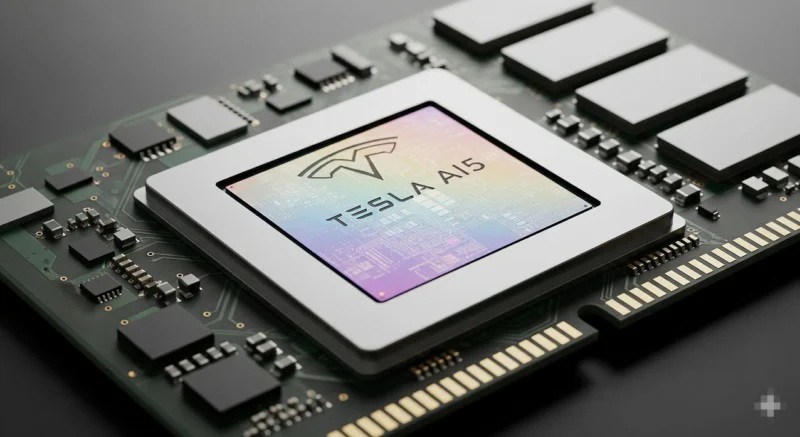
The Terafab initiative is tied to Tesla’s development of its fifth-generation AI chip, commonly referred to as AI5, which is designed to support the company’s next wave of autonomous vehicle technology and large-scale AI training systems.
Register for Tekedia Mini-MBA edition 20 (June 8 – Sept 5, 2026).
Register for Tekedia AI in Business Masterclass.
Join Tekedia Capital Syndicate and co-invest in great global startups.
Register for Tekedia AI Lab.
The chips power Tesla’s driver-assistance and autonomy software, including its Full Self-Driving system, which relies heavily on advanced neural networks trained on massive volumes of real-world driving data collected from Tesla vehicles.
Musk has repeatedly warned that the global supply of advanced chips is insufficient to meet Tesla’s rapidly expanding demand for artificial intelligence computing.
“Even when we extrapolate the best-case scenario for chip production from our suppliers, it’s still not enough,” Musk said during Tesla’s annual shareholder meeting last year.

That shortage of high-performance processors has pushed Tesla to explore building its own massive semiconductor fabrication facility.
“So I think we may have to do a Tesla terafab. It’s like giga but way bigger. I can’t see any other way to get to the volume of chips that we’re looking for,” Musk said at the time.
“I think we’re probably going to have to build a gigantic chip fab. It’s got to be done.”

The strategy mirrors Tesla’s broader approach of controlling critical parts of its supply chain — a philosophy the company previously applied to battery manufacturing through its “Gigafactory” network.
Potential Partnerships With Chipmakers
Although Tesla is designing its own AI processors, Musk has suggested that the company could collaborate with existing semiconductor manufacturers. He said last year that Tesla might work with Intel on the manufacturing side, although no formal agreement has been reached.
“We haven’t signed any deal, but it’s probably worth having discussions with Intel,” Musk said at the time.
Tesla is also partnering with two of the world’s most advanced chip foundries — Taiwan Semiconductor Manufacturing Company and Samsung Electronics — to produce versions of its AI processors. These chips are used in Tesla’s data centers as well as inside its vehicles, enabling real-time processing of camera feeds, sensor inputs, and complex machine-learning models that guide driving decisions.
The Importance of Autonomous Vehicles
Tesla’s push to expand chip production highlights how computing power has become the central bottleneck in the race to develop fully autonomous vehicles. Modern self-driving systems rely on enormous neural networks that must be trained using billions of miles of driving data.
That process requires vast computing clusters running specialized chips optimized for artificial intelligence workloads.
Tesla already operates a large AI training system known as Dojo, designed to accelerate development of its autonomy software. The AI5 processor is expected to deliver significantly greater performance than the company’s current generation chips, enabling more advanced perception models and decision-making algorithms.
Industry analysts say Tesla’s Terafab plan is a typical example of the broader shift among major technology companies toward designing and controlling their own AI hardware. Companies building large artificial intelligence systems increasingly require specialized chips tailored to their specific software architectures and data processing needs.
Relying solely on external suppliers can limit both performance and scale, particularly as demand for AI processors surges globally.
So, Tesla could gain greater control over costs, supply, and performance — factors that are becoming decisive in the AI arms race, by designing its own chips and potentially building dedicated fabrication capacity.
However, the EV maker’s investment in AI hardware is closely tied to Musk’s long-standing view that the company is fundamentally an artificial intelligence and robotics company rather than just an automaker. Autonomous driving remains a central pillar of that vision, with Musk arguing that large fleets of self-driving vehicles could eventually form a global robotaxi network.
To achieve that goal, Tesla must train increasingly sophisticated neural networks capable of handling the complexity of real-world driving environments.
The launch of the Terafab initiative, therefore, represents more than a manufacturing project. It marks another step in Tesla’s effort to build the vast computing infrastructure required to turn autonomous driving from a technological ambition into a scalable business.