

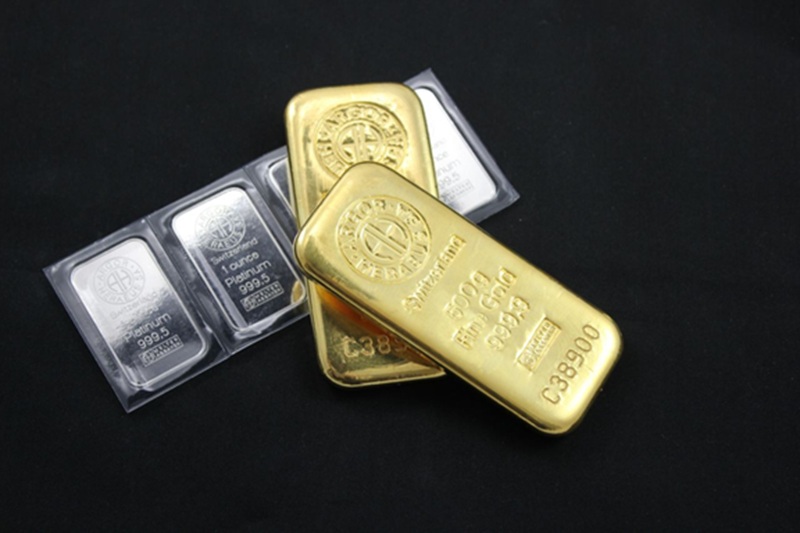
Africa has supplied precious metals to the world for generations, but their economic role is beginning to change. Gold, silver, platinum, and related metals could become more important not only as exports, but also as building blocks for investment, manufacturing, infrastructure, and broader economic development.
More Than a Source of Raw Materials
For much of modern history, Africa’s mining relationship with the rest of the world has followed a familiar pattern: minerals are extracted locally and shipped elsewhere for processing. The producing country earns export revenue, but much of the higher-value economic activity happens abroad.
That model is increasingly being questioned. Global interest in metals has grown alongside investment in renewable energy, electronics, electric vehicles, data centers, and advanced manufacturing. Precious metals have a place in many of these industries, giving African producers an opportunity to rethink what mining can contribute to their economies.
The conversation is also influenced by changing commodity markets. Investors following a silver price prediction, for example, may focus mainly on whether the metal could rise or fall. For an African country with mineral resources, however, the bigger issue is what happens before that silver reaches the global market. Mining, refining, transportation, financing, and manufacturing can each generate economic activity.
The real opportunity, therefore, may be less about selling more metal and more about capturing a greater share of its value.
Gold Remains an Important Economic Asset
Gold continues to occupy a special position across Africa. Countries including Ghana, South Africa, Mali, Tanzania, and Burkina Faso have significant gold industries, while exploration continues in other parts of the continent.
Gold can provide governments with export earnings and tax revenue while supporting thousands of direct and indirect jobs. Mining operations also require transportation, engineering, security, equipment, financial services, and other local suppliers.
There is another reason gold matters. Unlike metals that depend heavily on a single industrial application, gold attracts demand from several directions. It is used in jewelry and technology, while investors and central banks also hold it as a financial asset. This gives gold a distinctive role within the broader commodities market.
Still, simply having gold underground does not guarantee widespread prosperity. The economic impact depends heavily on how projects are managed and how revenues are used.
Platinum Could Gain New Strategic Value
Southern Africa has an especially strong position in platinum-group metals. South Africa holds an exceptionally large share of global platinum resources, making the region difficult to ignore in discussions about future metal supply.
Platinum is associated with automotive catalysts, but its uses extend into chemicals, electronics, medical equipment, and other industrial applications. It could also play a role in technologies connected with hydrogen production and fuel cells.
This creates both an opportunity and a challenge. Demand patterns can change as technology evolves. African economies that depend heavily on exporting one mineral can therefore be exposed when industries shift or commodity prices decline.
Building industries around minerals rather than depending entirely on their extraction could help reduce that vulnerability.
Processing Could Make the Bigger Difference
One of the central questions for Africa’s economic future is where minerals are processed.
Shipping unprocessed material abroad usually captures only part of the potential economic value. Refining and processing metals domestically can support skilled employment, industrial investment, technical knowledge, and local supplier networks. The International Energy Agency estimates that Africa currently captures less than 1% of the value generated from manufacturing clean-energy technologies and their components, despite its major role in supplying several important minerals.
Changing this situation will not happen simply by building more mines. Reliable electricity, transportation links, ports, skilled workers, financing, and predictable regulation are all necessary if countries want companies to invest further down the value chain.
Regional cooperation could matter as well. Instead of every country attempting to build a complete industry independently, neighboring economies could specialize in different parts of production and trade with one another.
Mining Can Support Wider Development
Large mining projects often require infrastructure that can benefit industries beyond mining itself. Roads, railways, electricity networks, water systems, and ports built partly to support mineral production may also lower costs for manufacturers, farmers, and other businesses.
The same principle applies to human capital. A more sophisticated mining and metals industry requires geologists, engineers, technicians, software specialists, financial professionals, and skilled tradespeople. Developing these capabilities can create knowledge that eventually spreads into other parts of the economy.
There are risks, of course. Poor environmental practices, corruption, unstable regulations, and excessive dependence on commodity exports can weaken the benefits of mineral wealth. Governments also have to balance attracting investment with ensuring that communities and national economies receive a reasonable share of the returns.
A Chance to Build Around Africa’s Natural Advantage
Africa’s mineral resources give the continent an important position at a time when global supply chains are being reconsidered. The World Bank has highlighted the potential for mineral development to encourage investment not only in extraction, but also in processing, infrastructure, innovation, and employment.
The next chapter, however, does not have to repeat the old pattern of digging resources out of the ground and sending them overseas.
If African economies can develop stronger local industries around gold, silver, platinum, and other valuable minerals, precious metals could contribute to something much larger than export income. They could help finance infrastructure, expand industrial capacity, create skilled employment, and give African countries a stronger position in the global economy.