

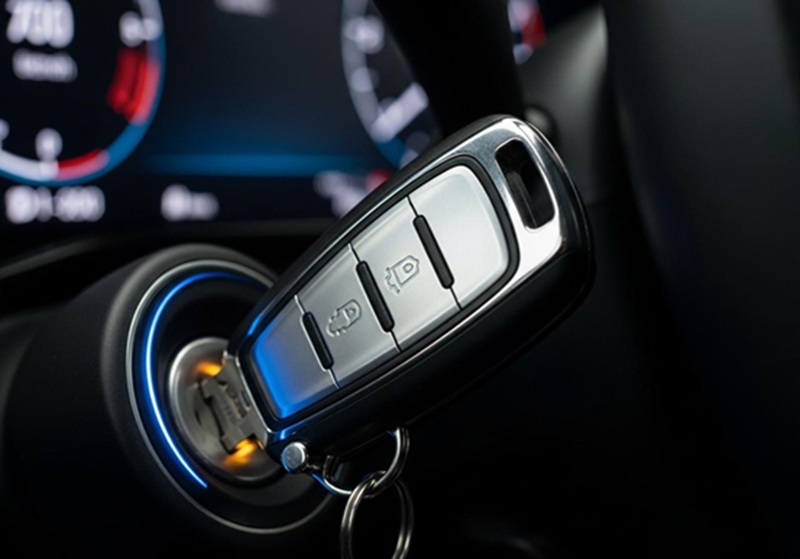
The automotive industry is in the midst of a technological renaissance. Vehicles are no longer defined solely by their horsepower or suspension systems; they are evaluated on their computing power, sensor arrays, and digital connectivity. We are driving rolling networks. However, despite this massive leap forward, the physical security systems of many vehicles remain a hybrid of cutting-edge microchips and century-old mechanical engineering.
This intersection of the physical and the digital creates a unique set of vulnerabilities for the modern driver. When these systems operate seamlessly, they provide incredible convenience and robust protection against theft. But when they fail, diagnosing and resolving the issue requires a blend of mechanical expertise and software troubleshooting that goes far beyond the capabilities of a traditional mechanic.
The Evolution of the Digital Handshake
To understand why modern automotive lockouts and failures are so complex, we have to look at how starting a car has changed. In older vehicles, the ignition cylinder was simply a physical switch. If the metal key matched the mechanical pins inside the cylinder, the switch turned, electricity flowed to the starter, and the engine ran.
Today, that physical turn is only the first step in a multi-layered security protocol. Most modern vehicles utilize a transponder key, which contains a small microchip embedded in the plastic head of the key. When this key is inserted into the ignition or brought into the vehicle’s cabin, an antenna ring around the ignition cylinder emits a short burst of radio frequency energy.
This energy powers the microchip, which then transmits a unique cryptographic code back to the vehicle’s immobilizer unit. If the code matches the vehicle’s internal database, the engine management system is unlocked, allowing fuel and spark to reach the engine. This entire “digital handshake” happens in milliseconds. It is a highly effective anti-theft measure because it means a thief cannot simply force the ignition cylinder to turn with a screwdriver; without the correct digital code, the car will remain immobilized.
When Mechanical Wear Meets Digital Sensors
While the digital components of this system are remarkably reliable, they are often housed within mechanical enclosures that are subject to physical wear and tear. A perfect example of this friction occurs when a driver finds their key stuck in ignition.
In the past, a stuck key was almost always a purely mechanical issue, usually caused by a worn-out key blade or bent pins inside the cylinder lock. While those physical failures still happen, modern ignitions introduce new points of failure. The ignition cylinder is now connected to steering wheel lock mechanisms, transmission shift interlocks, and the electronic ignition switch itself.
If a sensor fails to recognize that the vehicle is fully shifted into the “Park” position, a solenoid will physically block the key from turning back to the “Off” position, trapping it in the cylinder. Trying to forcefully yank the key out will only damage the delicate internal sensors and the transponder antenna ring. Resolving this requires understanding both the physical linkage of the transmission and the electronic communication between the vehicle’s safety modules.
The Cost of Complexity
The shift toward computerized security has centralized control, which means that a failure in one component can disable the entire vehicle. If the antenna ring fails, the car will not read the transponder chip, and the engine will crank but never start. If the fob loses its programming due to a dead battery or electrical interference, the vehicle essentially forgets its own key.
For the consumer, this complexity often translates to high costs and frustrating delays when turning to traditional dealerships for help. Dealerships typically operate by replacing entire modules rather than repairing individual components. If an ignition cylinder is jamming, their standard procedure is often to replace the entire steering column lock assembly and reprogram the computer system, leading to massive repair bills.
Specialized Mobile Solutions
The gap between the mechanical failures of the past and the digital complexities of the present has given rise to specialized mobile security technicians. These professionals act as hybrid engineers. They carry the heavy-duty physical tools required to extract broken metal blades and rebuild ignition cylinders pin by pin, alongside the advanced diagnostic laptops and coding software needed to communicate with the vehicle’s immobilizer network.
Instead of towing a disabled vehicle to a service center, these experts bring the dealership-level technology directly to the stranded driver. They can pinpoint whether a starting failure is due to a dead transponder chip, a misaligned mechanical wafer, or a communication error within the engine control unit. By repairing the specific point of failure rather than replacing the entire system, they offer a faster and much more targeted solution.
The Future of Vehicle Access
As we look toward the end of the decade, the reliance on physical keys and traditional ignitions will continue to diminish. The industry is rapidly adopting Ultra-Wideband (UWB) technology and smartphone integration, turning our mobile devices into primary vehicle keys.
However, as long as there are moving parts, there will be physical wear. Even the most advanced proximity fobs often contain a hidden mechanical emergency blade, and cars still feature physical override locks hidden beneath door handles. The future of automotive security is undeniably digital, but maintaining access to our vehicles will always require a deep understanding of the mechanical world. As drivers, staying informed about the technology guarding our cars is the best way to avoid being left stranded when the digital handshake fails.