

This morning, I had a coaching session with one of our startup CEOs. We discussed a recurring challenge involving a talented team member who continues to make the same avoidable mistakes. My advice was simple: do not view the issue solely as an individual performance problem. Instead, examine it as an organizational systems problem.
The young man is exceptionally bright, but brilliance alone does not eliminate errors. When the same mistakes occur repeatedly, leaders must ask whether the organization has built sufficient processes, training, quality assurance, and review mechanisms to prevent them. Among other recommendations, I suggested implementing a company-wide Quality Assurance (QA) and Quality Control (QC) program to improve the consistency and reliability of outputs.
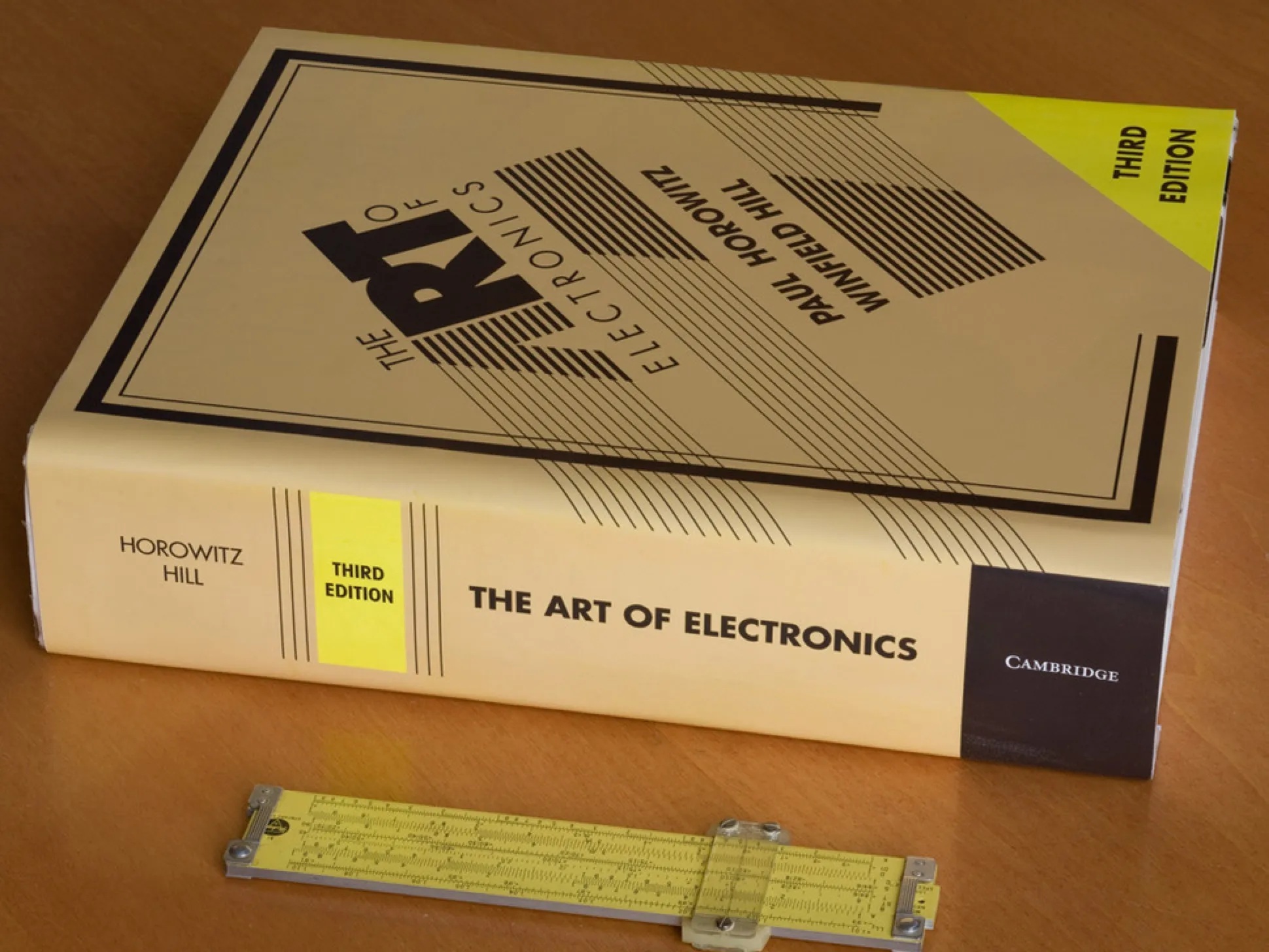
To explain my point, I took the CEO back to my undergraduate days at the Federal University of Technology Owerri (FUTO). In my first year, I bought a copy of The Art of Electronics. Interestingly, it was not one of the recommended textbooks, but the title and design caught my attention. Since I was studying electronics engineering, I decided to add it to my collection, alongside K.A. Stroud’s famous Engineering Mathematics, the book that introduced many of us to Ordinary Differential Equations.
Register for the next Tekedia Mini-MBA.
Register for Tekedia AI in Business Masterclass.
Join Tekedia Capital Syndicate and co-invest in great global startups.
One story in The Art of Electronics has stayed with me for years. A company had designed a highly successful product, but over time it lost its schematic diagrams, engineering documentation, and production records. The situation became so severe that production could no longer continue because the knowledge required to manufacture the product had effectively disappeared.
The company, Sea Data Corporation, was eventually forced to reverse-engineer its own products directly from printed circuit boards (PCBs) in order to recreate the engineering files and restore production.
After recounting the story, I asked the founder a simple question: “Would you ever want your company to find itself in that situation?”

His answer was immediate: “Certainly not.” My response was equally direct: then fix what needs to be fixed today.
Many organizations assume that success comes from having brilliant people. In reality, enduring success comes from having brilliant systems. People make mistakes. Systems reduce them. People leave. Systems preserve knowledge. People forget. Systems remember. The companies that scale sustainably are not those that depend on heroic individuals; they are those that institutionalize excellence. That is the ART of Business Success!
— The Art of Electronics by Paul Horowitz and Winfield Hill is a highly regarded, comprehensive textbook and reference for electronic circuit design, covering both analog and digital electronics with a practical, non-mathematical approach that builds intuition. It’s known for explaining the “art” of design using real-world methods, rules of thumb, and practical examples, making it valuable for students, hobbyists, and professionals. The third edition, published in 2015, updates the classic text to reflect modern electronics.

---
Connect via my
LinkedIn |
Facebook |
X |
YouTube