

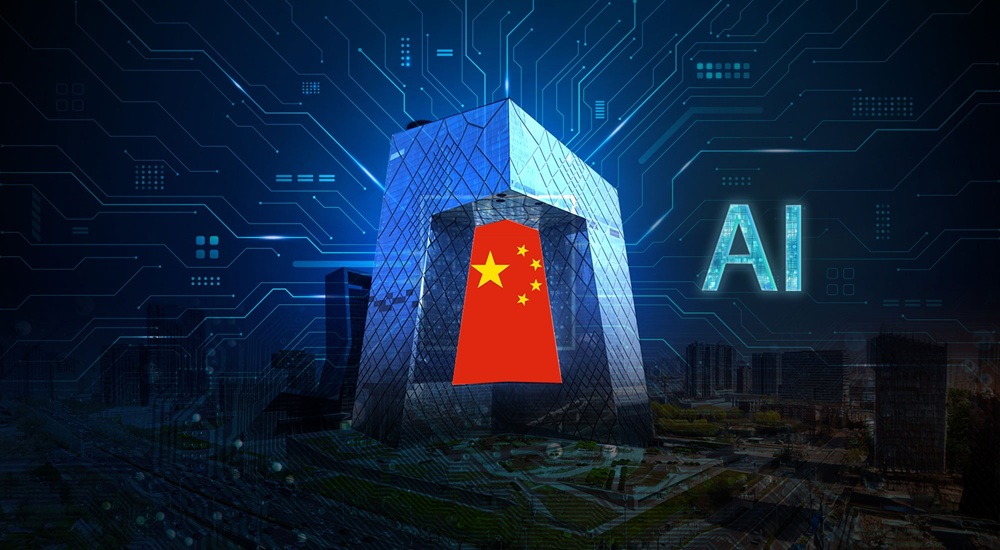
China has offered one of its clearest indications yet that it wants artificial intelligence to become a pillar of engagement rather than confrontation with the United States, using the Communist Party’s flagship newspaper to frame AI as a potential area of cooperation between the world’s two largest economies.
In a significant commentary published Monday, the official newspaper of the Chinese Communist Party, the People’s Daily, described artificial intelligence as a “new frontier” for China-U.S. cooperation. The message comes at a pivotal moment, following agreements reached during U.S. President Donald Trump’s visit to China last month, where he and Chinese President Xi Jinping agreed to establish a government-level dialogue mechanism focused on AI.
The commentary provides an unusually detailed glimpse into how Beijing views the future of AI relations with Washington. While the technology has increasingly become a focal point of strategic competition, China is signaling that it does not want artificial intelligence to become another casualty of the broader economic and technological rivalry between the two powers.
Register for the next Tekedia Mini-MBA.
Register for Tekedia AI in Business Masterclass.
Join Tekedia Capital Syndicate and co-invest in great global startups.
“The world does not want to see an AI Iron Curtain,” the newspaper argued, warning against efforts to divide the technology into competing geopolitical blocs.
The message reflects Beijing’s concern that artificial intelligence could follow the path of semiconductors, telecommunications, and advanced manufacturing technologies, sectors that have become increasingly fragmented by export controls, investment restrictions, and national security concerns.
Instead, the commentary argued that competition and cooperation should coexist.

According to the article, China and the United States, as the world’s two leading AI powers, share substantial interests in ensuring that artificial intelligence develops safely, benefits humanity, and contributes to global economic development.
The statement also extended China’s long-standing criticism of Washington’s technology containment strategy into the AI arena. The newspaper accused unnamed U.S. policymakers of adopting a “zero-sum mentality” and attempting to “politicize, instrumentalize and weaponize” artificial intelligence through measures such as semiconductor export restrictions, investment controls, and limits on cloud-computing access.
The criticism mirrors Beijing’s broader opposition to what it frequently describes as America’s “small yard, high fence” strategy, which seeks to block China’s access to a narrow set of strategically important technologies while maintaining broader economic engagement.

The timing of the commentary is notable because it follows a series of high-level discussions that suggest both countries are exploring ways to manage competition in AI before it becomes destabilizing. The bilateral dialogue mechanism announced on May 19 was presented by both governments as a channel for engagement, but officials on each side have emphasized different objectives.
Beijing has consistently portrayed the initiative as a platform for cooperation, governance, and shared technological development. Washington’s messaging has been more focused on risk management and maintaining its competitive advantage. Following his meeting with Xi, Trump said the two leaders discussed AI “guard rails,” language that suggests an emphasis on preventing dangerous outcomes from increasingly powerful AI systems.
The differing perspectives became even clearer in comments by Scott Bessent, who said the two countries would begin discussions on artificial intelligence and establish protocols covering best practices.
Yet Bessent also underscored the strategic dimension of the competition.
“The reason we are able to have wholesome discussions with the Chinese on AI is because we are in the lead,” he said during a CNBC interview.
“I do not think we would be having the same discussions if they were this far ahead of us.”
Those remarks highlight the central tension shaping the relationship. While both governments acknowledge the need for dialogue on a transformative technology, neither appears willing to compromise on its ambition to dominate the sector.
The contradiction is increasingly visible across the AI industry itself.
Commercial ties between American and Chinese technology firms remain high. The People’s Daily specifically cited companies such as Nvidia, Microsoft, and Advanced Micro Devices as examples of ongoing cooperation between U.S. firms and China’s AI ecosystem.
Nvidia, in particular, continues to seek opportunities in China despite facing extensive export restrictions. CEO Jensen Huang has repeatedly described China as a critical long-term market and recently joined Trump’s delegation during the presidential visit to Beijing.
Yet the regulatory environment continues moving in the opposite direction.
On Sunday, the U.S. Commerce Department reportedly closed a loophole that had allowed overseas subsidiaries of Chinese companies to acquire Nvidia’s most advanced AI chips without obtaining a license. The move represents another tightening of Washington’s effort to restrict China’s access to cutting-edge computing power.
At the same time, leading American AI platforms such as OpenAI’s ChatGPT and Anthropic’s Claude remain unavailable in mainland China and Hong Kong, underpinning the fragmented nature of the global AI industry.
What is emerging, therefore, is a complex relationship in which cooperation and confrontation are unfolding simultaneously. Both governments recognize that AI will shape economic competitiveness, military capabilities, and geopolitical influence for decades to come. Both also understand that the technology’s global nature makes complete separation difficult.
China’s latest message suggests Beijing is attempting to prevent artificial intelligence from becoming another fully divided technology ecosystem. But it is not clear whether Washington shares that objective.