

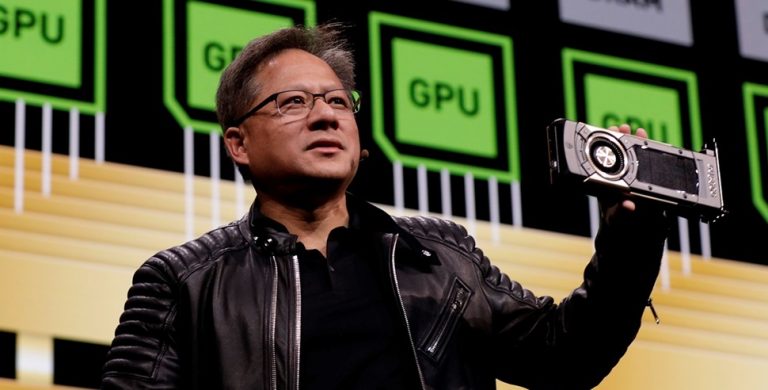
Nvidia CEO Jensen Huang has challenged warnings from leading artificial intelligence companies that the technology requires additional government oversight, saying that calls for new regulation are being presented in a misleading way and could ultimately weaken the rules already on the books.
In an interview with CBS News aired on Sunday, Huang said AI executives calling for greater government intervention were not necessarily seeking stronger safeguards.
“Go and read between the lines,” Huang said, referring to AI leaders calling for government regulation. “They’re actually not asking for more laws. They’re asking to be relieved of the laws we do have.”
Register for the next Tekedia Mini-MBA.
Register for Tekedia AI in Business Masterclass.
Join Tekedia Capital Syndicate and co-invest in great global startups.
“They must be doing it for ulterior reasons,” he added.
Huang said he did not know precisely what those reasons were, but noted that frightening the public about the potential dangers of AI was “irresponsible” and “unnecessary.”
His comments place one of the most influential figures in the AI industry on the opposite side of a prominent debate over how governments should respond to rapidly advancing models and autonomous AI systems.

Huang has repeatedly warned that slowing development in the United States could allow China to gain ground in the global AI competition. He reiterated that position in the CBS interview, noting that American AI companies do not need government intervention to coordinate a slowdown in development.
“We don’t need more regulations,” Huang said. “We need to apply the current regulations we have.”
Huang Challenges Calls for A Slowdown
Huang’s remarks came days after Anthropic CEO Dario Amodei called for a coordinated slowdown in the development of frontier AI systems until stronger safeguards can be established.

In a September 12 essay titled “We Must Pace the Frontier,” Amodei argued that AI capabilities were advancing rapidly enough to create risks that could eventually exceed the ability of humans to control the systems they develop.
His proposed framework included measures aimed at strengthening safeguards around frontier models and called for government involvement, including regulation of leading AI laboratories on antitrust grounds.
Amodei’s essay received support from OpenAI CEO Sam Altman and SpaceX CEO Elon Musk, putting some of the industry’s most prominent executives behind a more interventionist approach to AI governance.
The disagreement is not simply about whether AI can pose risks; it centers on how those risks should be managed and whether government regulation would improve safety without unnecessarily restricting technological development.
Huang’s position is that existing laws should be enforced rather than creating a new regulatory framework. Amodei, by contrast, has argued that the pace and scale of frontier AI development warrant additional measures to keep the technology under human control.
The difference is becoming more significant as AI systems move beyond conventional chatbots into software development, computer use, autonomous agents, and other tasks that allow models to act with less direct human intervention.
Trump Administration Aligns With Huang
Huang’s position also aligns with recent comments from President Donald Trump and senior officials in his administration.
Trump said on Saturday that new regulations were not necessary to ensure the safety of AI and argued that government should avoid restricting the industry’s growth.
“We will not in any way hinder or stifle the Growth of this incredible Industry,” Trump said on Truth Social.
Michael Kratsios, director of the White House Office of Science and Technology Policy, similarly rejected the idea that technology companies require additional government intervention to make their AI systems safe.
In an interview with Fox News on Sunday, Kratsios said AI laboratories could simply stop developing products if they believed those products were dangerous.
Huang has increasingly emerged alongside Trump and presidential adviser David Sacks as a prominent voice against expanding AI regulation. The debate comes as governments face pressure to establish rules around increasingly capable AI systems while companies are investing heavily in the infrastructure needed to develop them.
The issue is a matter of concern for Nvidia because Huang’s company supplies many of the advanced chips used to train and operate frontier AI models. Nvidia has become one of the central beneficiaries of the surge in AI infrastructure spending, making the pace of model development closely connected to demand for its computing hardware.
Huang’s warning about the consequences of slowing US AI development therefore reflects a broader industry concern that tighter restrictions could affect not only software companies but also the infrastructure ecosystem supporting the technology. At the same time, Amodei’s argument indicates the opposing concern: that competition between AI companies could encourage laboratories to prioritize faster capability gains even when the risks associated with increasingly autonomous systems remain unresolved.
That tension is likely to persist as the industry moves into a phase in which AI models are expected to perform complex tasks with greater independence.