

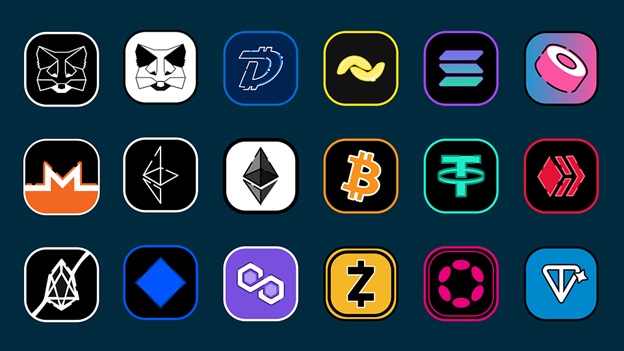
The launch of Ten Thousand Tokens by Tokenworks signals a renewed attempt to formalize how digital value units are created, distributed, and governed in increasingly modular blockchain ecosystems.
While token launches have become routine across decentralized finance, this initiative stands out for its explicit framing: not as a single asset issuance, but as a structured system for generating, managing, and potentially coordinating ten thousand discrete tokens under a unified design philosophy.
The Ten Thousand Tokens project appears to be an experiment in scale economics. Rather than concentrating value and utility into one or two flagship tokens, the model disperses functionality across a large constellation of smaller units. Each token can, in theory, represent a specific function, governance right, data stream, or microeconomic incentive.
This reflects a broader shift in blockchain architecture away from monolithic token systems toward fragmented, application-specific economies. From a design perspective, this approach introduces both composability and complexity. On one hand, modular token systems allow developers and communities to tailor incentives more precisely. For example, one token might govern protocol upgrades, another might subsidize transaction fees.
Register for the next Tekedia Mini-MBA.
Register for Tekedia AI in Business Masterclass.
Join Tekedia Capital Syndicate and co-invest in great global startups.
On the other hand, managing thousands of interacting assets introduces coordination overhead, liquidity fragmentation, and potential governance inefficiencies. The success of such a system depends heavily on whether Tokenworks can design abstraction layers that make the underlying complexity invisible to end users.
Economically, the project challenges traditional assumptions about scarcity in token design. Most crypto ecosystems rely on constrained supply models to drive perceived value. By contrast, Ten Thousand Tokens implies abundance and differentiation rather than scarcity and consolidation. This raises questions about how value accrues across such a broad asset base.
It is likely that Tokenworks will need to introduce indexing mechanisms, basket tokens, or aggregation protocols to prevent liquidity dilution and maintain market coherence.
There is also a governance dimension worth considering. Distributed token ecosystems often struggle with voter apathy and coordination failure, especially as the number of governance instruments increases. If each token carries some form of decision-making power, the cognitive burden on participants may become unsustainable.

A possible mitigation strategy could involve hierarchical governance structures, where subsets of tokens roll up into meta-governance layers that simplify participation while preserving decentralization. Technologically, the initiative reflects growing confidence in blockchain infrastructure maturity. The ability to mint, track, and manage thousands of tokens efficiently requires robust smart contract frameworks, scalable indexing systems, and secure interoperability standards.
It also suggests increasing reliance on automated market makers and algorithmic liquidity routing to ensure that tokens remain tradable despite their proliferation. Strategically, Tokenworks may be positioning Ten Thousand Tokens as a testbed for the next generation of digital economies—ones that resemble ecosystems more than markets. Instead of single-asset speculation, users may participate in a web of interconnected incentives that mirror real-world complexity more closely than earlier crypto models.
The success of Ten Thousand Tokens will depend on whether it can balance scale with usability. If executed effectively, it could redefine how token ecosystems are structured, shifting the industry from isolated digital assets toward deeply interconnected economic networks. If not, it risks becoming another ambitious but unwieldy experiment in over-engineered token design.