

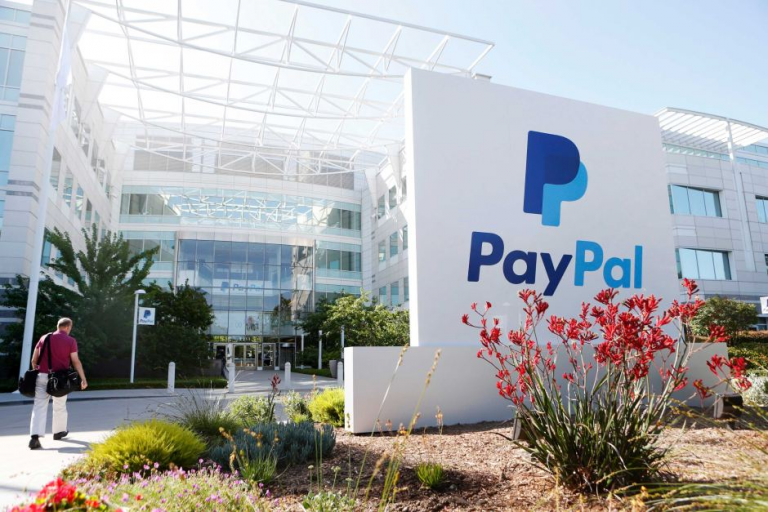
Nigerians have expressed strong criticism over PayPal’s proposed expansion into Africa following reports that the global payments giant is in talks with African fintech companies to launch a cross-border digital wallet platform in 2026.
The planned platform, known as PayPal World, is designed to enable interoperability between global and local digital wallets. Through this system, users would be able to make cross-border payments or shop internationally using a PayPal button connected to their local digital wallets, without the need to open a traditional PayPal account.
Despite the promise of seamless global payments, the announcement has reopened long-standing frustrations among Nigerians, many of whom argue that PayPal’s re-entry comes far too late. Many point to years of restrictions that limited economic opportunities for freelancers, remote workers, and digital entrepreneurs, forcing them to seek alternatives.
Register for Tekedia Mini-MBA edition 20 (June 8 – Sept 5, 2026).
Register for Tekedia AI in Business Masterclass.
Join Tekedia Capital Syndicate and co-invest in great global startups.
Register for Tekedia AI Lab.
Background Story
In the early 2000s, around 2004, PayPal placed heavy restrictions on several sub-Saharan African countries, including Nigeria. While the company did not completely ban Nigerian users, it prevented them from receiving payments, citing high fraud risks linked to stolen credit cards and online scams originating from the region.
At the time, Nigerians could send money through PayPal but were largely unable to withdraw funds to local bank accounts. Although PayPal described the restrictions as temporary, the ban persisted for nearly two decades.
In 2014/2025, PayPal briefly allowed some inflow capabilities, but full merchant functionality remained unavailable, leaving many users excluded from the global digital economy.

Public Reaction in Nigeria
Following news of PayPal’s renewed interest in Africa, Nigerian users across social media have expressed anger and disappointment, describing the move as opportunistic amid new tax regulations.
Many recalled losing access to foreign jobs, freelance gigs, surveys, and remote work opportunities because PayPal was often the only payment option available on global platforms.
Several commentators emphasized that Nigerians were forced to adapt during PayPal’s absence, leading to the rise of homegrown fintech solutions such as Cleva, Raenest, Grey Finance, and others. These platforms now serve thousands of freelancers and businesses, reducing dependence on international payment providers.

Others argued that PayPal underestimated Africa’s growing youth population and tech ecosystem and is only now attempting to tap into a market it previously ignored.
Check out some reactions on X,
@Technical Ben wrote,
“PayPal thinks they’re smart reopening Nigeria. Nigerians survived without them. We lost foreign jobs and gigs for years because of their restrictions, so we adapted. We built alternatives. We moved on. Now they’ve checked Africa’s youth stats and realized how much money they left on the table. Too late mate we have moved on.”
@Ede Ifeanyinchuku wrote,
“Africa has the largest youth population and an exploding tech ecosystem, I guess they are just waking up to that reality and want to get their own slice of the pie. I would argue that they will have a hard time competing with entrenched local players as well as the cultural nuances of winning trust in the African market.”
@Kami_iyo wrote,
“I lost a lot of transcription, survey, and some online jobs because PayPal is the only payment method and now they want to come back like nothing happened, that will never happen we will boycott them. I was in serious financial strain and had these opportunities I couldn’t touch”
@haroldsphinx wrote,
“If Nigerians have any sense of self-worth, they should actually boycott PayPal, there’s absolutely nothing in this life that can make me use PayPal again. This is when we should double down on supporting our own products that have solved that problem for us now”.
@Ossynoya wrote,
“PayPal will burn actually, they are one of the only global payment platforms that totally exclude Africans and Nigerians especially. And they literally gave the most stupid excuse for doing it. Now they want to stroll into the African market like nothing happened.”
@AbiodunØx wrote,
“I guess PayPal won’t fly in this part of the world. They went too far with the exclusionary policy [their excuse was lame]. The most annoying thing was when they only allowed us to send money and not receive it.”
@doctorwalesmd wrote,
“Grey Finance didn’t come this far for people like me to switch to PayPal if they ever decide to unblock services for Africans. They should kindly stay blocked. For me, they are no longer relevant here.”
A Changed Market Landscape
Nigeria’s fintech ecosystem has evolved significantly since PayPal first imposed restrictions. In 2025, the country hosts over 200 fintech startups processing an estimated $100 billion in transactions annually, according to central banking data. This growth has been driven largely by youth-led innovation, increased digital adoption, and solutions tailored to local needs.
As a result, PayPal is no longer entering an underserved market but one dominated by well-established local players with strong user loyalty and deep cultural understanding.
Outlook
PayPal’s planned expansion into Africa signals recognition of the continent’s economic potential, particularly its youthful population and fast-growing digital economy.
While PayPal World may offer technical advantages in cross-border interoperability, success in Nigeria will depend on more than infrastructure. Rebuilding trust, addressing historical grievances, and demonstrating long-term commitment to local markets will be critical. Without these, PayPal risks struggling against entrenched local fintech platforms that have already earned the confidence of Nigerian users.
Ultimately, PayPal’s return may reshape competition in Africa’s payments space, but in Nigeria, the battle will be as much about credibility and timing as it is about technology.
It’s funny how ‘security concerns’ suddenly disappear when the market potential becomes too big to ignore. Just two weeks ago, I launched a petition on Change.org challenging this exact laziness. We barely had 25 signatures when PayPal suddenly announced this 2026 ‘return.’ Coincidence? I don’t think so.
Otto Williams and his team are trying to slip back in because they realized they are losing the wallet war. But let’s be clear: You cannot ghost a market for 20 years, force us to build our own superior infrastructure (Paystack, Flutterwave, PeyGo), and then expect to just plug in like nothing happened. We demand more than just a ‘PayPal World’ button. We demand an apology for the livelihoods destroyed by your ‘send-only’ hypocrisy. We’ve moved on, but if you want back in, you better come with respect this time.
Sarki Amada, CEO, Ingle Meet, PeyGo