

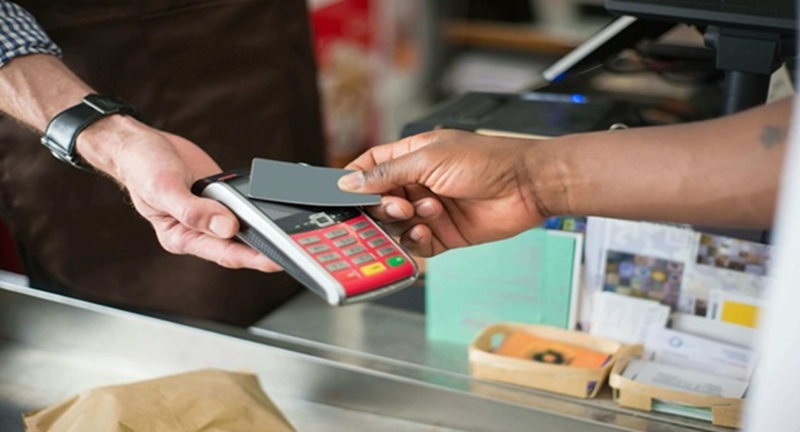
Walk around Singapore today, and it becomes clear very quickly that money no longer behaves the way it used to.
There are no wallets opening at hawker centres. No coins exchanged at convenience stores. No physical counting of change after a purchase. Instead, everything moves through screens – fast, silent, and almost automatic.
A commuter taps into the MRT within seconds. A drink is paid for with a QR scan before the order is even ready. A late-night food delivery is confirmed with a single notification.
It is not just a convenience anymore. It is a completely different relationship with spending.
And the most interesting part is not that Singapore became cashless but how quickly people stopped noticing money moving at all.
Spending that no longer feels like spending
One of the biggest behavioural changes in a fully digital payment environment is how disconnected spending feels from physical reality.
A $3 coffee does not feel like a financial decision. A $12 meal feels routine. Even larger expenses are processed in the same way – a tap, a confirmation, and it is done.
QR payments are now one of the most common ways people pay across retail in Singapore. This shift has reduced friction in everyday spending.
But friction is not just about speed. It also acts as a mental checkpoint.
When that checkpoint disappears, spending starts to feel less “active” and more automatic.
The hidden layer of everyday micro-spending
While big expenses like rent, insurance, and transport remain structured and predictable, the real behavioural shift sits in the smaller layer of daily life.
These are the transactions that barely register:
- Coffee on the way to work
- Food delivery during short breaks
- Subscription renewals running in the background
- Small in-app purchases that feel negligible in isolation
None of these decisions feels important individually. But together, they form a continuous stream of digital spending that is easy to overlook in real time.
This is where Singapore’s cashless system quietly changes behaviour – not by increasing how much people spend, but by changing how often spending happens.
Payment systems now shape decisions, not just transactions
Platforms like PayNow, GrabPay, and integrated banking apps have removed nearly all barriers between intention and payment.
That small detail matters more than it seems.
When paying takes seconds, hesitation disappears. When hesitation disappears, impulse becomes easier to act on.
The result is a financial environment where behaviour is guided less by physical limits and more by system design.
Even the way people categorise spending is changing. Essentials, subscriptions, and leisure are no longer separate in experience – they are all part of the same digital flow.
Digital entertainment and the blending of spending categories
One of the more subtle shifts happening alongside this cashless transition is how entertainment spending has fragmented.
Streaming platforms, mobile games, online memberships, and casual digital services now form part of everyday financial behaviour rather than occasional purchases.
Within online entertainment, users sometimes encounter alternative payment methods in discussions around flexible digital spending, including references to WebMoney casinos in Singapore as part of that wider ecosystem.
This is not treated as a separate financial category in practice. Instead, it sits within the same discretionary space as gaming subscriptions or other online leisure services, all grouped under non-essential digital spending.
What matters here is not the platform itself, but how seamlessly it blends into the broader payment ecosystem.
Why spending is harder to mentally track now
Cash used to provide natural boundaries.
You could see how much you had left. You could feel the reduction in physical money. That visibility created natural pauses in decision-making.
Digital payments remove that layer entirely.
Everything becomes a sequence of small, almost invisible actions – each one logged, stored, and forgotten until reviewed later.
This creates a very specific behavioural effect: spending does not feel heavier, even when it accumulates.
Most people only recognise the full picture when they check monthly summaries and see how many small transactions sit across different categories.
Awareness tools have replaced physical limits
Instead of controlling spending in real time, people now rely on retrospective awareness.
Banking apps, expense trackers, and spending notifications play a much larger role in financial behaviour than before. They do not stop spending – they interpret it after it happens.
The Infocomm Media Development Authority (IMDA) has reported steady growth in digital adoption across Singapore, especially in everyday services like payments and retail, as cashless behaviour becomes the norm.
In practice, this means people adjust their behaviour after reviewing data, not before making decisions.
A lifestyle built on constant micro-decisions
Modern digital spending in Singapore is no longer defined by a few major choices per week.
It is defined by dozens of micro-decisions per day.
A ride booked in seconds. A meal ordered during a short break. A subscription renewed automatically. A digital service activated without much thought.
Each decision feels small on its own. But together, they create a continuous pattern of spending that runs quietly in the background of daily life.
This is not a dramatic change in behaviour but a gradual change in awareness.
The broader effect of a cashless society
Singapore’s cashless system is often discussed in terms of efficiency, speed, and innovation. And all of that is true.
But the more interesting impact is behavioural.
Money has not disappeared. It has simply become less visible in the moment it is used.
That changes how people interact with it. Not in obvious ways, but in subtle shifts in attention, timing, and perception.
Instead of seeing money leave their hands, people see numbers update on a screen.
And over time, that difference shapes how spending is experienced.
Closing reflection
Singapore’s transition into a fully cashless society has not changed the fundamentals of what people buy.
What has changed is how those decisions feel while they are happening.
Spending has become faster, quieter, and more fragmented – spread across countless small moments rather than a few visible ones.
And in that shift, money has not become less important. It has simply become less noticeable.