

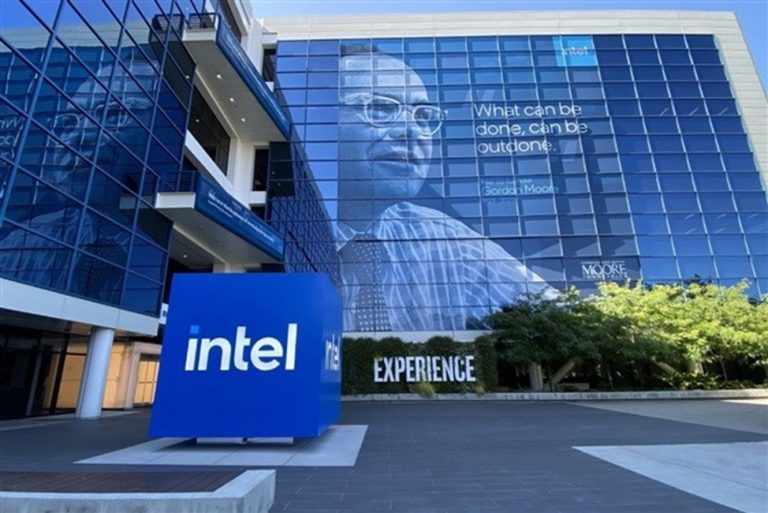
Intel’s financial chief, David Zinsner, lifted the lid on fresh details surrounding the company’s controversial partnership with the Trump administration, disclosing that the semiconductor giant received a $5.7 billion cash infusion from the U.S. government on Wednesday night.
The transaction forms part of a larger agreement struck last week, in which Washington acquired a 10 percent equity stake in Intel—a move that has rattled investors and reignited debate about the state’s growing role in the private technology sector. Speaking at a Deutsche Bank investor conference on Thursday, Zinsner described the arrangement as both a lifeline and a constraint for Intel’s fragile foundry unit, the arm of the business that manufactures chips for outside firms but has been bleeding money.
The structure of the deal underscores Washington’s determination to keep control over Intel’s strategic decisions. According to Zinsner, the agreement includes a five-year warrant that allows the government to scoop up an additional 5 percent of Intel’s shares—priced at $20 apiece—if the company dilutes its ownership of the foundry below 51 percent. That effectively prevents Intel from spinning off or selling the foundry business to outside buyers.
Register for Tekedia Mini-MBA edition 20 (June 8 – Sept 5, 2026).
Register for Tekedia AI in Business Masterclass.
Join Tekedia Capital Syndicate and co-invest in great global startups.
Register for Tekedia AI Lab.
“I think from the government’s perspective, they were aligned with that; they didn’t want to see us take the business and spin it off or sell it to somebody,” Zinsner told investors, making clear that the Trump administration insisted on conditions that safeguard U.S. control over semiconductor production.
The deal also delivers near-term liquidity for Intel, which has been under enormous pressure to raise funds. Zinsner hinted that the company could turn to private investors to bankroll growth in its foundry division, describing it as a “second opportunity” for cash injection. But the problem is stark: Intel Foundry reported an operating loss of $3.1 billion in the second quarter, and analysts have repeatedly called for a spin-off or restructuring to stem the bleeding.
The White House has portrayed the investment as part of its broader industrial policy to reshore semiconductor manufacturing and reduce reliance on Taiwan Semiconductor Manufacturing Company (TSMC), the world’s dominant chipmaker. Press secretary Karoline Leavitt told reporters Thursday that the Intel deal remains under discussion.

“The T’s are still being crossed, the I’s are still being dotted,” she said.
Still, Intel itself is bracing for turbulence. In a corporate filing on Monday, the company admitted the arrangement could trigger backlash.
“There could be adverse reactions, immediately or over time, from investors, employees, customers, suppliers, other business or commercial partners, foreign governments or competitors,” the filing stated, adding that litigation and heightened political scrutiny could follow.

The once-unassailable American chipmaker has lost ground over the past decade to rivals like TSMC and Samsung, while costly delays and weak execution have hindered its own turnaround. The foundry unit, in particular, has been a point of contention. Last fall, serious discussions about spinning it out were reportedly underway, only to collapse after the abrupt retirement of Pat Gelsinger, the architect of Intel’s foundry strategy.
With Washington now holding significant leverage through both its equity stake and the warrant, Intel’s path forward is narrowing. Analysts warn that the company must juggle its need for capital against the political imperatives of a government intent on preserving domestic chipmaking. What was once a private boardroom debate about restructuring has now become a matter of national policy.