

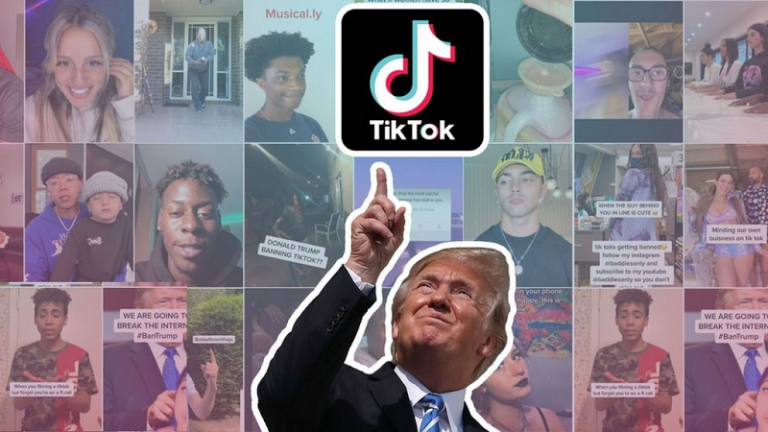
President Donald Trump has once again delayed enforcement of the divestment order against TikTok’s U.S. operations, marking the third time since assuming office in January that the administration has moved the deadline.
The new 90-day extension, confirmed by White House Press Secretary Karoline Leavitt on Wednesday, pushes the cutoff to September 17, 2025, offering China’s ByteDance more time to negotiate the sale of TikTok’s American business.
“President Trump will sign an additional Executive Order this week to keep TikTok up and running,” she said. “As he has said many times, President Trump does not want TikTok to go dark. This extension will last 90 days, which the Administration will spend working to ensure this deal is closed so that the American people can continue to use TikTok with the assurance that their data is safe and secure.”
Register for Tekedia Mini-MBA edition 20 (June 8 – Sept 5, 2026).
Register for Tekedia AI in Business Masterclass.
Join Tekedia Capital Syndicate and co-invest in great global startups.
Register for Tekedia AI Lab.
The reprieve comes just days ahead of the original June 19 deadline mandated under a national security law that the U.S. Supreme Court upheld shortly before Trump’s second inauguration. The law, passed in April 2024 with bipartisan support, requires ByteDance to divest its U.S. TikTok assets or face a ban, with penalties extending to app store operators like Apple and Google and internet service providers that support the app.
Political, Legal, and Market Friction
The extensions have already provoked strong reactions on Capitol Hill, especially from Senate Republicans who argue the law was explicit in allowing only one 90-day reprieve.
Legal experts say Trump’s action could open the door for lawsuits challenging executive overreach.

Despite the legal ambiguity, Trump has been consistent in stating he does not want TikTok shut down entirely. Speaking to NBC News last month, he reiterated that while data security is a legitimate concern, banning the app outright could hurt younger people who use it regularly.
There is also strategic political calculus behind the decision. TikTok played a key role in social media outreach during the 2024 campaign. Though Trump has been vocally critical of the platform in the past, his current stance seeks to balance national security fears with user base sensitivities and diplomatic considerations with Beijing.
Several entities, including Oracle, AppLovin, and Frank McCourt’s Project Liberty, have expressed interest in acquiring TikTok’s U.S. assets. However, negotiations have stalled amid ongoing uncertainty about whether the Chinese government would approve such a sale. Observers believe the stalemate reflects broader trade and diplomatic tensions between Washington and Beijing.

Notably, a previous TikTok shutdown in January led to the app being briefly removed from the Apple App Store and Google Play. It returned only after Trump’s initial executive order granted a delay. The same scenario could recur if no concrete sale agreement is reached by the new September deadline.
Trump’s administration has privately hinted that tariffs or other trade levers could be adjusted to break the deadlock with Beijing.
TikTok remains one of the most popular social media platforms in the United States, boasting over 170 million users and generating $10.4 billion in ad revenue in 2024 alone. Its user base, content creators, and advertisers have expressed relief at the extension, but uncertainty over the app’s long-term future continues to cloud business decisions.
According to a recent Pew Research survey, public sentiment against a TikTok ban is declining. Only about one-third of Americans now support removing the app, compared to nearly half in 2023.
Analysts say rivals like Meta (owner of Instagram and Facebook), Snap, and Reddit could benefit from prolonged ambiguity, possibly absorbing creators and ad budgets that might otherwise remain with TikTok.
A Crucial Three Months Ahead
The Trump administration insists the additional 90 days will be used to finalize a deal that secures American user data and ensures operational independence from China. National Security Adviser Michael Waltz and Vice President JD Vance are reportedly spearheading negotiations with potential acquirers.
In the background, ByteDance is also managing litigation and lobbying. Legal experts point out that the Supreme Court’s ruling upholding the law puts pressure on ByteDance to act swiftly.
Some legal experts have argued that there’s no fourth extension authorized by law, and if this deal isn’t closed by September, enforcement becomes inevitable unless Congress rewrites the statute.
However, TikTok will remain online and fully functional in the United States, with its fate hinging on the outcome of high-stakes talks between tech giants, lawmakers, and diplomats. The next three months are expected to determine the future of the embattled short-form video app.