

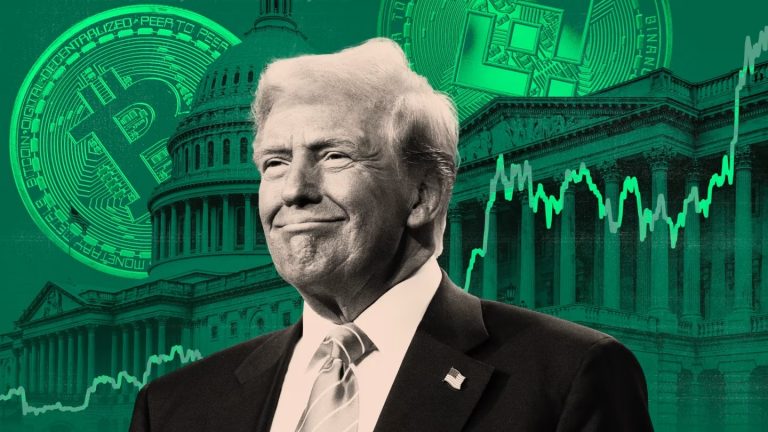
U.S. President Donald Trump has responded to questions surrounding the record $6.3 billion Binance hack, downplaying concerns over the incident while suggesting that the United States could engage North Korea over the matter.
Speaking to reporters around the same period, President Donald Trump addressed the incident saying,
“I’m not concerned. We’re learning about it. We don’t know if it’s North Korea, but if it is, we’ll talk to North Korea about it.”
Register for the next Tekedia Mini-MBA.
Register for Tekedia AI in Business Masterclass.
Join Tekedia Capital Syndicate and co-invest in great global startups.
His remarks come amid growing scrutiny of the cyberattack, which has raised questions about the security of cryptocurrency platforms and the involvement of state-linked hacking groups in major digital asset thefts.
Recall that on October 29, 2026, the world’s largest cryptocurrency exchange, Binance, suffered the biggest digital asset theft in history when attackers drained approximately $6.3 billion to $6.4 billion from its hot wallets across multiple blockchains in a rapid operation lasting roughly 20 minutes.
The breach, which began with what Binance described as a compromised DevOps engineer’s laptop and involved sophisticated malware designed to erase traces, forced the platform to pause withdrawals while it worked to secure systems and reassure users.

Blockchain intelligence firms including TRM Labs, Chainalysis, and Elliptic quickly analyzed the on-chain movements and attributed the attack with high confidence to TraderTraitor, a North Korean state-sponsored hacking group previously linked to major thefts such as the $1.5 billion Bybit incident in 2025.
The FBI formally confirmed the attribution on or around October 31, stating that North Korea was responsible for the theft of more than $6 billion in virtual assets and identifying the activity as TraderTraitor.
Officials noted that the perpetrators were primarily converting stolen funds into Ethereum and expected further laundering through decentralized finance platforms and instant swap services.

The FBI, together with the U.S. Secret Service and IRS Criminal Investigation, published lists of hundreds of associated addresses and urged industry participants to block related transactions.
Binance responded by pledging to fully cover all user losses using company resources. It set aside more than $6.34 billion, quickly replenished around 90 to 95 percent of the stolen assets by purchasing replacement tokens, and worked with partners such as Tether and Circle to freeze approximately $2.7 billion to $3 billion in stolen stablecoins.
Withdrawals resumed in phases starting November 1, beginning with major assets including Bitcoin, Ethereum, USDT, and others. Users responded by withdrawing billions, with net outflows reported in the range of $3.6 billion to $3.7 billion as confidence was tested, though the exchange’s overall reserves remained substantial.
The scale of the theft underscores North Korea’s growing reliance on cryptocurrency operations as a source of hard currency to evade international sanctions.
North Korean state-sponsored hackers have stolen approximately $12.8 billion in cryptocurrency across nearly 100 incidents since 2017, a figure equivalent to roughly 45% of the country’s estimated GDP, according to blockchain analytics firm TRM Labs.
Of the $12.8 billion total, $7.4 billion was taken in 2026 alone, accounting for 85% of all global cryptocurrency hack value year-to-date, according to TRM. That share has climbed steadily from just 7% in 2020, to 63% in 2025.
The dominant incident was the October 29, 2026, attack on Binance, the world’s largest crypto exchange by volume. Attackers drained roughly $6.36 billion from hot wallets across ten blockchains in about 20 minutes starting around 20:05 UTC.
TRM Labs attributed the heist with high confidence to TraderTraitor, a North Korean unit linked to the broader Lazarus Group and previously blamed for the $1.5 billion Bybit hack in February 2025. The FBI later confirmed the attribution.
Other major contributions to North Korea’s cumulative total include the Bybit, Ronin, Bitget, and DMM Bitcoin breaches. Just five infrastructure compromises account for about $9.1 billion of the $12.8 billion overall.
For Binance and the broader industry, the episode has highlighted both the persistent risks of centralized hot wallets and the effectiveness of rapid industry cooperation in freezing assets and restoring user balances.
As of early November 2026, Binance continues its phased return to normal operations, publishes updated proof-of-reserves data, and works with law enforcement on recovery efforts.
The majority of liquid assets have been replaced, though less liquid tokens remain a smaller outstanding challenge. The FBI’s public address lists and calls for industry blocking continue to shape the laundering landscape.
Trump’s willingness to discuss the matter with North Korea adds a diplomatic dimension to what remains one of the most significant cybersecurity and financial events of the year.
Outlook
Going forward, the Binance hack is expected to intensify scrutiny of cryptocurrency exchange security, particularly the management of hot wallets, internal access controls and vulnerabilities within operational infrastructure.
While Binance’s commitment to reimburse affected users and its collaboration with blockchain security firms have helped contain some of the immediate financial concerns, the incident could have longer-term implications for institutional confidence in centralized cryptocurrency exchanges.
The diplomatic dimension also remains uncertain. Although Trump has indicated that Washington could engage Pyongyang if its involvement is established, it remains unclear whether the incident will lead to direct diplomatic discussions, additional sanctions or coordinated cybersecurity measures against North Korean hacking networks.
Meanwhile, the race to recover the stolen assets is expected to remain a major priority for Binance, law enforcement agencies and blockchain intelligence firms.
With billions of dollars still potentially beyond the reach of asset-freezing mechanisms, investigators face the challenge of tracking funds as attackers move them across decentralized platforms and blockchain networks.
Ultimately, the incident could become a turning point for cryptocurrency security, pushing exchanges to strengthen internal cybersecurity infrastructure, improve real-time threat detection and deepen cooperation with regulators and law enforcement.
For Binance, restoring user confidence will depend not only on replacing stolen assets but also on demonstrating that its security systems can withstand increasingly sophisticated state-sponsored cyberattacks.