

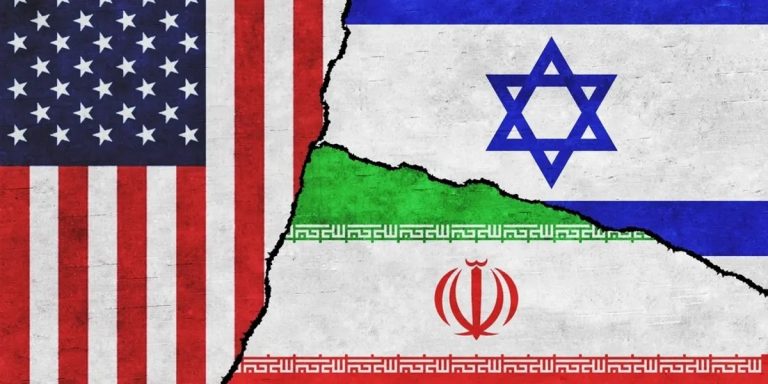
President Donald Trump is weighing a critical decision that could shift the trajectory of the escalating conflict between Israel and Iran.
According to White House press secretary Karoline Leavitt, Trump will make a final call “within the next two weeks” on whether the United States will militarily support Israel’s strikes on Iranian nuclear facilities.
The president’s decision comes amid mounting fears of a broader regional war and growing global concern over energy security. Trump, known for his “peace through strength” philosophy, has publicly signaled a preference for diplomacy, but his administration has also hinted at readiness to act militarily if necessary.
Register for Tekedia Mini-MBA edition 20 (June 8 – Sept 5, 2026).
Register for Tekedia AI in Business Masterclass.
Join Tekedia Capital Syndicate and co-invest in great global startups.
Register for Tekedia AI Lab.
“Based on the fact that there’s a substantial chance of negotiations that may or may not take place with Iran in the near future, I will make my decision whether or not to go within the next two weeks,” Leavitt quoted Trump as saying.
However, even as Washington signals openness to diplomacy, its support for Israel’s unilateral attacks, including the June 13 strike on Iran, has sparked speculation that U.S. involvement may be a matter of timing rather than debate. Trump’s special envoy, Steve Witkoff, has reportedly held several phone conversations with Iranian Foreign Minister Abbas Araghchi since the bombardment began. The EU has also stepped in, convening talks in Geneva with the foreign ministers of Britain, France, and Germany, in an attempt to cool tensions.
Iran Warns of Retaliation: Strait of Hormuz in the Crosshairs
As U.S. deliberations drag on, Iran is making it clear that American intervention will not go unanswered. A senior member of Iran’s parliament, Behnam Saeedi, said on Thursday that closing the Strait of Hormuz—the world’s most critical oil transit chokepoint—is among the options Tehran is considering in response to its enemies.

“Iran has numerous options to respond to its enemies… Closing the Strait of Hormuz is one of them,” Saeedi told the semi-official Mehr news agency.
While another lawmaker, Ali Yazdikhah, noted that Iran would allow continued shipping in the strait “so long as its vital national interests were not at risk,” he emphasized that U.S. military engagement would cross that line.
“If the United States officially and operationally enters the war… it is the legitimate right of Iran to disrupt the ease of oil transit,” Yazdikhah said.

Iran has issued similar threats in the past, but the current situation marks the first time in years that the strategic passage could realistically be jeopardized. About 20% of global oil consumption—around 18 million barrels per day—passes through the Strait, which is only 33 km wide at its narrowest point. It serves as the primary conduit for crude oil exports from Gulf states, including Saudi Arabia, Iraq, Kuwait, and the UAE.
Commercial ships have already begun avoiding Iranian waters near the strait, according to shipping trackers and maritime analysts, underlining that the threat is being taken seriously.
Oil Prices React Sharply, Markets Brace for Impact
Energy markets are already jittery. Brent crude rose by nearly 3% to hover around $78.85 per barrel, while WTI climbed to $77.20, as traders priced in geopolitical risk.
Analysts warn that a full-blown U.S. attack on Iran—or Iranian retaliation that disrupts oil flows—could send prices skyrocketing. JPMorgan analysts estimate that in a worst-case scenario involving 3 million barrels per day going offline, oil could surge to $120–130 per barrel. Citi forecasts a more moderate rise to $90 if about 1.1 million barrels are disrupted, a scenario already viewed as plausible if Iran takes early action.
Higher oil prices would ripple through the global economy. U.S. gasoline prices could spike to over $4 per gallon, and developing countries would face steeper import bills and slower growth. Insurance costs for shipping in the Gulf are also expected to climb sharply.
Despite clear military signaling, Trump has publicly denied reports suggesting he has already approved a strike on Iran. Responding to a Wall Street Journal article, the president wrote on Truth Social: “The Wall Street Journal has no idea what my thoughts are concerning Iran!”
Al Jazeera’s senior political analyst, Marwan Bishara, suggests that Trump’s ambiguous stance could be deliberate—“a pretext to camouflage whatever his intentions are and attack tomorrow,” he said.
Tehran, meanwhile, remains skeptical of U.S. intentions. Al Jazeera’s correspondent in Doha, Doha Jabbari, noted that “assuming the Israelis have the green light from the Americans… there is going to be very little trust there.”
However, Iran is sending its diplomats to Geneva for EU-led talks, understanding the optics of walking away from diplomacy would paint Tehran as the aggressor.
Global Pressure Mounts
Russia and China have both warned against U.S. entry into the conflict and called for an immediate ceasefire. The Kremlin labeled Israel’s strikes on Iranian nuclear sites “reckless” and urged all parties to de-escalate. Beijing, which imports a significant portion of its energy through the Gulf, has also lobbied for diplomatic channels to remain open.
The International Atomic Energy Agency (IAEA) and UN Secretary-General António Guterres have both expressed concern at the rapid deterioration of regional stability and called for restraint on all sides.
For now, the world watches and waits as Trump weighs one of the most consequential decisions of his presidency. With diplomatic channels still active and European nations scrambling to mediate, there remains a narrow window to avoid direct confrontation.
But if talks collapse or Israel intensifies its military campaign, the calculus in Washington could shift. If the U.S. enters the war, Iran has made it clear that the price may be felt not only in the Middle East—but at gas stations, shipping ports, and stock exchanges across the world.