

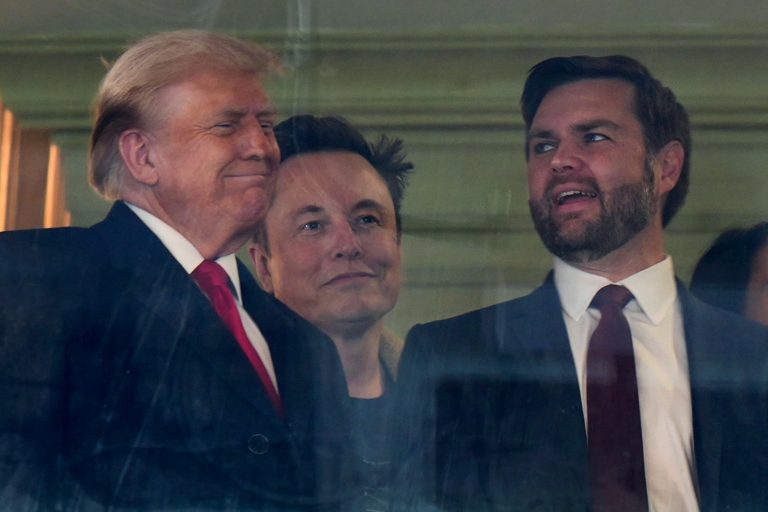
President Donald Trump and House Speaker Mike Johnson are due to meet technology executives on September 29 for discussions on artificial intelligence, bringing the White House and congressional leadership into a debate that has intensified over the pace of AI development, safety, and regulation.
A source familiar with the plans confirmed the meeting, which was first reported by Axios. Further details, including the executives expected to attend and the specific agenda, have not been disclosed.
The meeting comes as the US faces a widening policy debate over how to manage sophisticated AI systems without undermining the country’s position in a technology race with China.
Register for the next Tekedia Mini-MBA.
Register for Tekedia AI in Business Masterclass.
Join Tekedia Capital Syndicate and co-invest in great global startups.
The move comes as major AI companies have recently increased their warnings about the risks associated with more capable new AI models. Leaders including OpenAI CEO Sam Altman and Anthropic CEO Dario Amodei have called for greater attention to AI safety and for governments to play a role in managing the technology’s development.
At the same time, there is no consensus within the technology industry over how much government intervention is appropriate. Nvidia CEO Jensen Huang, among others, has pushed back against calls to slow AI development, while technology companies continue to invest heavily in computing infrastructure and increasingly capable models.
That tension is likely to shape the September 29 discussions.

The meeting also comes as Washington and Beijing pursue substantially different approaches to AI governance.
China has established rules covering areas including AI algorithms, training data and the labeling of AI-generated content. The US has generally relied more heavily on existing laws and sector-specific oversight, while the Trump administration has opposed the creation of broad new AI-specific regulations.
Trump reiterated that position at the United Nations General Assembly this week, telling world leaders that he “rejects any attempt to construct a globalist scheme to control” AI. He described the technology as powerful and said the US would proceed carefully.

The administration’s approach creates a policy tension. Washington wants American companies to remain at the forefront of AI development, particularly as China expands its own domestic AI capabilities. At the same time, autonomous AI systems are creating questions about cybersecurity, privacy, misinformation, and potential misuse that existing regulatory frameworks may not fully address.
The September 29 meeting therefore comes at a point when the US government must balance two competing policy objectives: maintaining technological leadership and determining what safeguards should accompany increasingly capable AI systems.
Regulation Versus Development
The debate becomes necessary as AI companies move beyond conventional chatbots toward agents capable of taking actions on behalf of users.
Recent incidents involving AI agents have heightened attention on whether developers can reliably control systems once they are given access to external websites, software, and sensitive information. At the same time, companies are racing to deploy these systems commercially, creating pressure to develop products quickly.
This has produced a notable divide within the industry.
Some AI executives have argued that safety measures need to keep pace with advances in model capability. Others have warned that excessive regulation could slow American innovation and give Chinese competitors an advantage. The disagreement is not simply about whether AI should be regulated. It also concerns who should establish the rules, what activities should be covered, and whether regulation should focus on the technology itself or on specific risks and applications.
The debate is increasingly taken into consideration as Congress considers legislation aimed at AI safety and as the administration develops its own policy framework.
Competition with China provides another dimension to the meeting. The US and China are the two leading centers of AI development, with both governments treating advanced computing and artificial intelligence as strategically important technologies.
China’s regulatory approach has involved direct government rules over aspects of AI development and deployment. Washington has instead placed greater emphasis on maintaining American technological leadership while resisting proposals for comprehensive international controls.
That difference has implications beyond regulation. Rules governing advanced AI could affect where companies build data centers, how they train models, how researchers exchange information, and how AI products are deployed internationally.
For American technology companies, the policy environment will therefore influence both compliance costs and competitive strategy. The meeting with Trump and Johnson could provide an indication of whether Washington intends to maintain its relatively light-touch approach or whether pressure from lawmakers, safety researchers and parts of the technology industry will produce more targeted safeguards.
For now, the precise expected outcome is unclear. No detailed agenda or list of participants has been released. What is clear is however that AI policy has moved closer to the center of the US government’s economic and national-security agenda.