

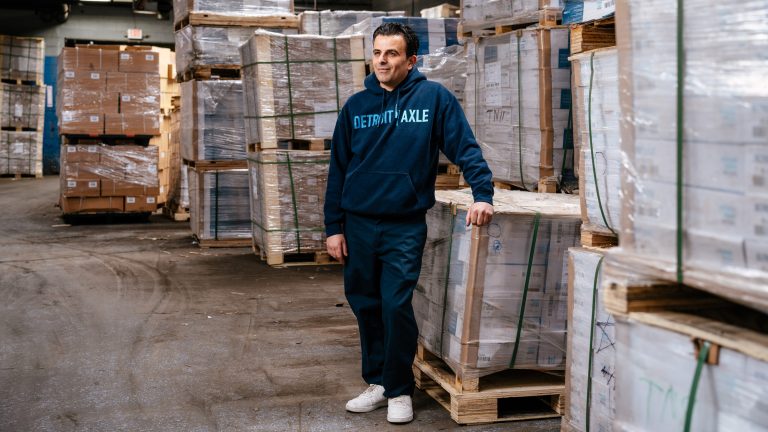
A federal trade court on Monday declined to halt President Donald Trump’s order ending tariff exemptions for low-value goods imported into the U.S., a blow to auto parts retailer Detroit Axle, which had warned the move could cripple its business and force mass layoffs.
The U.S. Court of International Trade ruled that Detroit Axle’s lawsuit, filed in May, overlaps with a broader, ongoing case already challenging Trump’s sweeping trade measures, including his now-paused “reciprocal” tariffs. That case, V.O.S. Selections v. Trump, is already awaiting resolution in a federal appeals court.
In a brief but pointed opinion, the three-judge panel said it would not issue what it called “redundant, contingent relief,” effectively shelving Detroit Axle’s plea for emergency protection from the new import restrictions.
Register for Tekedia Mini-MBA edition 20 (June 8 – Sept 5, 2026).
Register for Tekedia AI in Business Masterclass.
Join Tekedia Capital Syndicate and co-invest in great global startups.
Register for Tekedia AI Lab.
“This court has already granted, and the Federal Circuit subsequently stayed, all relief Axle requests,” the panel said, referring to the earlier V.O.S. case, where a ruling in May struck down Trump’s tariff authority before it was quickly stayed on appeal. The court has now stayed Detroit Axle’s case pending the outcome of that larger legal battle, which is scheduled for oral arguments this Thursday.
Detroit Axle, based in Michigan, had asked the court for a preliminary injunction against Trump’s April 3 executive order that revoked the de minimis exemption. This rule allowed goods valued below $800 to enter the country without tariffs. The exemption, long criticized by domestic manufacturers but widely used by e-commerce platforms like Shein and Temu, had become a lifeline for Detroit Axle amid the pressure of earlier tariffs imposed during Trump’s first term.
The company claimed that by routing orders through a distribution facility in Juarez, Mexico, and keeping shipment values under the $800 cap, it was able to maintain competitive prices and expand its U.S. customer base without incurring heavy import duties. That strategy has now collapsed under Trump’s latest action, which bans de minimis treatment specifically for Chinese-origin goods, citing a crackdown on “deceptive shipping practices” and hidden contraband such as synthetic opioids.

In court filings, Detroit Axle described the impact of Trump’s order as “swift and catastrophic,” saying the tariffs — now reaching as high as 72.5% on some Chinese parts — had made its operations financially untenable.
“Its frugal buyers will not bear the increased prices, and Detroit Axle cannot absorb them,” the company wrote, warning that without relief it would deplete its inventory by June and be forced to shutter facilities and lay off workers.
That scenario is now unfolding. In a June state filing, Detroit Axle confirmed plans to close its Ferndale, Michigan, warehouse and lay off 102 employees by August 25, citing “unforeseen circumstances” triggered by Trump’s trade actions. The company said the sudden tariff hike had severely disrupted its supply chain and left it with no viable way to sustain operations under the new cost burden.

While the company’s legal options now hinge on the fate of the broader appeal in the V.O.S. case, the immediate consequences are already hitting home. Trump’s move to aggressively curtail de minimis imports has stirred fears of collateral damage beyond Chinese online retailers, affecting small and mid-sized American firms like Detroit Axle that have built business models around low-cost international sourcing.
The broader fallout from Trump’s trade policies is being felt not only in domestic manufacturing but also across the globe, with U.S. allies and companies that had once benefited from the very global trade practices his administration is now seeking to shut down on the receiving end.