

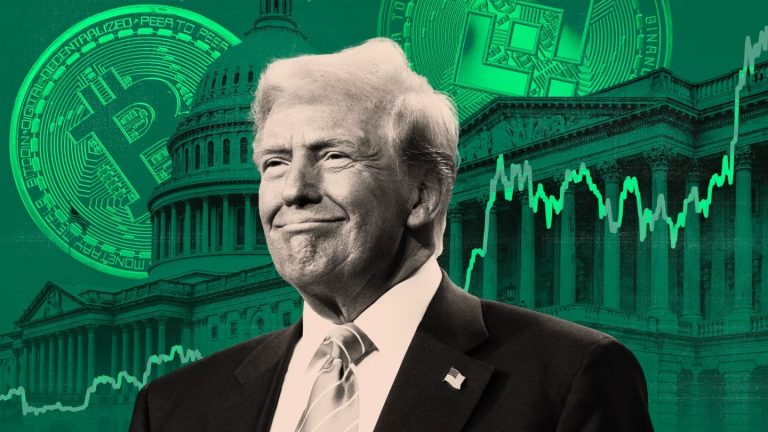
Trump’s latest remarks about his family’s cryptocurrency earnings have reignited debate over the growing intersection of politics, digital assets, and personal financial interests. During a recent interview, the U.S. president claimed that he did not know how much money his family had made from crypto-related ventures.
The statement immediately drew attention from political observers, financial analysts, and cryptocurrency enthusiasts, many of whom have closely followed the Trump family’s increasing involvement in the digital asset industry.
Over the past few years, members of the Trump family have become associated with several cryptocurrency initiatives, including non-fungible token (NFT) collections, decentralized finance (DeFi) projects, stablecoin ventures, and digital asset investment platforms.
Register for the next Tekedia Mini-MBA.
Register for Tekedia AI in Business Masterclass.
Join Tekedia Capital Syndicate and co-invest in great global startups.
These activities have generated substantial public interest, particularly as cryptocurrency continues to evolve from a niche technology into a significant component of global finance. As a result, questions surrounding transparency and financial disclosure have become increasingly important whenever public officials or their families participate in the sector.
During the interview, Trump emphasized that he had not kept track of the financial returns generated by these crypto ventures. He suggested that while his family had been active in the industry, he was not personally monitoring the profits or calculating the total earnings.
His comments appeared intended to distance himself from the day-to-day financial details of his family’s investments, although they also prompted renewed scrutiny over how closely political leaders should oversee business interests connected to emerging financial markets.
The cryptocurrency sector has experienced rapid growth despite periods of intense volatility. Rising institutional adoption, expanding regulatory discussions, and technological innovation have created new opportunities for entrepreneurs and investors alike.

Public figures have increasingly entered the space through endorsements, partnerships, NFT launches, and blockchain-related businesses. However, such involvement often raises concerns about conflicts of interest, especially when policymakers have influence over regulations that could directly affect the value of digital assets.
Critics argue that elected officials should maintain complete transparency regarding financial interests that could intersect with public policy. They contend that even if a politician is not directly managing a family business, significant profits earned by close relatives may still create the appearance of potential conflicts.
Supporters, on the other hand, maintain that adult family members have the right to pursue legitimate business opportunities independently and that politicians cannot reasonably be expected to know every detail of their relatives’ financial affairs.
Trump’s comments arrive at a time when cryptocurrency regulation remains a major policy issue in the United States. Lawmakers and regulatory agencies continue to debate how digital assets should be classified, taxed, and supervised.

Decisions regarding stablecoins, securities laws, consumer protections, and anti-money laundering rules could have profound effects on the industry’s future. Consequently, any financial ties between government leaders and crypto-related businesses are likely to receive heightened public attention.
The episode also highlights the broader relationship between politics and financial innovation. As blockchain technology becomes more integrated into mainstream finance, more public officials, investors, and corporations are expected to engage with the sector.
This trend underscores the importance of robust disclosure standards and clear ethical guidelines that help maintain public confidence while allowing innovation to continue.
Trump’s assertion that he does not know how much his family has earned from cryptocurrency has fueled fresh discussion about accountability, transparency, and the evolving role of digital assets in modern politics.
Regardless of differing political perspectives, the controversy illustrates how closely financial activities connected to cryptocurrency are now scrutinized when they involve influential public figures, reinforcing the growing significance of digital assets in both economic and political discourse.
Philippines Welcomes Binance as NFT Market Watches Machi Big Brother’s Latest Moves
Meanwhile, the cryptocurrency industry continues to evolve through a combination of major corporate developments and notable activity from influential investors. Two recent stories highlight these contrasting trends: prominent NFT collector Machi Big Brother continues to reduce his holdings of Bored Ape Yacht Club (BAYC) NFTs, while Binance has secured regulatory approval to operate in the Philippines.
These developments reflect the changing priorities of the digital asset ecosystem, where market maturity increasingly depends on both investor behavior and regulatory progress. Machi Big Brother, one of the most recognizable figures in the NFT community, has once again drawn attention after selling additional Bored Ape Yacht Club NFTs.
Over the past few years, Machi has built a reputation as one of the largest holders and most active traders of blue-chip NFTs. His transactions are closely monitored because they often influence market sentiment and can affect the perceived value of collections like Bored Ape Yacht Club.
The continued sale of Bored Apes has sparked speculation among collectors and investors. Some believe the sales represent a strategic portfolio rebalancing, allowing Machi to diversify into other digital assets or realize profits accumulated during previous market cycles.
Others interpret the move as a sign that even experienced NFT investors are becoming more cautious amid shifting market dynamics. Regardless of the motivation, high-profile sales often create short-term price volatility and encourage traders to reassess the long-term outlook for the NFT market.
Despite the recent sales, Bored Ape Yacht Club remains one of the most recognized NFT collections in the world. Developed by Yuga Labs, the collection has expanded beyond digital collectibles into gaming, metaverse initiatives, intellectual property licensing, and exclusive community experiences.
While NFT trading volumes have declined from their peak during the 2021 boom, established collections continue to serve as important benchmarks for the sector. At the same time, another major development is taking place on the cryptocurrency exchange front.
Binance has reportedly secured approval to operate in the Philippines, marking another important milestone in the company’s global regulatory strategy. The approval reflects Binance’s ongoing efforts to work with regulators and establish compliant operations in key international markets.
The Philippines has emerged as one of Southeast Asia’s most active cryptocurrency markets.
A young, digitally connected population, growing smartphone adoption, and widespread use of digital payment platforms have contributed to increasing interest in cryptocurrencies and blockchain technology. The country also became well known during the play-to-earn gaming boom, when blockchain-based games attracted millions of Filipino users seeking additional income opportunities.
For Binance, gaining regulatory approval strengthens its presence in an important regional market. The exchange has spent the past several years improving its compliance framework, expanding anti-money laundering controls, and engaging with financial regulators worldwide after facing increased scrutiny in multiple jurisdictions.
Securing approval demonstrates progress in rebuilding trust with regulators while positioning the company for sustainable long-term growth. The combination of these two developments illustrates the evolving nature of the digital asset industry.
On one hand, NFT investors are becoming increasingly strategic, with large holders actively managing portfolios in response to changing market conditions. On the other hand, cryptocurrency infrastructure continues to mature as exchanges prioritize regulatory compliance and expand into jurisdictions that embrace digital finance.
The future of the crypto ecosystem will depend on balancing innovation with stability. Influential investors like Machi Big Brother will continue to shape market sentiment through their trading decisions, while regulated platforms such as Binance play a critical role in expanding mainstream access to digital assets.
These trends signal an industry that is gradually transitioning from speculative enthusiasm toward greater institutional credibility, regulatory oversight, and long-term sustainability.