

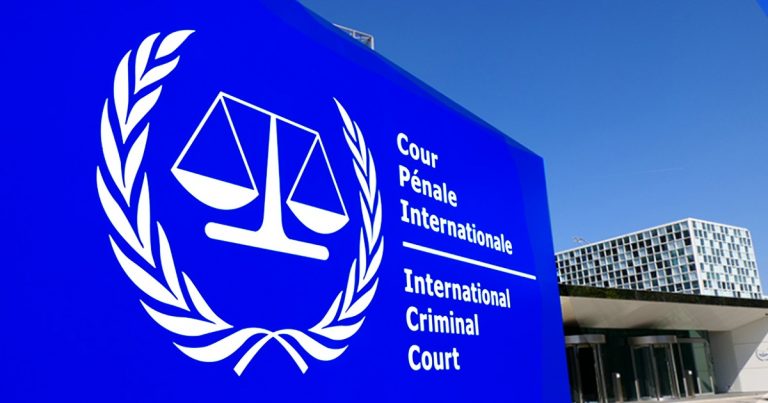
The decision by Microsoft to abruptly suspend the official email account of International Criminal Court (ICC) prosecutor Karim Khan has done more than disrupt communication within the court—it has triggered a continental alarm in Europe, forcing governments and institutions to confront a long-ignored vulnerability: the overwhelming reliance on American technology.
According to The New York Times, the move followed a February executive order from United States President Donald Trump, who imposed sanctions on Khan over his investigation into alleged war crimes by Israel in Gaza. Microsoft, a key digital service provider for the ICC for years, complied swiftly—cutting off Khan’s court email and effectively freezing him out of internal communications. The decision came just months after the court issued an arrest warrant for Israeli Prime Minister Benjamin Netanyahu.
Though Microsoft said it acted after consultation with the court, the broader message sent across Europe was unmistakable. The episode highlighted how deeply European institutions remain entangled in US-controlled digital systems—and how easily those tools can be leveraged or withdrawn based on political calculations in Washington.
Register for Tekedia Mini-MBA edition 20 (June 8 – Sept 5, 2026).
Register for Tekedia AI in Business Masterclass.
Join Tekedia Capital Syndicate and co-invest in great global startups.
Register for Tekedia AI Lab.
“The ICC showed this can happen,” said Bart Groothuis, a Dutch member of the European Parliament and former cybersecurity chief at the Dutch Ministry of Defense. “It’s not just fantasy.”
The fallout from Microsoft’s action touched a nerve that has been raw since Donald Trump’s first presidency. From sudden tariffs on European steel and aluminum to threats against NATO and now, executive orders targeting international institutions, the pattern has left Europe feeling more exposed than ever.
Trump’s actions have reshaped the transatlantic relationship, injecting unpredictability and pushing European governments to question the wisdom of digital dependence on companies bound by US law. The ICC episode simply brought the issue into sharp focus.

Karim Khan, now on leave from the ICC pending an unrelated sexual misconduct investigation—which he denies—had been using Microsoft’s email services as part of broader digital support provided by the company. Microsoft also supplies the court with Office software, data storage tools, and cyber-defense systems to fend off attacks, including those reportedly from Russia, which is also under ICC scrutiny.
Following the sanctions, the company met with ICC officials and agreed to suspend Khan’s access but continue its broader services to the court. Khan shifted his communications to a different platform, while some court officials began using encrypted Swiss-based Proton Mail, The Times cited sources as saying.
Microsoft has since revised its internal policies to better protect clients caught in geopolitical conflicts. When the Trump administration imposed sanctions on four other ICC judges in June, the company did not cut off their email access.

Fueling a Push for European Tech Sovereignty
For many European leaders, the event was more than a warning—it was the evidence they needed to justify calls for technological self-reliance.
“This was the smoking gun that many Europeans had been looking for,” said Casper Klynge, a former Danish and EU diplomat who once worked at Microsoft. “The fear is that American companies will be obligated to comply if the US government targets a country, organization, or individual.”
That fear is now driving real action. Across the continent, efforts are accelerating to develop independent digital infrastructure, secure cloud services, and reduce the reach of Silicon Valley in Europe’s public sector.
Denmark’s digital ministry is testing alternatives to Microsoft Office. Germany’s Schleswig-Holstein region has begun cutting Microsoft from its systems. The Netherlands has declared digital autonomy a matter of national interest. At the EU level, plans are underway to invest billions of euros in AI data centers and sovereign cloud networks that avoid American servers entirely.
Microsoft, Amazon, Google, and other US firms control more than 70% of the European cloud market, according to Synergy Research Group. Their services power everything from law enforcement databases to hospital records and judicial systems.
Despite this dominance, American tech firms have come under increasing scrutiny in Europe. The European Commission has launched multiple antitrust and data privacy cases against Meta, Apple, and Google. But enforcement has done little to address the deeper problem: when political decisions are made in Washington, European access to US-based digital infrastructure can be curtailed with little warning.
Microsoft President Brad Smith acknowledged this imbalance, saying the ICC incident “added fuel to a fire that was already burning.” CEO Satya Nadella traveled to the Netherlands in June to unveil new “sovereign solutions” for European clients—legal and data protections meant to shield institutions during geopolitical crises.
But trust has already been shaken.
“If we don’t build adequate capacity within Europe, then we won’t be able to make political choices anymore,” warned Alexandra Geese, a member of the European Parliament involved in digital policy.
An Opening for Local Alternatives
The drive for sovereignty is already creating opportunities for European companies. Proton Mail reported increased uptake. Dutch-based Intermax Group and Swiss cloud provider Exoscale said demand for local cloud services is growing.
“The situation is not tenable, and we see a big push from European governments to become more independent and more resilient,” said Mr Andy Yen, CEO of Proton.
Ludo Baauw, CEO of Intermax, echoed that shift in sentiment. “A few years ago, everyone was saying, ‘They’re our trusted partners,’” he said, referring to US tech firms. “There’s been a radical change.”
The Next Front in a Fraying Alliance
At its core, the Microsoft-ICC email shutdown has done more than disrupt one prosecutor’s workflow. It has highlighted the fragility of Europe’s digital ecosystem and how vulnerable it remains to American political winds.
Vice President J.D. Vance and Trump have made no secret of their disdain for European regulatory pressures on US tech. Digital governance is now a front-line issue in EU-US trade talks, with American officials urging Brussels to loosen restrictions on companies like Amazon and Meta.
Meanwhile, Europe is rushing to decouple—building new systems, tightening procurement laws, and encouraging public institutions to favor local providers.
Mr Groothuis, who once supported US tech firms but has done a “180-degree flip-flop”, said, “We have to take steps as Europe to do more for our sovereignty.”