

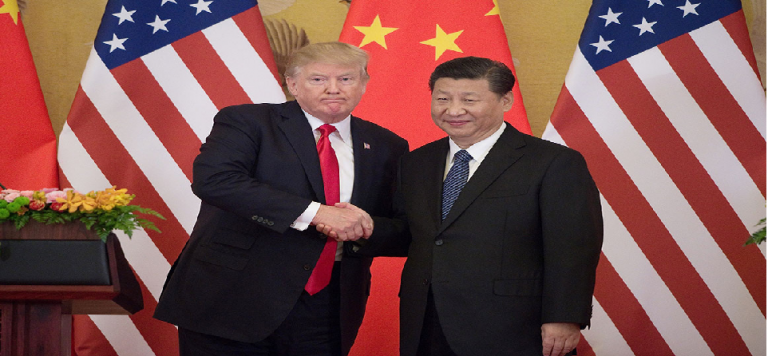
In the wake of sweeping new tariffs on Chinese imports announced by President Donald Trump, U.S. businesses are racing to avoid steep price hikes for consumers. But their efforts appear to be hitting a brick wall. Many are pressing their Chinese suppliers to slash prices in a bid to offset the added tariff costs.
The response has been largely the same: No.
“If you already reduced your pricing in the past for your U.S. clients, you probably don’t have much space to do it again and again,” said Jonathan Chitayat, CEO of Genimex Group, a firm that manages overseas production for American companies. “You can do it for an order or two, but the next time your customer asks you for a price, you’re going to work on the reality that you have to be a profitable business. You can’t continue losing money.”
Register for Tekedia Mini-MBA edition 20 (June 8 – Sept 5, 2026).
Register for Tekedia AI in Business Masterclass.
Join Tekedia Capital Syndicate and co-invest in great global startups.
Register for Tekedia AI Lab.
Chitayat’s firm helps U.S. companies manufacture products like kitchenware and electronics through factories in Asia, particularly China. He said that navigating Trump’s renewed tariffs has now become a regular part of the supply chain conversation. But margins are so thin, and government support is so lacking, that many factories simply have no room left to negotiate.
“There are no subsidies that we’re aware of that the government in China is giving to manufacturers,” he said. “So they mostly don’t—or have very, very little margins to give.”
The refusal by Chinese businesses to budge, analysts now say, signals a troubling prospect for American consumers: inflation could return faster and more forcefully than expected.

Trump Ratchets Up Tariff Fight, China Hits Back
The tariff escalation comes as Trump, in a flurry of posts and public appearances, declared that tariffs on China now total 145%. He also announced a temporary 90-day suspension of new tariffs for over 75 countries that had not responded with retaliatory measures. That reprieve did not extend to China, which he accused of showing a “lack of respect” for global markets.
Writing on Truth Social, the U.S. president said the tariffs are “effective immediately” and necessary because “China has taken advantage of American goodwill for too long.”
China didn’t take the move lightly. Its Ministry of Finance raised existing tariffs to 125% in retaliation, saying U.S. products had lost “market acceptance” in the Chinese economy. The agency also accused Washington of using trade policy as a blunt tool to fuel domestic politics, calling the U.S. a “joke” on the world stage.

Consumers Will Pay the Price, Experts Warn
The consequences of this back-and-forth are already becoming clear. With no room left in the supply chain to absorb costs, economists say American consumers are next in line.
“There has historically been this pressure to figure out who’s going to eat the tariff, and I don’t think there’s much room to move on that now,” Willy C. Shih, a professor at Harvard Business School told BI. “China is already hyper-competitive. Many of the products hit by tariffs—like TVs, monitors, and tech components—were never made in the U.S. to begin with. There’s no backup.”
Shih explained that while a weakening of the Chinese yuan could help offset some of the tariff burden, it won’t be nearly enough to protect consumers from higher prices.
“You can distribute parts of the tariff among all the parties in the supply chain,” he said, “but these numbers are so large now that they’re going to have to be passed on to consumers.”
Analysts say that warning signs are already flashing across sectors dependent on Chinese manufacturing, including electronics, apparel, automotive parts, and household goods. Prices that had only recently begun to stabilize after pandemic-era disruptions could once again start to rise—this time fueled not by supply bottlenecks but by policy decisions.
China’s Economic Struggles Leave No Wiggle Room
Meanwhile, Chinese manufacturers themselves are in a precarious position. Internal demand in China has been weakening, and the country’s once-booming property sector, long a major driver of its GDP, has collapsed, slashing local government revenues and limiting Beijing’s ability to offer support.
“Chinese manufacturing firms have faced declining margins in part due to falling domestic demand,” Sara Hsu, clinical associate professor of supply chain management at the University of Tennessee told BI. “There is already weakness in this sector from last year, and the new tariffs only add to that pressure.”
Andrew Collier, Senior Fellow at the Harvard Kennedy School’s Mossavar-Rahmani Center, said Beijing’s options are limited.
“Xi [Jinping] faces pressure from unemployed workers, disgruntled property owners, and small businesses. He may want to help exporters, but he has very little fiscal space left to maneuver,” he said.
Inflation Headwinds May Undermine Trump’s Economic Message
For the U.S., the timing couldn’t be worse. Inflation, while declining in recent months, remains a core concern for households, and any policy that raises the cost of living could erode public support quickly.
Lisa Suwen, the trade consultant, warned that price hikes could hit the market before the summer shopping season.
“What makes this dangerous is that these tariffs aren’t coming after a trade war that’s cooled off—they’re coming after a period where consumers are just recovering from years of inflation,” she said. “If inflation returns suddenly because of this, it could lead to a rapid deterioration in purchasing power.”
She added that most large retailers have already begun discussing price adjustments, especially on tech and imported home goods.
“The Chinese aren’t going to lower prices, and the Americans aren’t going to eat the cost. That leaves just one option—price hikes.”
A Familiar Standoff With More at Stake
Trump’s trade policies have always carried political weight, particularly when aimed at China. But analysts say this latest round of tariffs is different—not only in scope but also in its potential to destabilize fragile economic recovery efforts.
Even as Trump positions the tariffs as a defense of American manufacturing, many argue that many of the goods targeted simply have no domestic substitute.
“These are not jobs that are coming back. These are price hikes that are coming in,” said Shih.
Unless either side backs down, a scenario that appears unlikely, American consumers may soon pay the price for a trade war with no clear exit ramp.