

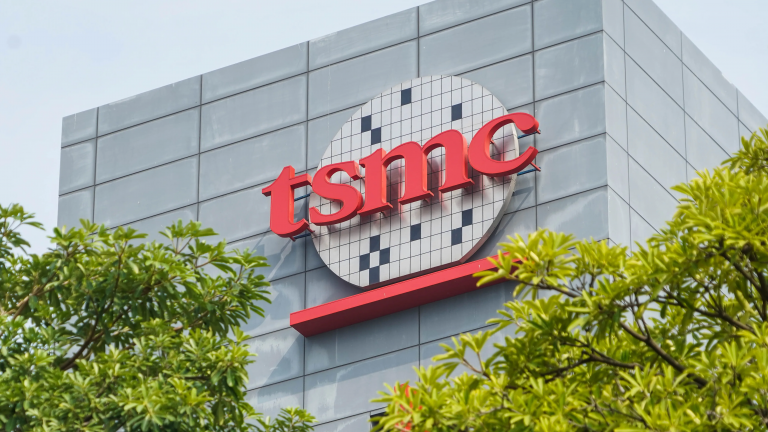
Taiwan Semiconductor Manufacturing Co. (TSMC) delivered another record-breaking quarter on Thursday, as surging demand for advanced chips from customers including Nvidia, Apple and Broadcom drove earnings well above market expectations and prompted the company to raise both its capital spending and U.S. investment plans.
The world’s largest contract chipmaker reported second-quarter net profit of NT$706.56 billion ($39.45 billion), up 77.4% from a year earlier and comfortably ahead of analysts’ estimates of NT$632.64 billion, according to LSEG SmartEstimates. Revenue climbed 36% year-on-year to a record NT$1.27 trillion, also exceeding expectations of NT$1.264 trillion.
The results underpin TSMC’s position as the biggest beneficiary of the unprecedented global buildout of AI infrastructure, with hyperscalers and semiconductor companies continuing to spend aggressively on next-generation computing capacity. The company has now posted record quarterly net income for five consecutive quarters, highlighting the resilience of AI-related investment even as broader semiconductor markets recover at a slower pace.
Register for the next Tekedia Mini-MBA.
Register for Tekedia AI in Business Masterclass.
Join Tekedia Capital Syndicate and co-invest in great global startups.
Looking ahead, TSMC projected third-quarter revenue of between $44.6 billion and $45.8 billion, alongside an operating profit margin of 56% to 58%, signaling that demand remains exceptionally strong.
“AI related demand continues to be extremely robust,” Chairman and Chief Executive C.C. Wei said during the company’s earnings call.
To support that demand, Wei announced that TSMC will invest an additional $100 billion in Arizona, increasing its total planned investment in the U.S. state to $265 billion.

“This is to build several or more semiconductor logical wafer fab for two nanometer MP (mass production) technologies, as well as advanced packaging fabs to support the strong multi-year demand from our leading U.S. customers,” Wei said.
The announcement further cements Arizona as one of TSMC’s most strategically important manufacturing hubs outside Taiwan and reflects growing efforts by customers and governments to diversify semiconductor production geographically while securing access to advanced chips.
Chief Financial Officer Wendell Huang also raised the company’s 2026 capital expenditure forecast to between $60 billion and $64 billion, marking one of the largest annual investment budgets in semiconductor industry history.

The increased spending is seen as another indication that AI is reshaping capital allocation across the semiconductor sector. While many technology companies are racing to develop larger AI models and build new data centers, TSMC remains the critical manufacturing partner producing the advanced processors powering that expansion.
The company’s technology mix also illustrates how quickly customers are migrating toward leading-edge manufacturing nodes.
Advanced technologies of 7 nanometers and below accounted for 77% of total wafer revenue during the quarter. The 5-nanometer process contributed 33% of revenue, while 3-nanometer chips represented 30%, demonstrating continued customer migration toward increasingly sophisticated manufacturing technologies.
High-performance computing remained the primary growth engine, accounting for 66% of revenue in 2026, well ahead of smartphones at 22% and Internet of Things applications at 5%. The figures highlight how AI servers and data-center processors have become the company’s most important business segment, reducing its historical reliance on smartphones.
Industry analysts said TSMC continues to enjoy significant pricing power because of its unmatched technological leadership, although management has exercised restraint in passing higher costs on to customers.
“Net, they have far more pricing power than they are currently exercising,” said Sravan Kundojjala, an analyst at SemiAnalysis.
He added that TSMC is capturing greater value through selective price increases while deliberately avoiding aggressive pricing strategies that could pressure customers.
Kundojjala also noted that booming demand for AI-related memory is beginning to affect other parts of the semiconductor industry.
“The memory boom is now squeezing TSMC’s non-AI business. Consumer and price-sensitive end markets took a hit from rising memory prices and tight component supply,” he said.
AI-related chips continue to experience supply constraints and premium pricing across the tech industry, but consumer electronics markets remain comparatively subdued, creating a two-speed industry where AI infrastructure investment continues to offset weakness in traditional computing and consumer devices.
TSMC’s results also lend credence to recent optimism across the semiconductor supply chain. Equipment makers, including ASML, have raised sales forecasts amid expanding AI-related capacity, while Nvidia, Broadcom and other major chip designers continue to launch powerful processors that rely on TSMC’s most advanced manufacturing technologies.
Investors welcomed the strong results, with TSMC shares rising 1.23% on Thursday. The stock has gained more than 58% this year, extending its rally as investors continue to view the company as one of the clearest long-term beneficiaries of the global AI investment cycle.
The latest earnings suggest that demand for advanced semiconductors remains far ahead of available manufacturing capacity, supporting TSMC’s strategy of maintaining record capital expenditure while expanding production across Taiwan, the United States, and other international locations.
With customers continuing to commit tens of billions of dollars to AI infrastructure, the company’s elevated investment plans indicate it expects the current AI spending cycle to remain intact for several years rather than representing a short-term surge.