

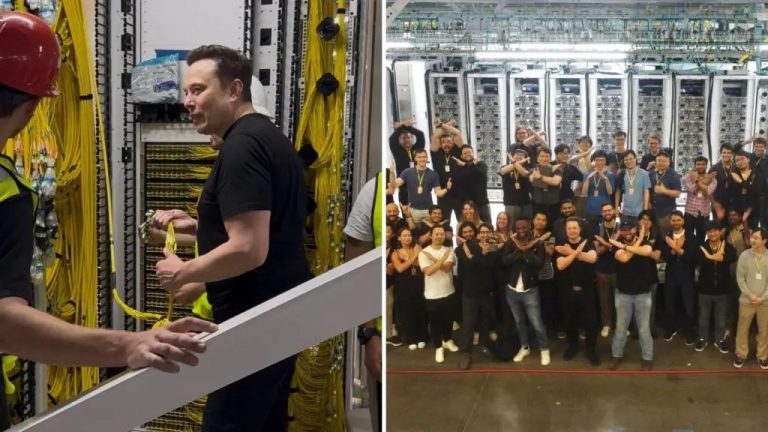
The departures of Tony Wu and Jimmy Ba reduce xAI’s founding team by half, pointing to mounting internal and competitive pressures as Elon Musk races to close the gap with OpenAI and Anthropic.
Tony Wu and Jimmy Ba, two co-founders of Elon Musk’s artificial intelligence venture xAI, have resigned from the company less than three years after helping to launch it. The announcements, made in separate posts on X, mark the latest leadership changes at the firm and leave it with six of its original 12 co-founders.
Neither Wu nor Ba publicly stated their reasons for stepping down or outlined immediate next steps, though both expressed gratitude to Musk in their messages.
Their exits come at a pivotal moment for xAI, which was founded in 2023 as Musk’s direct challenge to OpenAI, the company he co-founded and later publicly criticized over its direction and governance. Since its launch, xAI has sought to position its Grok model — integrated into Musk’s social media platform X — as a more open and less constrained alternative to competing large language models.
Register for Tekedia Mini-MBA edition 20 (June 8 – Sept 5, 2026).
Register for Tekedia AI in Business Masterclass.
Join Tekedia Capital Syndicate and co-invest in great global startups.
Register for Tekedia AI Lab.
Reported internal tensions
The Financial Times reported that Ba’s resignation followed tensions within xAI’s technical team over pressure to improve model performance as Musk pushes to narrow the gap with industry leaders such as OpenAI and Anthropic.
Performance benchmarks have become central in the generative AI race. Companies compete aggressively on reasoning ability, coding accuracy, multimodal capabilities, and inference speed. Any perception of lagging progress can affect valuation, partnerships, and investor appetite.
If internal friction emerged over engineering timelines or product readiness, it would reflect the broader strain facing AI startups attempting to scale foundational models at breakneck speed while competing against firms with deeper capital reserves and established research ecosystems.

Ba, a well-known academic in machine learning and co-author of the widely cited Adam optimization algorithm, brought significant technical credibility to xAI at its inception. Wu also played a key role in the company’s early engineering development. Their departures remove two influential voices from the core research group at a time when execution speed is critical.
High-capex environment
Days before the resignations became public, SpaceX announced plans to purchase xAI in a transaction that Musk said would create a combined entity valued at $1.25 trillion. The merged structure is reportedly intended to go public later this year, with proceeds aimed at financing large-scale infrastructure projects, including ambitions to deploy data centers in space.
The proposed integration signals how capital-intensive Musk’s AI strategy has become. Training frontier models requires vast computational resources, often involving tens of thousands of high-end GPUs, advanced cooling systems, and long-term energy contracts. Infrastructure spending now defines competitive positioning in AI as much as algorithmic breakthroughs.

By folding xAI into SpaceX’s orbit, Musk appears to be consolidating capital, engineering capacity, and long-term financing mechanisms under a single corporate umbrella. SpaceX’s strong private-market valuation and track record of raising large funding rounds could provide xAI with more stable access to capital than a standalone startup structure.
Yet such consolidation can also intensify internal performance expectations. As investor scrutiny grows — particularly ahead of a potential public listing — pressure to demonstrate technical parity with rivals may increase.
OpenAI, Anthropic, and Google DeepMind have widened the performance envelope of large language models over the past year, introducing models capable of advanced reasoning, coding, video generation, and real-time multimodal interaction. Each firm has secured major enterprise and government partnerships.
Grok’s integration into X gives it a built-in distribution channel to hundreds of millions of users for xAI. However, distribution alone does not guarantee leadership in benchmark performance or enterprise adoption. Corporate customers typically evaluate AI systems on reliability, safety controls, latency, and integration flexibility — areas where incumbents have invested heavily.
The departure of founding researchers could prompt questions about continuity in xAI’s core research agenda. Founders often anchor technical culture, long-term research direction, and hiring pipelines. Replacing that institutional knowledge requires careful management, particularly in a sector where talent mobility is high, and competition for senior AI researchers is intense.
Strategic inflection point
Musk has repeatedly framed AI as central to his broader industrial ambitions, linking it to autonomous vehicles, robotics, and space infrastructure. The decision to align xAI more closely with SpaceX suggests a strategy built around vertical integration — controlling hardware, compute, data pipelines, and application layers within a unified ecosystem.
That strategy carries significant upside if execution aligns. It also raises governance and operational complexity, especially if the combined entity proceeds toward a public listing at a multitrillion-dollar valuation target.
For now, xAI remains in active development mode, continuing to iterate on Grok and expand its infrastructure footprint. The loss of half its founding team does not necessarily derail that trajectory, but it signals internal recalibration at a time when the global AI race is accelerating.
In frontier AI, leadership stability, technical momentum, and capital scale often determine which firms define the next generation of platforms. In the coming months, xAI will be proving whether it can maintain research velocity and organizational cohesion as it enters a more demanding phase of competition and financial scrutiny.