

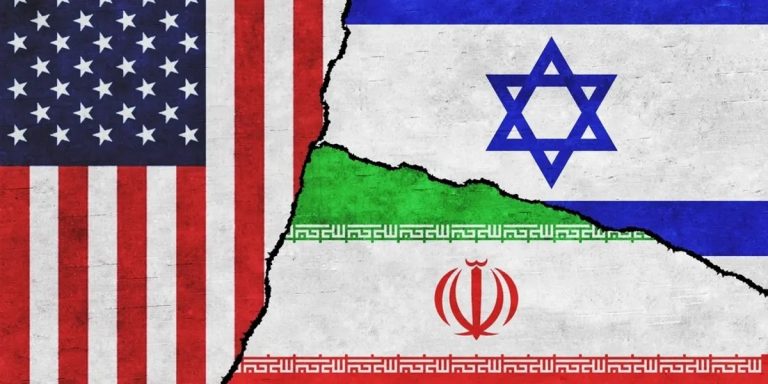
U.S. intelligence assessments indicate that Iran’s ruling establishment remains largely intact and is not at immediate risk of collapse, even after nearly two weeks of sustained military strikes by the United States and Israel, according to three sources familiar with the reports quoted by Reuters.
The latest intelligence analysis, completed within the past few days, concludes that Iran’s political system retains control of the country despite the unprecedented military pressure.
A “multitude” of intelligence reports provide “consistent analysis that the regime is not in danger” of falling and still “retains control of the Iranian public,” one of the sources said.
Register for Tekedia Mini-MBA edition 20 (June 8 – Sept 5, 2026).
Register for Tekedia AI in Business Masterclass.
Join Tekedia Capital Syndicate and co-invest in great global startups.
Register for Tekedia AI Lab.
The findings complicate the strategic calculations of the administration of Donald Trump, which is weighing how and when to wind down what has become the largest U.S. military operation since the Iraq War began in 2003.
With global oil prices surging amid the conflict, Trump has signaled that he intends to end the campaign “soon,” though officials acknowledge that securing an acceptable conclusion may prove difficult if Iran’s leadership structure remains firmly in place.
Leadership Cohesion After Khamenei’s Death
The intelligence assessments underline the resilience of Iran’s clerical establishment even after the killing of Supreme Leader Ali Khamenei on Feb. 28, the first day of U.S. and Israeli strikes. His death marked one of the most dramatic moments in the conflict, removing the central figure who had dominated Iranian politics for more than three decades.

Yet intelligence officials say Iran’s governing institutions have moved quickly to maintain continuity.
Earlier this week, the Assembly of Experts — the clerical body responsible for selecting Iran’s supreme leader — declared Khamenei’s son, Mojtaba Khamenei, as the country’s new supreme leader. The transition suggests the regime has preserved its core power structure despite the loss of its longtime figurehead.
Strikes carried out by the United States and Israel have killed dozens of senior Iranian officials and several high-ranking commanders of the Islamic Revolutionary Guard Corps (IRGC), the powerful military and paramilitary organization that plays a central role in Iran’s security apparatus and controls significant portions of the country’s economy.

Even so, U.S. intelligence reports indicate that the IRGC and the interim leadership that assumed authority after Khamenei’s death remain capable of maintaining control.
Officials caution that conditions inside Iran remain fluid and could change rapidly as the conflict evolves.
Diverging War Objectives
The intelligence findings also highlight lingering questions about the strategic objectives of the U.S.-Israeli campaign. Since the operation began, the two allies have targeted a broad range of Iranian military and strategic assets, including air defense systems, nuclear facilities, and senior members of the political leadership.
When announcing the start of the operation, Trump urged Iranians to “take over your government,” comments widely interpreted as encouragement for a popular uprising. Senior officials in his administration later denied that regime change was the formal goal of the military campaign.
Israeli officials have acknowledged privately that there is no certainty the war will result in the collapse of Iran’s clerical government, according to a senior Israeli official familiar with internal discussions.
Another source said Israel’s strategic objective remains the dismantling of Iran’s ruling structure, adding that Jerusalem does not intend to allow remnants of the existing government to remain intact.
Limits Of Military Pressure
Analysts say toppling Iran’s government would likely require far more than airstrikes. One source familiar with strategic planning said regime collapse would probably depend on either a large-scale internal uprising or a ground offensive capable of weakening the state’s security apparatus enough for mass protests to emerge.
Such a scenario would likely involve significant risks, including the possibility of a prolonged regional conflict.
The Trump administration has not ruled out the possibility of deploying U.S. ground forces inside Iran, though officials have not indicated that such a decision is imminent. One possible pressure point considered by U.S. planners involves Iranian Kurdish militant groups based across the border in Iraq.
Reuters reported last week that Kurdish militias held discussions with U.S. officials about the possibility of launching attacks against Iranian security forces in western Iran.
Supporters of the idea argue that an incursion could stretch Iran’s security forces and potentially create conditions for unrest inside the country.
Abdullah Mohtadi, leader of the Komala Party of Iranian Kurdistan, said Kurdish parties have organized networks inside Iran and claimed “tens of thousands of young people are ready to take up arms” if they receive U.S. backing.
Mohtadi said he had received reports that IRGC units in Kurdish regions were abandoning some bases and barracks out of fear of airstrikes.
“We have been witnessing tangible signs of weakness in Kurdish areas,” he said.
However, recent U.S. intelligence assessments have cast doubt on the ability of Kurdish groups to sustain a significant military campaign against Iran’s security forces.
According to two sources familiar with the analysis, intelligence agencies believe the militias lack both the manpower and heavy weaponry needed to challenge Iranian forces effectively.
The Kurdish groups have recently asked U.S. officials and lawmakers for weapons and armored vehicles, another person familiar with the discussions said. But Trump said on Saturday that he had ruled out sending the Kurdish militias into Iran.
The Kurdistan Regional Government, which governs the autonomous Kurdish region of Iraq where the militias are based, did not immediately respond to requests for comment.
War Enters Uncertain Phase
For now, intelligence officials say the conflict has weakened parts of Iran’s military infrastructure but has not fundamentally altered the balance of power inside the country.
That assessment suggests the war could enter a prolonged and uncertain phase, where military strikes degrade Iranian capabilities but fall short of achieving the political transformation some leaders in Washington and Israel have suggested.
With oil markets volatile and diplomatic pressure mounting, the next stage of the conflict may depend less on battlefield developments and more on political decisions in Washington, Jerusalem, and Tehran.