

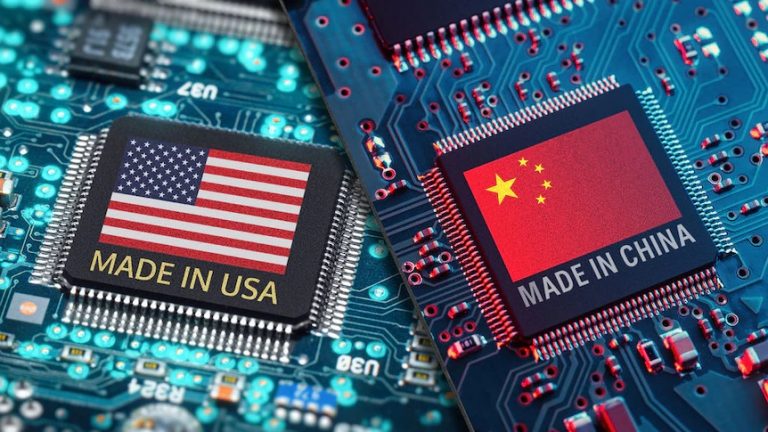
A new bipartisan investigation by the U.S. House Select Committee on China has revealed that gaps and inconsistencies in export control rules among the United States, Japan, and the Netherlands have allowed China to purchase nearly $40 billion worth of advanced chipmaking equipment — despite efforts by Washington and its allies to curtail Beijing’s access to cutting-edge semiconductor technology.
The report, obtained by Reuters, shows that China’s purchases of semiconductor manufacturing tools surged by 66% in 2023 from the previous year, when many of the restrictions were first introduced. Chinese firms legally acquired the equipment from top global suppliers, exploiting regulatory discrepancies among the allied nations tasked with enforcing export bans.
The findings pinpoint what lawmakers described as a critical failure in the West’s semiconductor containment strategy, with major implications for both global technology competition and national security.
Register for Tekedia Mini-MBA edition 20 (June 8 – Sept 5, 2026).
Register for Tekedia AI in Business Masterclass.
Join Tekedia Capital Syndicate and co-invest in great global startups.
Register for Tekedia AI Lab.
The Loophole Effect
While Washington has imposed some of the world’s toughest controls on exports of advanced chipmaking tools to China, allied manufacturers, particularly in Japan and the Netherlands, have filled part of the gap left by U.S. companies barred from selling to Chinese clients.
The report notes that five of the world’s largest semiconductor equipment suppliers — Applied Materials, Lam Research, KLA, ASML, and Tokyo Electron — collectively sold $38 billion worth of tools to China last year. This accounted for nearly 39% of their global sales, highlighting how lucrative the Chinese market remains even under export restrictions.
“These are the sales that made China increasingly competitive in the manufacture of a wide range of semiconductors, with profound implications for human rights and democratic values around the world,” the committee warned in its findings.

The committee urged the United States and its allies to move beyond piecemeal bans targeting specific Chinese companies and instead adopt broader restrictions covering entire categories of chipmaking tools and components.
Washington’s National Security Push
For years, both Democratic and Republican administrations have viewed China’s rapid progress in semiconductor manufacturing as a strategic threat. Advanced chips are essential for artificial intelligence, supercomputing, and military modernization, making control over semiconductor technology a central pillar of U.S. national security policy.
The Trump administration has maintained some of the Biden-era trade policy toward China, while expanding restrictions to include not just finished chips but also the tools and software used to produce them. The latest revelations, however, suggest that these measures have not been watertight.

U.S. lawmakers say the lack of policy alignment among allies has weakened their collective leverage. Japan’s Tokyo Electron and the Netherlands’ ASML, two of the world’s most important equipment suppliers, have continued to sell to Chinese companies that American firms are prohibited from dealing with.
Mark Dougherty, president of Tokyo Electron’s U.S. unit, told Reuters that sales to China have started to decline this year as tighter export rules take hold. He acknowledged that more consistent coordination between the U.S. and Japan is still needed.
“I think it’s clear, from a U.S. perspective, there’s an outcome that is still desired that has not yet been achieved,” Dougherty said.
While Applied Materials and Lam Research did not respond to requests for comment, ASML and KLA said they could not comment until they reviewed the report in full. The committee noted that all five toolmakers cooperated with the investigation and were briefed on its findings.
Rising Concern Over Chinese Firms
The investigation also highlighted three Chinese chip firms — SwaySure Technology Co, Shenzhen Pengxinxu Technology Co, and SiEn (Qingdao) Integrated Circuits Co — as companies of “particular security concern.” U.S. officials believe these firms are part of a shadow supply chain network supporting Huawei Technologies, which remains blacklisted by Washington.
In December, the Commerce Department formally barred exports to the three companies, following warnings from committee leaders Chairman John Moolenaar (R-Mich.) and Ranking Member Raja Krishnamoorthi (D-Ill.), who accused the firms of working covertly to advance Huawei’s semiconductor capabilities.
A New Technological Battleground
Analysts warn that China’s aggressive pursuit of chipmaking self-sufficiency is reshaping the global semiconductor industry. Craig Singleton, a senior fellow at the Foundation for Defense of Democracies, said Beijing is now trying to “rewrite the entire supply chain” to reduce dependency on Western technology.
“What used to be niche tool segments are now battlegrounds,” Singleton said, adding that the competition is no longer about finished chips but about the underlying infrastructure and components that make chip fabrication possible.
The committee’s report called for tighter coordination among allies to prevent China from developing workarounds, including restrictions on components that could be repurposed for domestic tool production.
The findings come at a time when U.S.-China technological rivalry has expanded far beyond semiconductors, touching areas such as AI data centers, quantum computing, and telecommunications infrastructure. Both nations are vying for dominance in advanced technologies that are expected to define the global economy over the next decade.
While Washington’s export bans have slowed Beijing’s access to next-generation chips, the investigation shows that China’s semiconductor ecosystem remains resilient — leveraging global supply chains, state subsidies, and strategic partnerships to advance its ambitions.
The report serves as a warning for the U.S. and its allies that partial coordination is not enough in an era where chip technology has become as critical to national power as oil once was.