

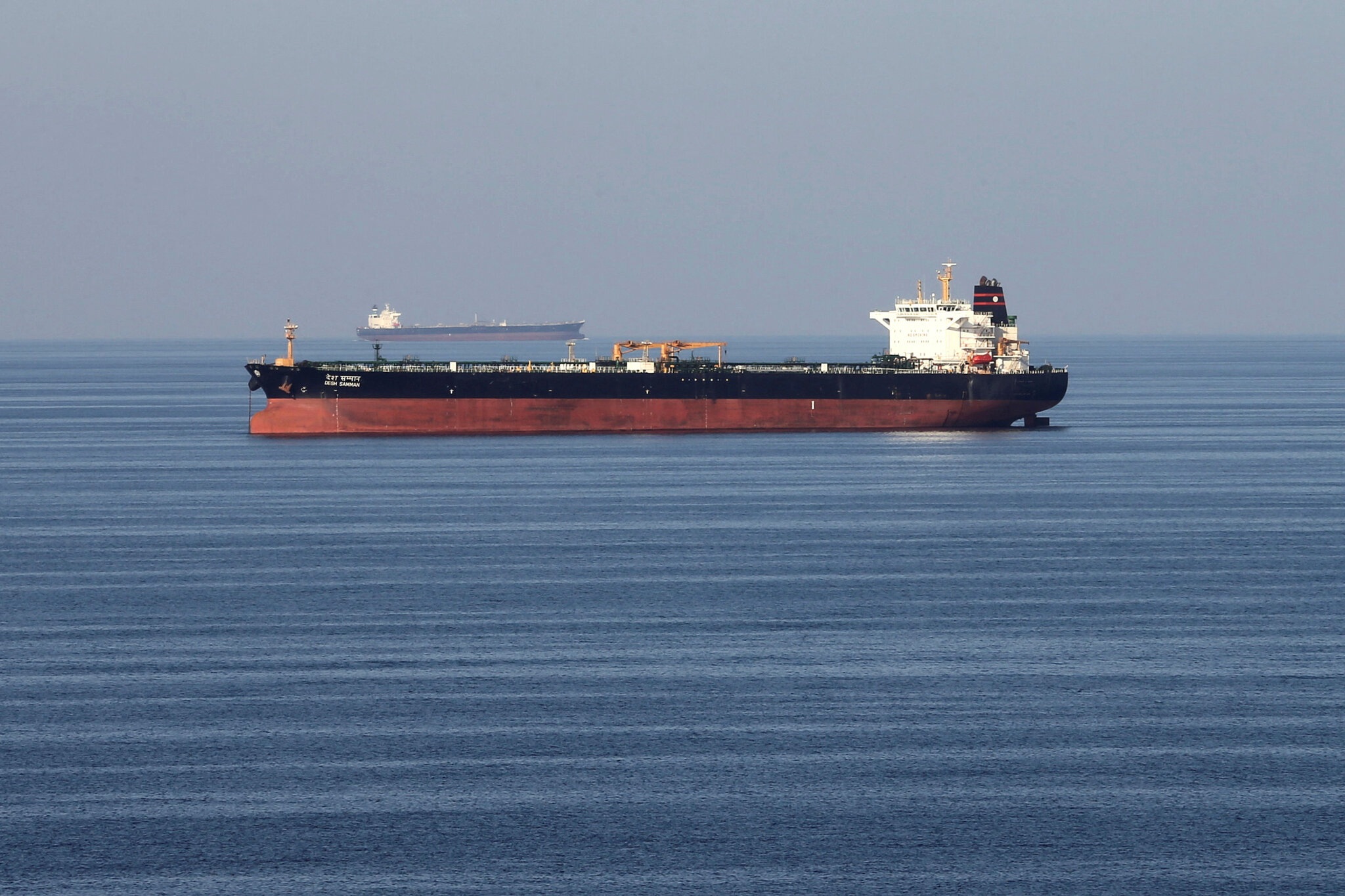
The U.S. Department of Justice has moved to take permanent ownership of the oil tanker Motor Tanker Skipper and roughly 1.8 million barrels of crude oil supplied by Venezuela’s state-run Petróleos de Venezuela SA (PDVSA), alleging the vessel was part of a sanctions-evasion network designed to benefit Iran’s Islamic Revolutionary Guard Corps (IRGC).
In a civil forfeiture complaint filed in U.S. District Court for the District of Columbia, prosecutors allege that since at least 2021, the Skipper participated in a scheme to facilitate the shipment and sale of petroleum products tied to the IRGC, which Washington has designated under terrorism and sanctions authorities. The complaint states the vessel transported crude from both Iran and Venezuela and used tactics including location spoofing, false flagging, and other deceptive shipping practices to conceal its routes.
A confidential informant cited in the filing told U.S. authorities the tanker loaded approximately seven million barrels of Iranian-origin crude over the past two years. The Justice Department is seeking forfeiture of both the vessel and its most recent cargo, a legal process that would transfer ownership to the U.S. government without compensation if a court finds the property was used in violation of federal law.
Register for Tekedia Mini-MBA edition 20 (June 8 – Sept 5, 2026).
Register for Tekedia AI in Business Masterclass.
Join Tekedia Capital Syndicate and co-invest in great global startups.
Register for Tekedia AI Lab.
The Skipper was seized near Venezuela in December while flying the flag of Guyana. The U.S. complaint alleges the tanker was not legitimately flagged to Guyana, a detail that may prove significant under maritime law. A vessel without a valid nationality can be treated as stateless on the high seas, potentially expanding the legal grounds for interdiction.
Crew members told U.S. authorities after the seizure that the supertanker was initially bound for Cuba but later received instructions to reroute immediately to an unspecified destination in Asia, according to the complaint. U.S. officials say the routing changes and other measures were consistent with efforts to obscure the cargo’s origin and intended buyer.
Attorney General Pam Bondi said the case signals a broader enforcement posture. “Under President Trump’s leadership, the era of secretly bankrolling regimes that pose clear threats to the United States is over,” she said in a statement. “This Department of Justice will deploy every legal authority at our disposal to completely dismantle and permanently shutter any operation that defies our laws and fuels chaos across the globe.”

The Skipper case sits within an expanding U.S. campaign targeting oil shipments linked to sanctioned jurisdictions, particularly Iran and Venezuela. According to a Reuters analysis, U.S. forces have intercepted 10 tankers since December and released at least two to Venezuela’s interim government. In the most recent action, the Pentagon said U.S. military forces seized a sanctioned oil tanker in the Indian Ocean after tracking it from Caribbean waters, marking the third such interdiction in that region.
The strategy underlines Washington’s focus on so-called “shadow fleets” — aging tankers often operating under complex ownership structures, frequent renaming and reflagging, and the disabling or manipulation of Automatic Identification System (AIS) signals to evade detection. These fleets have been central to sustaining oil exports from countries facing U.S. sanctions.
Oil revenue remains a critical source of Iran’s foreign currency. U.S. officials argue that disrupting maritime logistics chains tied to the IRGC constrains the group’s financial reach. For Venezuela, whose oil sector has struggled with underinvestment and sanctions, interdictions further complicate efforts to stabilize export flows and attract buyers willing to assume legal and reputational risk.

The case also intersects with U.S. policy toward Caracas following the January 3 U.S. military operation that resulted in the capture of Nicolás Maduro. Since then, Trump administration officials have pressed the interim government in Caracas to open the oil sector to U.S. firms and implement reforms. Control over seized cargoes and vessels adds leverage in negotiations over market access and restructuring of Venezuela’s energy industry.
Civil forfeiture in sanctions cases has become a prominent enforcement tool because it targets property rather than individuals, lowering evidentiary thresholds compared with criminal prosecutions. If successful, the forfeiture would allow the U.S. to dispose of the Skipper and its cargo, potentially through auction or sale, with proceeds directed in accordance with federal law.
The case may also influence maritime compliance practices. Shipping companies, insurers, port operators, and commodity traders face increasing due diligence expectations when dealing with cargoes that could have touched sanctioned supply chains. Insurers in particular have tightened underwriting standards for vessels suspected of AIS manipulation or opaque beneficial ownership.
Energy markets are unlikely to be immediately affected by the 1.8 million barrels at issue, a modest volume in global terms. But the cumulative effect of repeated interdictions can constrain the flow of discounted crude that has fed alternative trading networks in Asia and elsewhere. Tighter enforcement raises transaction costs and insurance premiums, and increases the risk premium embedded in trades involving sanctioned-origin oil.
The Justice Department’s complaint will now proceed through federal court, where claimants, if any, may challenge the forfeiture. The outcome will test both the evidentiary strength of the U.S. sanctions case and the evolving boundaries of maritime enforcement against vessels accused of operating in the gray zones of global oil trade.