

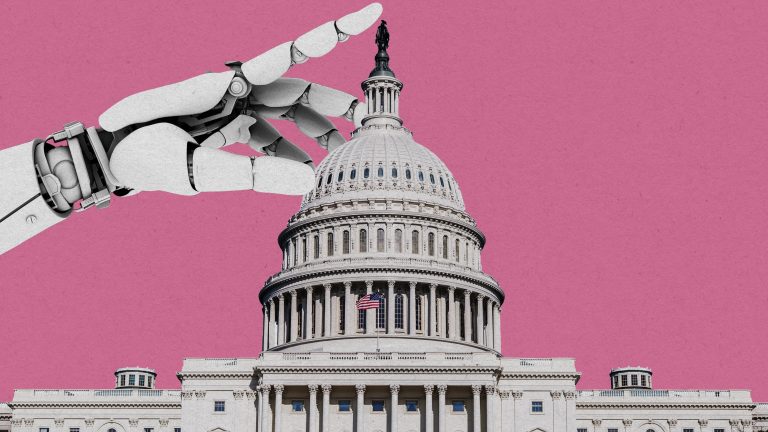
Senator Ted Cruz’s plan to impose a sweeping ban on state-level regulation of artificial intelligence collapsed on Tuesday, as the U.S. Senate voted 99-1 to strike the controversial measure from President Donald Trump’s sweeping domestic policy bill.
Cruz himself was forced to vote in favor of removing the provision, after it became clear that the opposition—both within and outside his party—had reached insurmountable levels.
The Texas Republican’s proposal would have blocked states from receiving billions in broadband funding if they passed laws governing AI technologies, such as rules targeting deepfakes, robocalls, algorithmic bias, or the use of AI in surveillance and autonomous vehicles. It had been quietly inserted into the broader GOP-backed budget legislation under the guise of a regulatory “pause,” but quickly drew backlash from both Democrats and Republicans.
Register for Tekedia Mini-MBA edition 20 (June 8 – Sept 5, 2026).
Register for Tekedia AI in Business Masterclass.
Join Tekedia Capital Syndicate and co-invest in great global startups.
Register for Tekedia AI Lab.
Initially, the plan would have disqualified states from accessing a $42 billion federal broadband deployment fund if they enacted AI-related laws. After mounting criticism, Cruz attempted to dial it back by limiting the moratorium to five years and shrinking the financial penalty to just $500 million in AI grants. But the core of the proposal remained the same: tie state access to federal dollars to a prohibition on AI regulation.
Republican leadership tried to market the scaled-down version as a “temporary” freeze on regulation to allow the federal government to craft unified standards. Yet the revised provision still alarmed many lawmakers who saw it as a backdoor move to restrict state autonomy and provide legal cover for tech firms.
“Wolf in Sheep’s Clothing”
Democratic Senator Ed Markey of Massachusetts slammed the revised version as “a wolf in sheep’s clothing,” warning that it still gave the Trump administration too much power to punish states for attempting to protect consumers.

“Despite Republican efforts to hide the true impact of the AI moratorium,” he said, “the language still allows the administration to use federal broadband funding as a weapon against the states.”
Senator Maria Cantwell (D-Washington), who co-authored the amendment to strike the clause, said the GOP’s attempts to dress up the provision as a five-year pause did not change its core danger.
“This was another giveaway to tech companies,” she said, accusing Cruz of misleading assurances. “It gives AI and social media a brand-new shield against litigation and state regulation.”

Senator Marsha Blackburn (R-Tennessee), a conservative Republican who initially explored a compromise with Cruz, ultimately joined Cantwell to kill the measure. Blackburn argued that the bill, even in its updated form, would leave states unable to respond to urgent consumer protection needs, especially when it comes to children and data privacy.
“This provision could allow Big Tech to continue to exploit kids, creators, and conservatives,” Blackburn said. “Until Congress passes real, federally preemptive laws like the Kids Online Safety Act and an online privacy framework, we can’t tie the hands of our state legislatures.”
Cruz Retreats Under Pressure
Faced with bipartisan opposition, Cruz eventually withdrew support for his own measure. In a floor statement, he blamed “outside interests” for torpedoing the deal, insisting that the five-year moratorium had backing from President Trump and was intended to “protect kids and creative artists.” But critics said it was less about children and more about shielding Silicon Valley from oversight.
The failure marked a significant political blow to Cruz, who had been one of the most vocal champions of preempting state regulation of emerging technologies. Ironically, his plan lost steam just as his home state of Texas enacted its own AI legislation—undermining his case that states were unfit to legislate on the topic.
The final vote to remove the AI moratorium—99 in favor, 1 opposed—left Senator Thom Tillis (R-North Carolina) as the only lawmaker supporting it. Cruz’s decision to join the majority was seen as a reluctant concession to political reality.
Broad Coalition Rejected the Proposal
The resistance to the AI provision extended beyond Capitol Hill. Cantwell’s office cited unified opposition from 17 Republican governors, 40 state attorneys general, and policy organizations ranging from the Heritage Foundation to the Center for American Progress. The rare cross-ideological alliance highlighted just how deeply unpopular the provision had become.
“Despite several revisions by its author and misleading assurances about its true impact, this proposal would have opened the door to unchecked AI deployment while stripping states of their right to act,” Cantwell said after the vote.
Lawmakers also emphasized that the federal government has yet to pass comprehensive AI legislation, meaning states remain the only line of defense for consumer protection in this rapidly advancing sector. In 2023 alone, at least 24 states introduced or passed some form of AI-related laws and regulations that could have been invalidated or chilled under Cruz’s plan.
What’s Next for AI Regulation?
The Senate’s overwhelming rejection of the moratorium leaves the door open for states to continue setting their own standards while Congress continues to work on a federal framework. The episode also served as a warning shot to federal lawmakers attempting to sneak sweeping tech policy changes into must-pass legislation.
“The Senate came together tonight to say that we can’t just run over good state consumer protection laws,” Cantwell said.
Even as the broader budget bill advances—now cleared of the Cruz amendment—many lawmakers are calling for a standalone debate on AI legislation, not backdoor policy crafted in closed-door budget negotiations.