

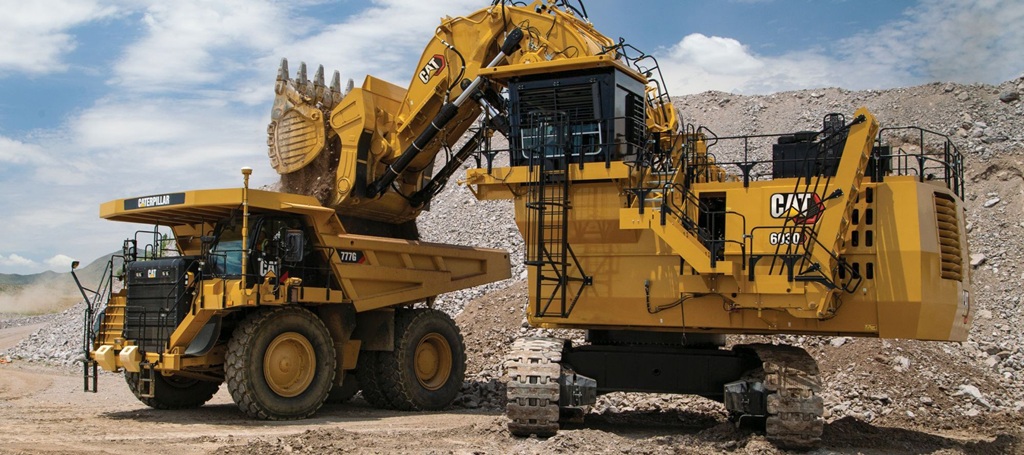
The Trump administration has sharply criticized Norway’s $2 trillion sovereign wealth fund after it announced plans to sell its stake in U.S. machinery giant Caterpillar, linking the move to the conflict in Gaza.
In an emailed statement Thursday, a State Department spokesperson said Washington was “very troubled” by the decision, describing it as based on “illegitimate claims against Caterpillar and the Israeli government.” The spokesperson added that the U.S. is “engaging directly with the Norwegian government on this matter,” signaling Washington’s discomfort with what it views as the politicization of corporate investments.
Norges Bank Investment Management (NBIM), which oversees the wealth fund on behalf of the Norwegian population, said last week it would cut its exposure to Caterpillar and five Israeli banks. The fund cited “unacceptable risk that the companies contribute to serious violations of the rights of individuals in situations of war and conflict.”
Register for Tekedia Mini-MBA edition 20 (June 8 – Sept 5, 2026).
Register for Tekedia AI in Business Masterclass.
Join Tekedia Capital Syndicate and co-invest in great global startups.
Register for Tekedia AI Lab.
Specifically, NBIM pointed to Caterpillar’s bulldozers, which it said were being used by Israeli authorities in “widespread unlawful destruction of Palestinian property.” At the end of last year, NBIM held a 1.2% stake in the New York-listed company.
The decision follows earlier announcements by the fund to offload Israeli holdings not included in its equity benchmark index and to terminate contracts with Israeli asset managers. By June, the fund held 61 Israeli equities; today, it retains just six.
U.S. Political Pushback
The divestment has stirred anger among U.S. lawmakers. Republican Senator Lindsey Graham, a close Trump ally, denounced the move in a series of posts on X, calling it “shortsighted” and “beyond offensive.”

“To Norway’s sovereign wealth fund… Your decision to punish Caterpillar, an American company, because Israel uses their product is beyond offensive,” Graham wrote.
He went further, suggesting retaliation: “Maybe it’s time to put tariffs on countries who refuse to do business with great American companies. Or maybe we shouldn’t give visas to individuals who run organizations that attempt to punish American companies for geopolitical differences.”
The State Department’s statement, while more measured, reflects similar unease about the precedent such divestments could set for U.S. companies tied to controversial regions.

Norwegian Finance Minister Jens Stoltenberg pushed back against the criticism, stressing that the government does not influence the fund’s investment decisions.
“The government is not involved in assessing individual companies,” Stoltenberg said Thursday. “The decision to exclude companies is an independent decision made by the Executive Board of Norges Bank, in accordance with the established framework. It is not a political decision.”
Stoltenberg noted that he had been part of a Norwegian delegation in Washington earlier in the week for talks with Trump’s economic adviser, Kevin Hassett, but emphasized that the pension fund “was not a topic of discussion.” Instead, conversations focused on trade, tariffs, sanctions against Russia, and support for Ukraine.
NBIM’s deputy CEO Trond Grande also defended the divestment strategy in a CNBC interview, saying the decision reflected heightened scrutiny in Norway over the fund’s Israeli holdings as the conflict in the West Bank escalated.
“Due to the conflict and due to opinion here in Norway, I should say there’s a lot of scrutiny around specifically our holdings in Israeli companies,” Grande said. “What we’re doing now is really not down-weighing… but we are trying to simplify our portfolio in Israeli equities, because we have ethical guidelines.”
Norway’s sovereign wealth fund — the world’s largest, valued at about 20 trillion kroner ($1.98 trillion) — is built on the country’s oil and gas revenues and is widely regarded as a global benchmark for ethical investing. Its independent ethics council has long taken positions that place human rights and conflict risks at the center of its portfolio decisions, sometimes clashing with governments and corporations.
Over many years, the fund has excluded companies for producing certain weapons, and for contributing to serious human-rights violations or abuses. NBIM currently notes that a set of companies is excluded on product grounds, such as weapons, tobacco, cannabis, and coal.
NBIM is reinforcing that stance by distancing itself from Caterpillar and Israeli financial institutions. But the move has now thrust it into a geopolitical crossfire between U.S. officials determined to defend an American industrial icon and a European institution that insists its mandate is governed by ethical rules, not political favoritism.