

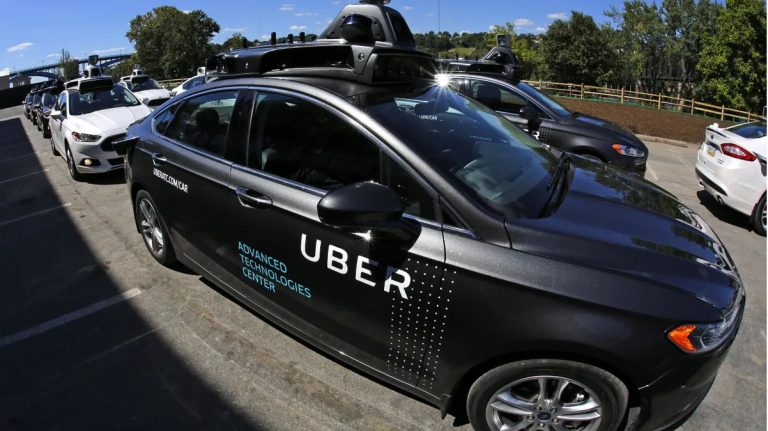
The race to commercialize autonomous transportation continues to accelerate as ride-hailing giant Uber Technologies and autonomous driving technology developer Autobrains announce plans to begin testing self-driving taxis in the German city of Munich.
The initiative represents another significant step toward the broader adoption of autonomous mobility services in Europe and highlights the growing collaboration between transportation platforms and artificial intelligence-driven vehicle technology firms. The planned pilot program is expected to evaluate how autonomous vehicles can safely operate in complex urban environments while providing passengers with a convenient and reliable transportation option.
Munich, known for its advanced infrastructure, strong automotive industry presence, and supportive technology ecosystem, offers an ideal testing ground for next-generation mobility solutions.
The city is also home to several major automotive manufacturers and research institutions, making it a natural location for innovation in transportation technology. For Uber, the partnership reflects a long-term strategy to integrate autonomous vehicles into its ride-hailing network. The company has invested heavily in self-driving initiatives over the years, recognizing that automation could significantly reduce operating costs while increasing transportation accessibility.
Register for the next Tekedia Mini-MBA.
Register for Tekedia AI in Business Masterclass.
Join Tekedia Capital Syndicate and co-invest in great global startups.
Human drivers currently represent one of the largest costs associated with ride-hailing services. By introducing autonomous vehicles, Uber aims to improve efficiency, expand service availability, and potentially lower fares for customers over time. Autobrains brings specialized expertise in autonomous driving software powered by artificial intelligence.
Unlike some competitors that rely heavily on high-definition maps and expensive sensor arrays, the company has focused on creating systems capable of understanding and responding to real-world driving conditions in a more adaptive manner. This approach seeks to improve scalability and reduce deployment costs, two critical challenges facing the autonomous vehicle industry.
The Munich tests will likely focus on collecting real-world operational data and validating the performance of autonomous systems under various traffic, weather, and road conditions. Urban environments present numerous challenges for self-driving technology, including pedestrians, cyclists, construction zones, and unpredictable driver behavior. Successfully navigating these situations is essential before autonomous taxi services can be deployed at a larger scale.
The announcement also underscores Europe’s increasing importance in the autonomous mobility sector.

While much of the early development and testing of self-driving vehicles occurred in the United States and China, European cities are becoming attractive locations for pilot programs due to their advanced regulatory frameworks and emphasis on sustainable transportation. Governments across the continent are exploring ways to integrate autonomous technologies into broader smart-city initiatives aimed at reducing congestion, improving safety, and lowering emissions.
Despite the promise of self-driving taxis, challenges remain. Regulators must ensure that autonomous systems meet rigorous safety standards, while companies must address public concerns regarding reliability, liability, and cybersecurity. Building public trust will be just as important as achieving technological milestones. Any large-scale deployment will depend on demonstrating that autonomous vehicles can operate at least as safely as human drivers.
If the Munich pilot proves successful, it could pave the way for wider deployment across Germany and other European markets. The collaboration between Uber and Autobrains reflects a broader transformation underway in the transportation industry, where artificial intelligence, automation, and digital platforms are converging to reshape how people move through cities.

As autonomous technology continues to mature, partnerships like this one may help bring the vision of self-driving taxi networks closer to everyday reality. The Munich tests represent more than a local experiment; they are another milestone in the global effort to redefine urban mobility for the future.