

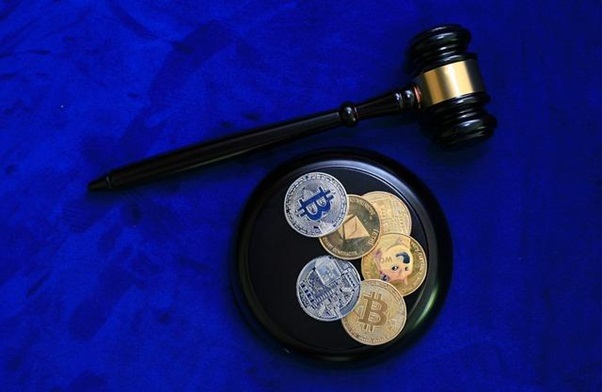
The Serious Fraud Office (SFO), the country’s primary agency for investigating serious financial crimes, has described this as its first major investigation into crypto-related fraud. Here’s a breakdown of what happened, based on official statements and reporting.
Two men—one in his 40s and the other in his 30s—were detained on suspicion of fraud and money laundering. Their identities haven’t been publicly disclosed, but one may be linked to Adam Cobb-Webb, a 48-year-old UK national previously fined $150,000 by the U.S. Commodity Futures Trading Commission (CFTC) in 2023 for market manipulation in oil futures.
Coordinated raids occurred on November 20 in Herne Hill south London and Bradford West Yorkshire. The men were released on bail pending further inquiries. The probe stems from the 2022 collapse of Basis Markets, a project that raised approximately $28 million from investors in late 2021 but allegedly diverted funds to personal wallets without delivering any product.
Basis Markets pitched itself as a “decentralized hedge fund” offering “delta-neutral” yields through sophisticated arbitrage basis trades—strategies typically reserved for institutional investors. The team claimed over 80 years of combined experience in traditional finance, software, and crypto.
Register for Tekedia Mini-MBA edition 20 (June 8 – Sept 5, 2026).
Register for Tekedia AI in Business Masterclass.
Join Tekedia Capital Syndicate and co-invest in great global startups.
Register for Tekedia AI Lab.
Despite assurances of locked team allocations and a project treasury, investigators found funds were funneled directly to founders’ personal wallets. No platform was built, and the project shut down months later without refunds.
Pitch materials hyped unrealistic returns, like a single NFT earning up to $18,000 monthly by year three later revised down but still inflated. Founders reportedly flaunted luxury purchases like watches in their Discord community.
This fits the pattern of “rug pulls” from the 2021 crypto boom, where hype around NFTs and DeFi lured retail investors into unaccountable schemes. The SFO is urging victims and whistleblowers to come forward, signaling this could be the start of a wave of prosecutions.

It reflects a national strategy to tackle digital asset crimes, especially as the UK pushes for crypto regulation via the Financial Services and Markets Act 2023. Blockchain forensics and NFT traceability were key to tracing funds.
Similar probes are underway elsewhere—e.g., the U.S. SEC’s actions against high-profile rug pulls. This case highlights ongoing risks in crypto, even years later, and may deter future fraud by emphasizing accountability.
The investigation is ongoing, with potential for more arrests. The SFO is analyzing blockchain transactions from the sales. A basis trade is a low-risk arbitrage strategy that exploits small price differences (“basis”) between two closely related assets.

In traditional finance, the most famous version is the cash-and-carry trade in futures markets (e.g., Treasury futures vs. actual bonds, or Bitcoin futures vs. spot Bitcoin). In crypto, the basis trade almost always refers to: Long spot Bitcoin or ETH + Short perpetual futures or quarterly futures at a higher price
You lock in the difference (the “basis”) as nearly risk-free profit. Immediately short the same amount of BTC on a perpetual futures exchange using cross-margin or stablecoin-margin. You are now delta-neutral no net directional exposure. Collect funding rate payments from the short perpetual position. This is the key profit source.
Hold the position until the basis shrinks or you decide to unwind. Profit = cumulative funding received minus borrowing costs and fees. Unlike traditional markets, crypto perpetual futures almost always trade at a premium to spot because:Most retail traders are long-only and leveraged ? they pay funding to shorts.
Funding rates can stay positive for months or even years especially in bull markets. Example historical rates: 2021 bull market: often 0.05–0.30% per 8 hours ?18–100% annualized. 2024–2025 bull market: frequently 0.01–0.10% per 8 hours ?10–80% annualized on good days.
When funding is positive ? shorts get paid by longs ? basis traders (who are short) earn steady yield.Simplified Profit & Loss Example (2025 numbers)You run a $1 million basis trade when funding is 0.05% every 8 hours
In late 2024 and early 2025, large hedge funds like Millennium, Balyasny, Exodus, etc. reportedly made hundreds of millions doing exactly this trade. Risks Funding rate flips negative ? You start paying instead of receiving happened briefly in crashes. Exchange insolvency or forced liquidation.
Margin calls if you over-leverage the short leg. Opportunity cost — your capital is tied up earning 20–40% instead of going 5× long in a bull run. The fraudulent project Basis Markets promised investors they were running sophisticated basis trades and other delta-neutral strategies with decades of TradFi experience.
In reality, they allegedly just took the money and never executed any trades — classic rug pull dressed up in impressive-sounding hedge-fund jargon. The crypto basis trade = buy spot Bitcoin, short the same amount in perpetual futures, collect funding payments from leveraged longs.
It’s one of the closest things crypto has to a “risk-free” trade, which is why real hedge funds love it — and why scammers love name-dropping it.