

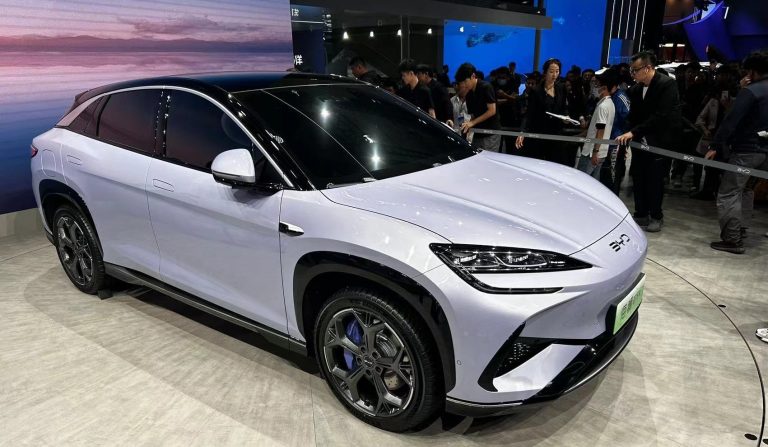
Britain is considering imposing higher tariffs on Chinese electric vehicle imports as ministers weigh how to protect the domestic automotive industry from growing Chinese competition while avoiding new barriers to trade with the European Union.
Business Secretary Jonathan Reynolds is drawing up options for tariffs on Chinese-made electric vehicles amid concerns that heavily subsidized Chinese manufacturers are gaining market share by selling vehicles at prices that British officials and industry representatives fear could amount to dumping, the Times reported.
No decision has been made, and the British government has not imposed new tariffs on Chinese EVs.
Register for the next Tekedia Mini-MBA.
Register for Tekedia AI in Business Masterclass.
Join Tekedia Capital Syndicate and co-invest in great global startups.
“We continue to engage closely with industry so that our approach reflects the sector’s and UK’s national interests,” a government spokesperson said in an email to Reuters.
The debate places Britain in a difficult position. The government wants to encourage the transition to electric vehicles, attract automotive investment and preserve consumer choice, but it is also under pressure to prevent Chinese manufacturers from gaining a dominant position in a strategically important industry.
Additionally, closer alignment with the EU could help British automakers avoid being disadvantaged by proposed European industrial policies that favor locally produced vehicles and components.

Britain Caught Between Chinese Competition and EU Rules
According to the Times, British ministers are considering tariffs that could match the European Union’s levy on Chinese electric cars, which can reach 45% depending on the manufacturer.
Britain currently applies a substantially lower 10% import duty on Chinese EVs. That gap has become wider as Chinese brands such as BYD, Jaecoo and Chery have expanded rapidly in the British market. The Financial Times reported that the brands accounted for more than 20% of new EV sales in September.
The growth of Chinese manufacturers presents an unusual dilemma for Britain. Chinese companies bring competitively priced electric vehicles and, in some cases, investment and potential manufacturing opportunities. But a rapid increase in imports could make it more difficult for established British and European manufacturers to defend market share while they are spending heavily to develop electric models and meet emissions requirements.

The government is already reviewing Britain’s zero-emission vehicle mandate, which sets requirements for manufacturers as the country moves toward ending sales of new petrol and diesel cars by 2030 and reaching 100% zero-emission new car and van sales by 2035. The government said in August that more than one in four new cars sold in Britain was already electric and that EV sales were 45% higher than a year earlier.
But introducing substantially higher tariffs on Chinese vehicles could have competing effects. Industry analysts note that it could give domestic and European manufacturers more room to compete, but it could also increase the price of some electric vehicles at a time when policymakers are trying to accelerate mass-market adoption.
The government has consequently stressed that any decision would be based on British interests rather than simply copying Brussels.
The EU’s “Made In Europe” Push Raises The Stakes
The tariff debate is also linked to the European Union’s proposed “Made in Europe” policy, which seeks to strengthen European manufacturing and reduce reliance on Chinese components in strategically important industries.
For Britain, the concern is that exclusion from such arrangements could create a new disadvantage for manufacturers operating across the Channel.
The British automotive industry is deeply integrated with European supply chains. The EU remains the UK’s largest car export market, accounting for 54.1% of British vehicle exports in the first eight months of 2026, according to the Society of Motor Manufacturers and Traders. EU-bound UK car exports fell 7.4% in August, highlighting the importance of maintaining access to the European market.
British manufacturers have warned that the proposed European rules could become a significant problem if vehicles or components made in Britain fail to qualify for preferential treatment.
Prime Minister Andy Burnham has noted that Britain should be recognized as a “trusted partner” under the EU’s proposed framework, warning that excluding UK manufacturers could damage the country’s automotive industry. The Financial Times reported that Brussels has encouraged Britain to align more closely with EU trade policy, including raising tariffs on Chinese cars, as part of efforts to prevent trade barriers from emerging around the “Made in Europe” initiative.
That situation has created a trade-off for London. Aligning with Brussels could make it easier for British companies integrated into European production networks to qualify for future incentives and avoid some barriers. But imposing higher tariffs could also expose British exporters to retaliation from China.
Companies with significant international sales are especially exposed to that risk. The Financial Times reported that Reynolds has not committed to higher tariffs partly because of concerns that China could retaliate against British exporters, including Jaguar Land Rover.
Tariffs Could Reshape Britain’s EV Market
The potential policy shift comes as Chinese automakers are moving beyond simply exporting vehicles into Europe and increasingly looking at local production.
Chinese manufacturers, including BYD, Leapmotor, Dongfeng, Geely and Chery, have been exploring European manufacturing facilities and partnerships as the EU moves toward tighter local-content requirements. BYD has already begun production in Hungary and is considering another European site.
That means tariffs alone may not determine how the competitive landscape develops. Chinese companies can respond to trade barriers by localizing production, sourcing more components within Europe or establishing partnerships with European manufacturers.
For Britain, this could make the question of market access more complicated. A tariff on finished Chinese vehicles could protect domestic producers from some import competition without necessarily preventing Chinese companies from expanding their presence in Europe through local factories.
The British government is simultaneously trying to attract investment into its own automotive sector. Recent announcements from Bentley, McLaren and Nissan have brought more than £1 billion of investment into Britain, with the government presenting the spending as evidence of continued confidence in the country’s manufacturing base.
The policy challenge is therefore not just about Chinese imports. It is about whether Britain can create an automotive environment in which manufacturers invest locally, consumers can afford electric vehicles and British companies retain access to their largest export market.
Higher tariffs could help address one part of that equation, but they could complicate the others.
The decision also comes as Britain and the EU are attempting to reshape their broader post-Brexit trading relationship. The automotive sector is particularly exposed because production networks cross the UK-EU border multiple times before a finished vehicle reaches consumers. That makes divergence from European trade policy potentially costly for British manufacturers, even if London concludes that protecting the domestic market requires a tougher stance toward Chinese imports.
For now, the government is maintaining that no new tariffs have been imposed and that discussions with industry are continuing. The eventual decision will have to balance competition, consumer prices, Chinese investment, domestic manufacturing and access to the European market.