

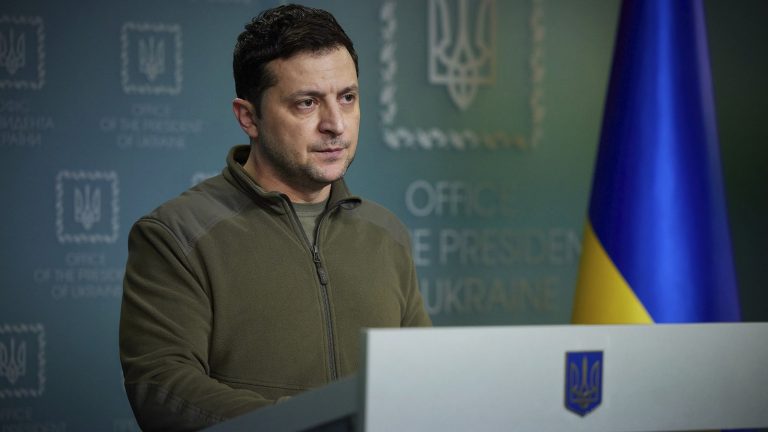
Kyiv has reached a breakthrough agreement with Washington on mineral resource management, a deal that has not only solidified U.S.-Ukraine economic ties but also fueled political tensions between U.S. President Donald Trump and Ukrainian President Volodymyr Zelensky in recent weeks.
The deal, confirmed by Ukraine’s Deputy Prime Minister and Justice Minister Olha Stefanishyna in an interview with the Financial Times on Feb. 25, marks a significant shift in Ukraine’s economic strategy as it seeks to leverage its mineral wealth to secure long-term financial stability. Zelensky’s office also confirmed the agreement to the Kyiv Independent.
While Ukraine has also presented the deal as a step toward strengthening ties with the U.S., many experts believe that the agreement is largely skewed in Washington’s favor, raising concerns about Ukraine’s sovereignty over its own natural resources.
Register for Tekedia Mini-MBA edition 20 (June 8 – Sept 5, 2026).
Register for Tekedia AI in Business Masterclass.
Join Tekedia Capital Syndicate and co-invest in great global startups.
Register for Tekedia AI Lab.
This development comes as Ukraine faces a daunting economic challenge: the estimated cost of reconstruction and recovery from Russia’s full-scale invasion has now ballooned to a staggering $524 billion over the next decade, according to a joint report by Ukraine’s government, the World Bank, the European Commission, and the United Nations. The sheer scale of destruction—affecting key sectors such as housing, energy, transportation, and trade—has left Ukraine in dire need of massive financial aid and investment.
A Deal That Favors the U.S.?
In an earlier proposal by Trump, Ukraine would contribute to the fund until the contributions reach the sum of $500 billion. The United States would provide a long-term financial commitment to the development of a “stable and economically prosperous Ukraine.” But Zelenskiy refused to sign the deal, with Kyiv protesting it had received far less than that in U.S. aid and the deal lacked the security guarantees Ukraine needs.
Under the final version of the minerals agreement, Ukraine will establish a sovereign fund, contributing 50% of proceeds from the future monetization of state-owned mineral resources, including oil, gas, and related logistics.

These revenues will be used to invest in projects within Ukraine. However, the deal specifically excludes resources that already contribute to the state budget, such as those controlled by Ukraine’s state-owned energy firms Naftogaz and Ukrnafta.
A key point of contention is that while the fund will be jointly managed by Ukraine and the U.S., decision-making authority will ultimately rest with Washington under American legal oversight. Many believe that this provision gives the U.S. significant control over Ukraine’s natural wealth, essentially making it a junior partner in the arrangement.
While the deal drops earlier U.S. demands for a $500 billion claim over Ukraine’s mineral resources, it still allows the U.S. to claim joint ownership of Ukraine’s resource-related infrastructure, including ports. This means that Ukraine will not only share revenues but also relinquish significant control over key economic assets.

Trump’s Hardline Approach and Zelensky’s Concessions
The minerals deal has been at the center of a heated dispute between Trump and Zelensky. Ukraine had initially rejected the U.S. proposal due to a controversial repayment structure, which would have required Kyiv to return two dollars for every one received in aid. Additionally, Zelensky had pushed for security guarantees as part of the agreement, but the final deal does not include such provisions.
Trump has been publicly pressuring Zelensky to move forward with the deal, accusing him of dragging his feet. In a sharp rebuke, Trump called Zelensky a “dictator without elections” and warned that if he did not act quickly, he would “not have a country left.” The U.S. president has framed the agreement as a way to ensure that America recoups “the tens of billions of dollars” it has spent supporting Ukraine’s war effort.
“What we’re doing is now we’re saying, look, we want to be secured,” Trump said. “The American taxpayer now is going to get their money back, plus.”
Zelensky Desperate To End The War
Amid these negotiations, Zelensky has signaled an unprecedented willingness to end the war, even suggesting that he would step down as president if it would bring peace to Ukraine.
“If [it guarantees] peace for Ukraine, if you really need me to resign, I am ready. I can exchange it for NATO,” he said. His public rhetoric has also shifted in recent weeks, with increasing emphasis on finding a diplomatic resolution to the conflict.
This shift comes as Ukraine faces a worsening military and economic situation. The war, now in its third year, has left the country in ruins. According to the World Bank’s latest estimates, Ukraine’s direct losses have surged to $176 billion, up from $152 billion just a year ago. The report highlights the extensive damage inflicted on Ukraine’s housing, energy, and transportation sectors. It notes that 13% of Ukraine’s total housing stock has been damaged or destroyed, affecting more than 2.5 million homes.
The war has also caused a 70% increase in damaged or destroyed assets, including power plants, transmission lines, and district heating systems. Key infrastructure, including roads, bridges, and ports, has suffered significant losses, making logistics and trade operations increasingly difficult.
With these staggering figures, and the US’ unwillingness to continue funding the war, Ukraine’s ability to sustain the war effort is diminishing, pushing Zelensky to explore all possible avenues for peace.
Will Russia Abide by a Peace Deal?
While Zelensky has shown enough willingness to make concessions, it remains unclear whether Russia would agree to a peace settlement that respects Ukraine’s sovereignty.
On Feb. 25, Russian Foreign Ministry Ambassador-at-Large Rodion Miroshnik confirmed that Moscow’s war objectives remain “unfulfilled.” Using the Kremlin’s term for the war, he stated that the “objectives of the Special Military Operation have not yet been achieved.” Russia continues to demand that Ukraine withdraw from all four regions it illegally annexed—Kherson, Zaporizhzhia, Donetsk, and Luhansk—before any serious negotiations take place.
Even if Zelensky were to agree to some form of territorial concession, there is little confidence that Russian President Vladimir Putin would abide by any agreement. Western intelligence reports suggest that Putin is using peace talks as a way to consolidate territorial gains, rather than negotiating in good faith.
Meanwhile, the U.S. has been engaging in direct talks with Russia, excluding Ukraine from the discussions. A Feb. 18 meeting in Saudi Arabia between American and Russian officials sparked outrage in Europe, with concerns that Ukraine is being sidelined in negotiations over its own future.
Trump has also hinted at a possible meeting with Putin before the end of February, fueling speculation that Washington may be seeking a separate deal with Moscow. Trump has claimed that the war “could end within weeks” and has suggested deploying European peacekeepers to Ukraine—a proposal that has received mixed reactions from European leaders. The U.K. is reportedly preparing a plan to deploy 30,000 European troops as part of a post-war security arrangement.