

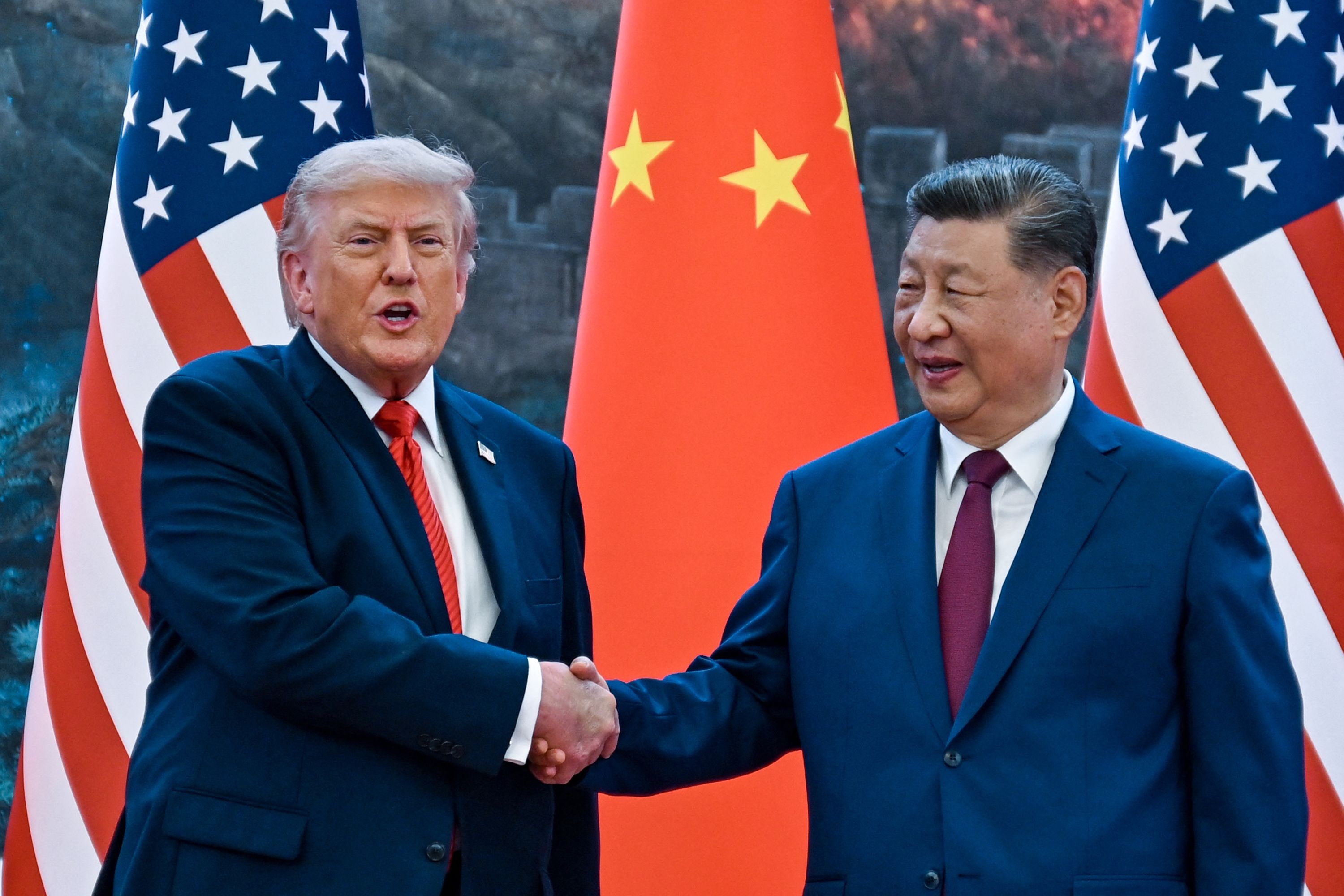
The White House’s disclosure of new trade arrangements emerging from recent high-level talks between the United States and China marks a calibrated attempt to stabilize one of the world’s most consequential economic relationships. While the full legal texts of the agreements remain under negotiation, the administration’s framing signals a pragmatic shift toward managed competition rather than open-ended escalation.
According to the briefing, the deals span a narrow but strategically significant set of sectors: critical minerals, agricultural exports, industrial components, and technology supply chain transparency. The White House emphasized that the agreements are designed less as comprehensive trade liberalization packages and more as guardrail mechanisms intended to reduce volatility in bilateral commerce while preserving domestic industrial policy priorities.
At the center of the announcements is a partial easing of export restrictions on selected U.S. agricultural products, including soybeans, corn, and dairy inputs, which are expected to restore predictable demand channels for American producers. In exchange, Beijing has reportedly agreed to streamline licensing procedures for certain rare-earth mineral exports, a category that has become increasingly sensitive due to its importance in electric vehicles, defense systems, and advanced electronics manufacturing.
The agreements also introduce a framework for supply chain transparency in semiconductor-adjacent components. While not reversing existing export controls, both sides have committed to enhanced disclosure requirements and coordination mechanisms aimed at reducing unintended disruptions.
Register for the next Tekedia Mini-MBA.
Register for Tekedia AI in Business Masterclass.
Join Tekedia Capital Syndicate and co-invest in great global startups.
This reflects a growing recognition that decoupling in high-tech sectors has generated inefficiencies without fully resolving underlying security concerns. From a macroeconomic perspective, the White House’s messaging seeks to reassure markets that the bilateral relationship is entering a phase of controlled interdependence. Financial analysts have long warned that abrupt policy swings between Washington and Beijing could amplify inflationary pressures.
Particularly in energy-intensive manufacturing sectors. By contrast, structured trade channels are expected to reduce input cost uncertainty and improve inventory planning for multinational firms. Politically, however, the agreements remain delicate. Within the United States, lawmakers remain divided between those advocating stronger economic containment strategies and those prioritizing supply chain resilience through selective engagement.
In the China, the agreements are being framed domestically as evidence of strategic leverage, particularly regarding rare-earth resources. The White House has been careful to describe the outcome as early-stage deliverables rather than a comprehensive trade pact. This language reflects the broader reality that structural tensions—ranging from technology governance to industrial subsidies—remain unresolved.
Nevertheless, the willingness of both sides to formalize incremental agreements suggests a shared interest in preventing further deterioration of economic ties. Markets responded cautiously but positively to the announcement, with investors interpreting the development as a reduction in tail-risk scenarios rather than a full normalization of trade relations.

Economists note that even modest improvements in export predictability can have outsized effects on global supply chain efficiency, especially in sectors reliant on just-in-time manufacturing. The trade deals underscore a new phase in U.S.–China economic relations: one defined not by broad convergence, but by selective coordination under conditions of strategic rivalry.
The White House’s approach reflects a balancing act—preserving national security priorities while acknowledging the structural reality that the world’s two largest economies remain deeply intertwined.