

Dr. Kaze Armel, Associate Researcher, Xiangtan University, School of Law, China-Africa Research Institute
Fang Gaoyang, Master Student, Xiangtan University, School of Law
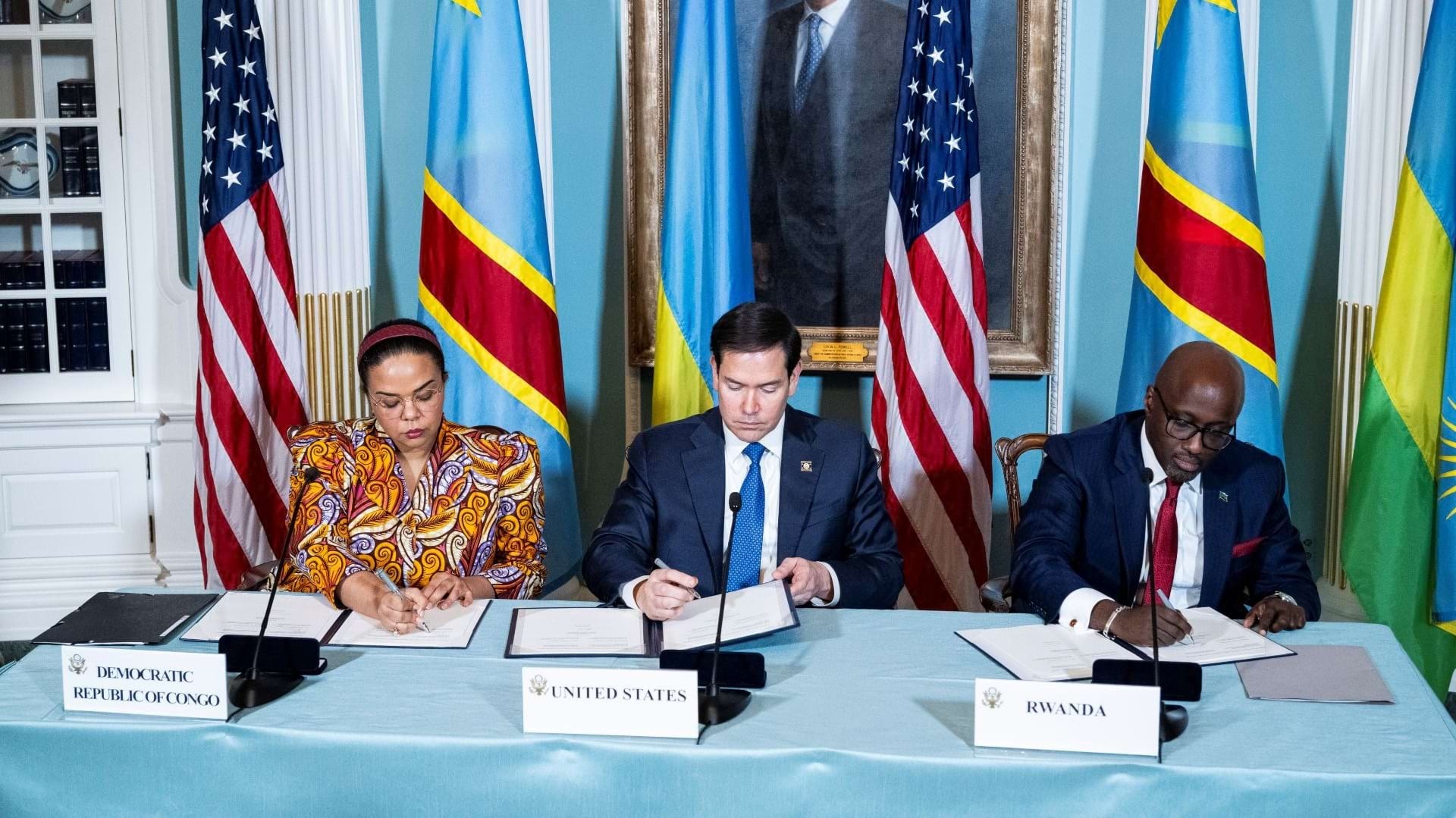
In a surprising move, the government of the Democratic Republic of Congo, Africa’s richest country by mineral deposits, has given the United States an offer to access its critical minerals in exchange for security. DRC is giving the US access to its Banana deep sea port and a possibility of the US having its military bases in the country. This move is driven by a complex interplay of geopolitical, economic, and security motivations, reflecting the DRC’s strategic positioning in a world increasingly reliant on critical minerals. With an estimated mineral wealth of $24 trillion, including the world’s largest reserves of cobalt, substantial copper deposits, and other key resources like lithium and tantalum, the DRC holds a pivotal role in global supply chains for advanced technologies, particularly those underpinning the green energy transition and defence industries.
The government of DRC led by President Felix Tshisekedi has increasingly come under immense pressure from the rebels that continues to gain territory; unmasking incapacity of the state to secure its borders and citizens. For over three decades, the eastern provinces, notably North and South Kivu, have been plagued by armed conflict involving more than 100 rebel groups, with the M23 movement emerging as a particularly formidable threat. In 2025 alone, the M23, allegedly supported by Rwanda, has caused thousands of deaths and displaced millions, capturing key mining hubs like Walikala and Goma. The Congolese government, under President Félix Tshisekedi, has struggled to contain this insurgency with its own forces and limited foreign aid, including an ineffective UN peacekeeping presence (MONUSCO). The DRC’s proposal to the US reflects a desperate bid for decisive military support (training, equipment, and potentially direct intervention), to stabilize the region and reclaim control over its territory and resources. The US, with its history of military engagement and influence in countering regional aggression is seen as a capable partner to tip the scales against the rebels.
Economically, the DRC seeks to diversify its partnerships and reduce its overwhelming reliance on China, which dominates its mining sector. Chinese companies own or co-own 15 of the DRC’s 19 cobalt operations, controlling roughly 70% of global cobalt supply, a critical component in batteries and military technologies. This dominance stems from a decades-long strategy, including the 2008 Sycamines deal, where China secured mineral access in exchange for infrastructure investments—though the DRC later criticized this arrangement for delivering far less than. Renegotiations in 2024 yielded a $7 billion revised deal, but dissatisfaction persists over transparency, equitable benefits, and China’s tolerance for operating in unstable, corruption-prone environments. By offering the US exclusive mineral access, the DRC aims to dilute China’s economic grip, attract Western investment, and leverage competition to negotiate better terms for its resources, aligning with Tshisekedi’s goal of fostering a more balanced economic landscape.
President Tshisekedi also sees US President Donald Trump as a transactional leader who could easily buy into the idea of investing into DRC mineral resources – a longstanding flashpoint in the ongoing geopolitical rivalry between the US and China. American policy makers accuse China of obtaining an upper hand in exploitation of DRC’s mineral resources. Given the precedent set in Ukraine where Trump has literally arm-twisted President Volodymyr Zelenskyy into a mineral deal with US for security guarantees in the conflict with Russia, Tshisekedi hopes for a node from Washington. The race for critical minerals is becoming more intense with leading political voices in US like Tesla owner Elon Musk having the eye and ear of President Trump – a factor that could jolt US into the DRC offer.
The third motivation for DRC to offer its natural resources to US for security is the apparent failure of the ongoing mediation and peace processes aimed at stemming the tide of conflict in Eastern DRC. On March 18, 2025, leaders of Rwanda and DRC met in Qatar and agreed to a cease fire in the Eastern DRC. Rwanda is believed to be strong supporter of the M23. The rebels announced a day later that the talks between President Felix and Rwanda’s Paul Kagame wouldn’t impeded their appetite for more Congolese territory. Furthermore, Angola has announced its decision to end its mediation efforts in the ongoing conflict involving the M23 rebels, the Democratic Republic of Congo and Rwanda. These developments have left little room for the DRC government to envision a possible future of peace and stability, creating much political pressure on President Tshisekedi to source for alternative paths to stability.
Furthermore, the success of the rebels is largely attributed to their capability to control mineral rich regions and use extra-state systems to extract the resources and sell to the international markets, including in the US and the European Union. Rwanda, accused of funding and arming the M23, is Africa’s largest gold exporter, despite having no known deposits of the commodity that would give it such as edge. Illegal exploitation of the DRC’s resources has been blamed for funding the rebels, thereby perpetuating a cycle of conflict-for-minerals with complicit countries like Rwanda attracting censures by the United Nations, the US and EU countries.
More importantly, through the deal, the DRC aims to harness its mineral wealth for domestic growth. The promise of US security assistance could stabilize mineral-rich regions like Lualaba and Haut-Katanga, where cobalt and copper deposits are concentrated, enabling the government to redirect revenues toward infrastructure, jobs, and poverty alleviation in one of the world’s poorest nations. The proposal includes joint mineral stockpiles and port projects, hinting at a vision for long-term economic partnership rather than mere extraction. This aligns with Tshisekedi’s rhetoric of using mineral resources to transform the DRC, reducing the appeal of rebellion by addressing underlying grievances like unemployment and lack of services.
Will US and European companies step in?
Offering DRC minerals in exchange for security by the US is something that will certainly get the attention of the Donald Trump. The US leader’s transactional nature and the desire to consolidate American power both at home and abroad, under the Make America Great Again (MAGA) movement led Tshisekedi to believe that time is ripe to broker a peace-for-minerals deal with Washington. At the heart of it, the offer is certainly alluring. The DRC is home to 60% of the world’s Coltan reserves; and up to 70% of the world’s cobalt production – all pointing to the lead position of the country in terms of critical minerals endowment. Similarly, the US has long decried China’s strong presence in DRC’s mineral sector where Beijing currently has a controlling stake in the exploration of the resources. In putting forward the offer to Trump administration, the DRC seeks to incentivize the US to prioritize its stability, potentially elevating its status on the international stage. For the DRC, aligning with the US could also counterbalance Rwanda’s regional influence and pressure the international community to address the conflict more decisively.
However, American companies have largely been absent in the DRC minerals exploitation space. The US has instead been relying on some European companies and merchants who sell the DRC minerals in the international markets. However, the increasingly visibility of China in DRC and other African countries has seen successive US leaders, including Barack Obama and Joe Biden initiate attempts to compete with China in the continent.
In the sunset days of his presidency, Joe Biden visited Angola, where he met regional leaders including President and host, João Lourenço; DRC President, Félix Tshisekedi; Zambian President Hakainde Hichilema and Tanzania Vice President Philip Mpango. The choice of Angola was critical given that it is the epicentre of a massive rail infrastructure project backed by the US and western allies to counter China’s connectivity headways in the continent. The Lobito Corridor, has become synonymous with Biden administration and is increasingly viewed as an important success of his administration in geopolitical chessboard in Africa, with the eye on China. Biden pledged US$ 600 million for the Lobito Corridor Project, bringing US total investment commitments in the corridor so far to US$ 4 billion. The G7 countries, EU and banks in Africa are expected to raise US$ 2 billion into the project.
The project remains the largest train development initiative supported by the US outside America and aims to refurbish 2,000 kilometres of train lines terminating in the mineral-rich areas of Democratic Republic of Congo and Zambia. The regions contain large deposits of cobalt, copper and other critical minerals used in manufacture of batteries for electric vehicles, electronic devices and other clean energy technologies. Implementing the corridor was primed to give the US and allies opportunity to cart away critical minerals from the central Africa region, including from DRC in a westerly manner – a stark contrast to what Washington sees as China’s use of the Belt and Road Initiative to transport minerals to China through the easterly route.
What would DRC-US minerals deal mean for China?
If the US-DRC deal is implemented, China’s near-monopoly over the DRC’s mining sector would face a significant challenge. Currently, Chinese firms like CMOC Group control the majority of cobalt and copper production, with 80% of DRC output shipped to China for processing. Exclusive US access to key deposits, coupled with operational control for American companies, could divert a substantial share of these resources westward. For instance, cobalt exports—vital for US tech and defence industries—might shift from Chinese refineries to US-led supply chains, potentially reducing China’s global market share from 70% to a lower figure, depending on the scale of US investment. This would weaken Beijing’s stranglehold on critical minerals, a strategic concern for the US amid rising geopolitical tensions between the two leading global powers.
Secondly, the entry of US companies would introduce competition, pressuring Chinese firms to improve their terms with the DRC. The DRC might leverage US interest to extract more value from Chinese partners by demanding higher royalties, better infrastructure commitments, or reduced environmental damage.
How Should China prepare for operations in DRC going forward?
China has traditionally paired its mining investments with military assistance, training Congolese forces and protecting its assets in the east. A US military presence will be a direct threat to Beijing. In order to avert this eventuality, China should deepen its economic ties with the DRC government by offering enhanced infrastructure investments, favourable loan terms, or technical assistance. This could reinforce the DRC’s reliance on Chinese partnerships, making it less appealing to pivot fully toward the US.
Secondly, China should play the long game. It took decades of investments by Chinese companies in DRC to achieve the level of dominance and visibility it enjoys today. The DRC request to the Trump administration remains aspirational. It is not clear if President Trump will buy into the idea and whether he will be in a position to marshal enough resources to see the desired investments come to life in DRC. Although Trumps aggressive budget cuts might put some dollars at his disposal, it remains to be seen if he will have the staying power actually push US companies and European allies to invest in DRC. The US has been long on rhetoric regarding China’s growing economic and political influence in Africa without corresponding policies and resources that can match Beijing in the continent.
China should also consider strengthening the terms of current mining contracts involving Chinese companies to ensure long term stability. Equally important is for Beijing to increase joint ventures with Congolese firms to enhance local stake in Chinese projects while building processing facilities in the DRC to add value and create local jobs, reducing reliance on raw exports.
Even if the DRC offer is not taken up by the Trump administration, it is emblematic of the restlessness of the DRC government regarding how to secure long term stability, security and prosperity of the country. China must act pre-emptively to consolidate its position in the DRC through diplomacy, economic incentives, and strategic diversification. By reinforcing its role as a dependable partner and countering US influence, China can mitigate risks from an actual US-DRC minerals-for-security deal.