

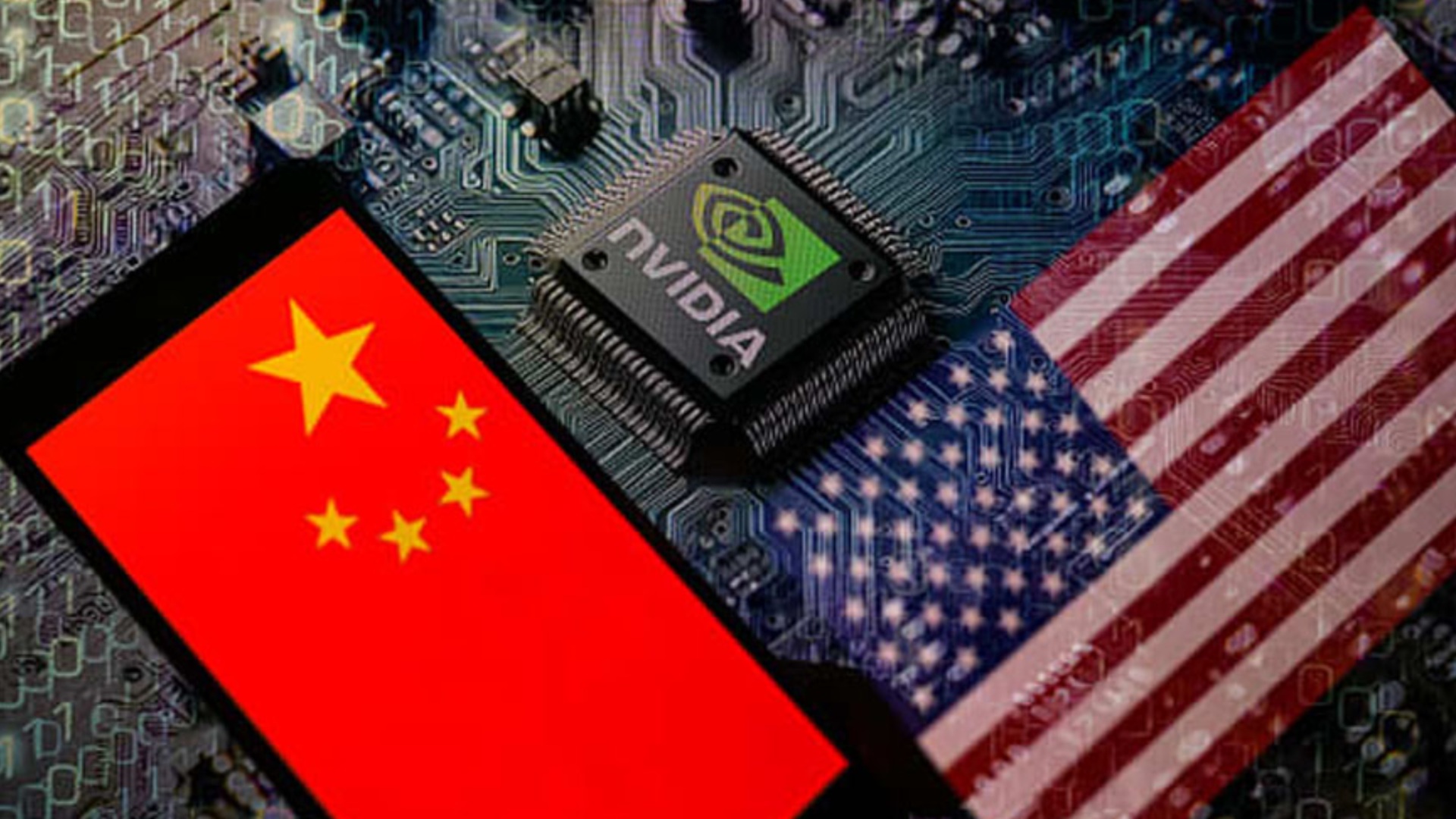
The US is drafting new export control rules under the Trump administration that would require government approval via the Department of Commerce for virtually all global exports of advanced AI chips and accelerators from companies like Nvidia and AMD.
This expands existing restrictions which already target around 40 countries, including China into a worldwide licensing framework, positioning the US as a “gatekeeper” for AI infrastructure. The goal appears to be oversight, security, and leverage for negotiations requiring foreign investments in US AI data centers or security guarantees for very large deployments.
Tiered review process. Smaller shipments; up to 1,000 Nvidia GB300 GPUs or equivalent ? Streamlined and simplified review. Larger clusters ? Pre-clearance, potential site visits, or monitoring requirements (e.g., software to prevent clustering without approval). Massive scales (e.g., over 200,000 units) ? Formal host-government agreements, “matching” US investments, or stricter conditions.
This builds on prior policies during Biden-era restrictions on certain countries, recent shifts allowing conditional sales to China with fees/tariffs), but shifts toward broader global control to prevent diversion risks and promote secure AI buildouts.
Register for Tekedia Mini-MBA edition 20 (June 8 – Sept 5, 2026).
Register for Tekedia AI in Business Masterclass.
Join Tekedia Capital Syndicate and co-invest in great global startups.
Register for Tekedia AI Lab.
The news caused immediate stock declines: Nvidia (NVDA): Down about 1.8–1.9%. AMD: Down about 2.2–2.3%. Micron: Down around 3.4%. These rules introduce bureaucratic hurdles, potential delays, and uncertainty for international sales, which could slow global AI deployments especially sovereign projects and affect revenue growth for US chipmakers.
AI-linked cryptocurrencies often tied to decentralized AI compute, rendering, or infrastructure narratives dropped in tandem, with several falling around 5%. This reflects market sensitivity: Tighter controls on leading AI hardware suppliers can dampen enthusiasm for AI ecosystem growth, including blockchain-based alternatives that rely on or compete with centralized AI infrastructure.
The proposals are still drafts and could change, be softened, or face pushback from industry players. They aim to balance national security with keeping US tech dominant globally, but critics worry about overreach harming competitiveness.

While not directly targeting TSMC; a Taiwanese firm, the rules’ global licensing requirements for US-designed chips could indirectly affect its order pipeline, production allocation, and revenue from AI-related manufacturing. TSMC’s American depositary shares closed at $344.94 on March 6, 2026, down 2.52% from the previous close of $353.86.
This decline mirrors the broader semiconductor sector’s response to the export news, with Nvidia and AMD also dropping 1.8-2.3% on March 5 amid fears of delayed international sales and bureaucratic hurdles. The dip reflects investor concerns over potential order disruptions, particularly for China-bound chips, but TSMC’s shares have still surged over 200% in the past five years, driven by explosive AI demand.
Analysts view this as a temporary pullback, with long-term growth intact due to TSMC’s near-monopoly over 90% market share in advanced nodes like 3nm and 2nm processes critical for AI. Nvidia has reportedly halted production of its H200 AI chips intended for China, redirecting TSMC manufacturing capacity toward its next-generation Vera Rubin platform.
This stems from stalled US export licenses and Beijing’s push for domestic alternatives, reducing near-term H200 volumes but potentially maintaining or boosting overall utilization at TSMC fabs for unrestricted products. Similar dynamics could apply to AMD’s MI325X chips.

TSMC’s Nanjing fab in China faces ongoing restrictions; the US revoked its special export license for advanced tools by the end of 2025, forcing case-by-case approvals that could limit upgrades or output. However, China represents less than 10% of TSMC’s revenue, minimizing the hit compared to peers like Samsung or SK Hynix. If global export approvals slow large-scale AI cluster sales, it might temper TSMC’s 2026 production ramp-up for restricted chips.
To counter uncertainties, TSMC is speeding up construction of its mega-fab in southern Taiwan to meet surging AI chip demand, backed by projected 53.77% year-over-year EPS growth. This aligns with US policies under the CHIPS Act, which have pushed TSMC to invest over $65 billion in US facilities reducing reliance on Taiwan-based production and mitigating geopolitical risks.
As the producer of 90%+ of the world’s advanced semiconductors, TSMC gives Taiwan significant influence in the AI ecosystem. The rules position the US as a “gatekeeper,” potentially driving more AI infrastructure investments stateside, but they also highlight TSMC’s bottlenecks in advanced packaging, which are critical for inference-heavy AI agents and could amplify its role in future growth.
The tiered approval process isn’t an outright ban and could foster negotiated deals, like foreign investments in US data centers. This might sustain demand for TSMC’s services, especially as AI shifts from training to real-time inference, where its hardware dominance is key.
Critics argue overreach could harm US competitiveness, but for TSMC, it reinforces its indispensable position. Escalating US-China tensions or broader conflicts (e.g., US-Iran issues cited in recent chip dips) could disrupt supply chains. If China accelerates self-sufficiency, it might erode TSMC’s edge, though experts estimate a multi-year gap in capabilities.
The rules introduce near-term headwinds like order volatility and stock pressure, but TSMC’s fundamentals remain strong amid AI’s explosive trajectory. The proposals are still in draft form and could evolve with industry feedback.