

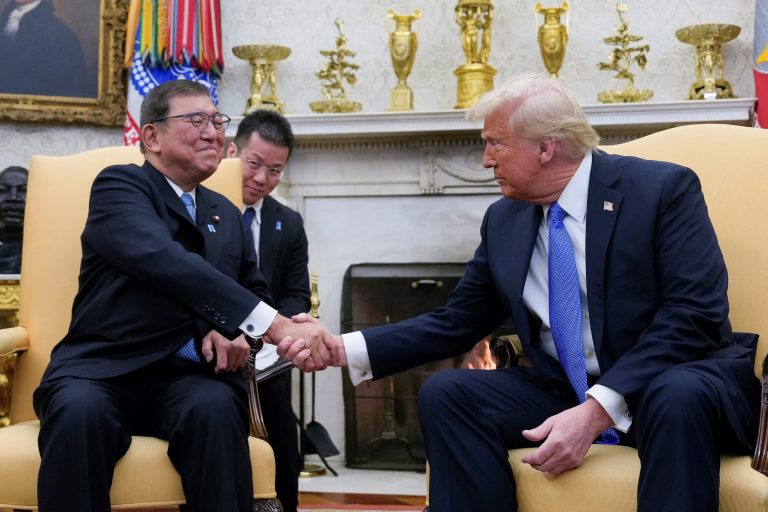
The United States and Japan have announced a $1 billion partnership aimed at accelerating breakthroughs in artificial intelligence, quantum computing, nuclear fusion, and biotechnology. The initiative reflects a shift toward integrated technological alliances among advanced economies seeking to maintain leadership in frontier science.
The agreement signals coordinated research agendas, shared infrastructure development, and deeper alignment between public institutions, national laboratories, and private sector innovators. It also highlights concerns about technological fragmentation, supply chain resilience, and the strategic control of next-generation computing and energy systems.
In artificial intelligence, the partnership focuses on model development, semiconductor optimization, and safety-aligned deployment frameworks.
Both countries aim to pool compute resources, accelerate chip design innovation, and improve energy efficiency in large-scale training systems. Japan contributes robotics integration and industrial automation expertise, while the United States provides foundation model research and cloud-scale infrastructure.
Register for the next Tekedia Mini-MBA.
Register for Tekedia AI in Business Masterclass.
Join Tekedia Capital Syndicate and co-invest in great global startups.
Joint initiatives will prioritize secure AI systems for defense, healthcare, and manufacturing, while reducing dependency on single-vendor ecosystems through diversified hardware and software stacks, alongside talent exchange and joint funding mechanisms efforts.
Quantum computing is a pillar of the agreement, targeting advances in qubit stability, error correction, and scalable architectures. Collaborative research will involve national laboratories, universities, and quantum startups. The goal is to accelerate quantum advantage in cryptography, materials science, and optimization problems.
By aligning standards and hardware roadmaps, the United States and Japan aim to avoid fragmentation in early-stage ecosystems while positioning themselves ahead of competitors in Europe and China, with interoperability and secure quantum communication as priorities.

Fusion research under the partnership centers on accelerating plasma confinement breakthroughs and advancing tokamak and stellarator designs. Both countries aim to integrate computational modeling with experimental reactor data to reduce time to commercial fusion energy.
Shared investment in supercomputing and advanced materials is expected to improve reactor stability and yield.
The collaboration also seeks common regulatory frameworks for fusion safety and commercialization pathways, positioning fusion as a long-term clean energy alternative, including pilot plant coordination efforts and validation. Biotechnology forms a pillar emphasizing genomic research, bio-manufacturing, and pandemic preparedness.
The United States and Japan will collaborate on synthetic biology platforms, drug discovery pipelines, and AI-driven protein modeling. Investments will enhance vaccine development and strengthen medical supply chains. Ethical frameworks for gene editing and biosecurity will be jointly developed to ensure responsible innovation.

The initiative reflects recognition that biotech is strategically important as digital and energy technologies in national security planning across public and private sectors globally. Geopolitically, the partnership underscores coordinated response to global technology competition.
By aligning research priorities, the United States and Japan aim to reinforce democratic leadership in emerging technologies while reducing reliance on concentrated supply chains. Economically, the initiative is expected to catalyze private investment, stimulate startups, and accelerate commercialization of frontier research.
Challenges remain, including regulatory harmonization, intellectual property management, and high costs of scaling experimental technologies into industrial systems, alongside sustained cross-border coordination efforts and governance alignment efforts.
The $1 billion United States–Japan partnership represents convergence of science, industry, and security priorities. By jointly investing in AI, quantum computing, fusion energy, and biotechnology, both nations position themselves at the forefront of the next technological era.
Success will depend on execution, sustained funding, and coordination across sectors. If successful, it could redefine global innovation leadership and allied technological collaboration long term framework.