

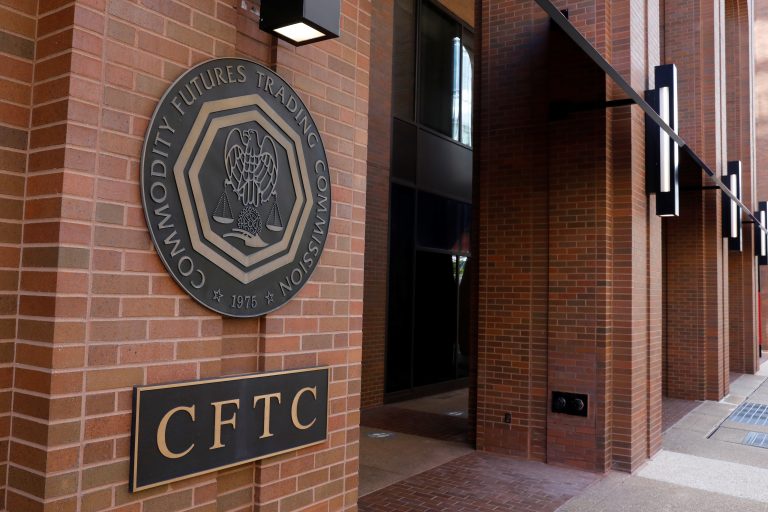
The U.S. Securities and Exchange Commission (SEC) and the Commodity Futures Trading Commission (CFTC) have signed a landmark Memorandum of Understanding (MOU) to enhance coordination on oversight, with a strong focus on cryptocurrency and digital assets.
The agreement was announced on March 11, 2026, marking a significant step toward resolving long-standing jurisdictional overlaps and “turf wars” between the two agencies.This MOU aims to support lawful innovation, maintain market integrity, and protect investors/customers while fostering U.S. competitiveness in finance through clearer, more harmonized regulation.
Alignment on definitions — Developing a shared taxonomy/classification for crypto assets to reduce confusion over whether something is a security (SEC) or commodity (CFTC). Agencies will share supervisory data securely, confer on overlapping enforcement actions, conduct joint examinations, and hold regular staff meetings.
Joint Harmonization Initiative
A new effort to advance regulatory clarity in shared areas, including joint reviews of product applications from dually registered firms and reducing frictions for exchanges, venues, and intermediaries. Explicit goal of creating a “fit-for-purpose” regulatory framework for crypto assets and emerging technologies, addressing barriers to new product launches and improving overall clarity.
Register for Tekedia Mini-MBA edition 20 (June 8 – Sept 5, 2026).
Register for Tekedia AI in Business Masterclass.
Join Tekedia Capital Syndicate and co-invest in great global startups.
Register for Tekedia AI Lab.
Six priority areas — Including shared crypto-asset taxonomy, coordinated enforcement, joint firm consultation platforms, policymaking alignment, modernizing rules and data sharing. SEC Chair Paul Atkins described it as a “roadmap for a new era of harmonization,” emphasizing that past overlaps had stifled innovation and driven activity overseas.
The MOU is not legally binding but signals strong commitment to collaboration, which market participants view positively for reducing regulatory uncertainty. This development follows years of debate over crypto jurisdiction and could pave the way for clearer rules, easier institutional entry, and a more unified U.S. stance on digital assets.
Industry reactions appear broadly optimistic, seeing it as a step toward ending duplicative burdens and unlocking growth in the sector. This non-binding agreement reaffirms and expands prior coordination including the 2004 MOU on security futures products to address overlapping jurisdictions in an evolving financial landscape, particularly with interconnected markets, digital infrastructure, and crypto assets blurring traditional lines.

The SEC’s mission focuses on investor protection, fair/ordered/efficient securities markets, and capital formation. The CFTC’s emphasizes integrity, resilience, and vibrancy of U.S. derivatives markets via principles-based regulation. Both recognize shared oversight in areas like trading venues, clearinghouses, data repositories, pooled vehicles, intermediaries, and hybrid products.
Markets are rapidly converging through technology, with new model like onchain and automated systems creating jurisdictional ambiguity and cross-market risks. The MOU aims for closer harmonization to support innovation while protecting market integrity, investors, and customers.
Subject to applicable law, the agencies will strive to: Provide regulatory clarity and certainty through technology-neutral rules, emerging-tech accommodations, transparent processes, and defined boundaries. Share information/data on common issues (e.g., incidents/events/activities), including swaps/security-based swaps data from repositories (with confidentiality).
Coordinate closely to remove barriers to lawful introduction of novel derivatives, crypto products, or other innovations. Enhance overall market functioning. Clarifying product definitions via joint interpretations and rulemakings. Modernizing clearing, margin, and collateral frameworks. Reducing frictions for dually registered exchanges, venues, and intermediaries.

Providing a fit-for-purpose regulatory framework for crypto assets and emerging technologies. Streamlining regulatory reporting for trade data, funds, and intermediaries. Coordinating cross-market examinations, economic analyses, risk monitoring, surveillance, and enforcement. Implementation Mechanisms Secure data sharing. Regular staff meetings and consultations. Joint examinations and coordinated enforcement (e.g., conferring on charges, strategies).
Joint reviews of product applications from dually registered firms. Efforts to align policymaking and reduce duplicative burdens. Reaffirmation of Prior MOU. The parties reaffirm the March 17, 2004, MOU on oversight of security futures product (SFP) trading and information sharing.
The MOU is not legally binding and enforceable but signals strong commitment to collaboration. It does not alter statutory authorities or create rights and obligations for third parties. Amendments require mutual written consent. It takes effect upon signing. Signed by SEC Chairman Paul S. Atkins and CFTC Chairman Michael S. Selig on March 11, 2026.
Overall, the document serves as a high-level roadmap for ongoing inter-agency cooperation, with heavy emphasis on crypto/digital assets to reduce uncertainty, end past “turf wars,” and foster U.S. leadership in financial innovation. Industry views it as a positive, clarity-boosting step without immediate rule changes.