

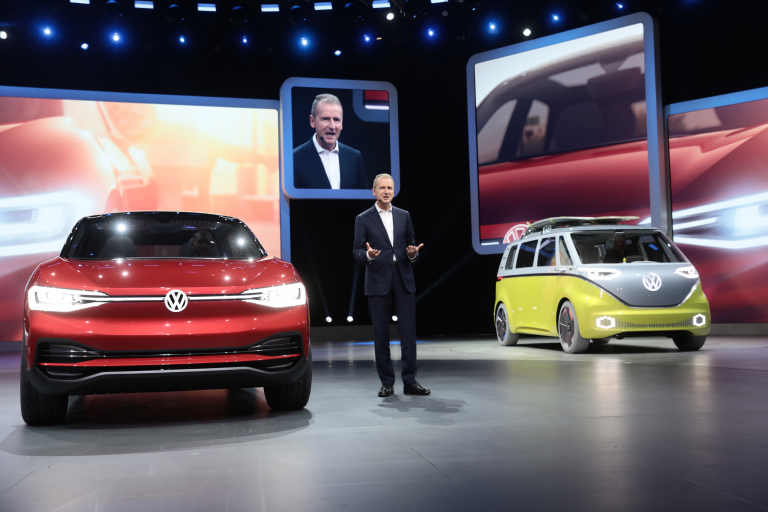
Volkswagen is facing growing tensions with its workforce after reports emerged that management is delaying the release of detailed cost-cutting plans, fueling uncertainty and anger among employees and labor representatives.
The German automotive giant, already grappling with slowing demand, intensifying competition from Chinese electric vehicle manufacturers, and the costly transition toward electrification, now finds itself dealing with internal unrest that could complicate its restructuring efforts.
The frustration among workers stems largely from a perceived lack of transparency. Employees and union leaders argue that management has repeatedly warned of the need for significant savings but has yet to clearly explain where the reductions will occur or how deeply they will affect jobs and operations.
This uncertainty has created anxiety across Volkswagen’s extensive workforce, particularly in Germany, where the company remains one of the country’s largest employers.
Register for the next Tekedia Mini-MBA.
Register for Tekedia AI in Business Masterclass.
Join Tekedia Capital Syndicate and co-invest in great global startups.
Volkswagen has been under increasing pressure to improve profitability as global market conditions become more challenging. The company has struggled with weaker demand in Europe and China, two of its most important markets.
Electric vehicle adoption has been slower than many automakers expected, while price competition has intensified significantly. Chinese manufacturers such as BYD have expanded rapidly, offering competitively priced electric vehicles that threaten Volkswagen’s market share both in China and increasingly in Europe.
To address these challenges, Volkswagen has emphasized the necessity of reducing costs and improving efficiency. Company executives have repeatedly stated that the existing cost structure is too high to remain competitive in the evolving automotive landscape.

However, employees fear that efficiency measures could translate into plant closures, job reductions, or cuts to worker benefits. Labor unions, particularly IG Metall and Volkswagen’s influential works council, have expressed strong dissatisfaction with management’s approach.
Worker representatives argue that any restructuring process should involve open dialogue and early communication. They contend that withholding details about future plans undermines trust and creates unnecessary tensions within the company.
The situation is particularly sensitive because Volkswagen has historically maintained a unique relationship between management and labor.
Germany’s co-determination system grants workers significant influence through representation on supervisory boards and works councils. This collaborative model has often allowed the company to navigate difficult periods through negotiation and compromise. However, the current lack of clarity risks damaging that long-standing partnership.

The uncertainty extends beyond immediate job concerns. Many workers worry that delayed communication may indicate that management is considering more drastic measures than initially anticipated. Rumors regarding possible factory restructuring and potential workforce reductions have intensified concerns.
Volkswagen’s leadership faces a delicate balancing act. On one hand, decisive action is needed to maintain competitiveness in a rapidly changing industry. On the other hand, management must preserve employee morale and maintain constructive relations with labor organizations that play a central role in the company’s governance.
The coming months are likely to prove crucial for Volkswagen’s future direction. Investors will be watching closely to see whether the company can successfully implement reforms that enhance profitability without triggering major labor conflicts.
Equally important will be management’s ability to communicate its strategy transparently and reassure employees about the company’s long-term vision. Volkswagen’s current predicament highlights the broader challenges confronting the global automotive industry.
As traditional manufacturers adapt to electrification, digitalization, and increasing international competition, balancing financial discipline with social responsibility will remain one of the defining tests of corporate leadership in the years ahead.
Germany Invests in Railway Infrastructure as Key Hamburg-Hanover Route Reopens
Germany’s transport infrastructure received a major boost as the busy rail corridor connecting Hamburg and Hanover officially reopened following extensive modernization and renovation works. The reopening marks an important milestone in the country’s broader effort to upgrade its aging railway network, improve service reliability, and strengthen sustainable transportation across Europe.
The Hamburg-Hanover line is one of Germany’s most important railway routes, serving as a crucial connection between northern ports, industrial centers, and major passenger destinations. Every day, the corridor accommodates thousands of passengers and significant freight traffic, making it a strategic artery for both the German economy and European logistics networks.
Its temporary closure for renovations had caused disruptions and rerouting challenges, but authorities argued that the short-term inconvenience was necessary to ensure long-term efficiency.
The renovation project focused on modernizing tracks, signaling systems, overhead power lines, and station infrastructure along key sections of the route. Germany’s national railway operator, Deutsche Bahn, has increasingly come under pressure to address frequent delays, maintenance backlogs, and deteriorating infrastructure that have affected the country’s rail reputation in recent years.
The Hamburg-Hanover project is therefore viewed as a symbol of Germany’s determination to restore confidence in its railway system. One of the most significant improvements introduced through the renovations is the installation of more advanced digital signaling technology.
These upgrades are expected to increase operational capacity, allowing more trains to use the corridor while reducing bottlenecks and delays. Faster maintenance response systems and enhanced safety measures have also been integrated into the network. For freight transportation, the reopening carries substantial economic implications.
Hamburg is one of Europe’s largest ports, serving as a gateway for goods entering and leaving Germany. Efficient rail connections from Hamburg to inland regions are essential for maintaining supply chain stability and supporting exports. The renovated line will help improve cargo movement, reduce transit times, and lower logistical costs for businesses that rely heavily on rail transport.
Passenger services are also expected to benefit considerably. Travelers between Hamburg, Hanover, and other connected cities should experience more punctual services and improved travel comfort.
Reduced delays could encourage more people to choose rail over road or air transport, aligning with Germany’s environmental objectives of lowering carbon emissions and promoting greener mobility solutions. The reopening comes at a critical time when European governments are increasingly emphasizing infrastructure investment and sustainable transportation.
Rail networks are being viewed as central components of climate strategies, particularly as countries seek alternatives to carbon-intensive modes of transport. Germany, Europe’s largest economy, has committed billions of euros toward railway modernization, with several major projects currently underway across the country.
However, experts caution that the reopening of the Hamburg-Hanover line represents only one step in a much larger challenge.
Germany’s railway system still faces substantial investment needs, and numerous corridors require similar upgrades. Continued funding, efficient project execution, and long-term planning will be essential to ensuring that the country’s transport infrastructure can meet future demand.
The successful completion and reopening of the Hamburg-Hanover route provide a positive signal for Germany’s infrastructure ambitions. It demonstrates that significant modernization projects can be delivered and highlights the government’s commitment to building a more resilient, efficient, and environmentally sustainable transportation network.
As trains resume operations on this critical corridor, businesses, commuters, and policymakers alike will be watching closely to see whether the improvements deliver the promised gains in reliability and efficiency. If successful, the project could serve as a blueprint for future railway modernization efforts across Germany and Europe.