

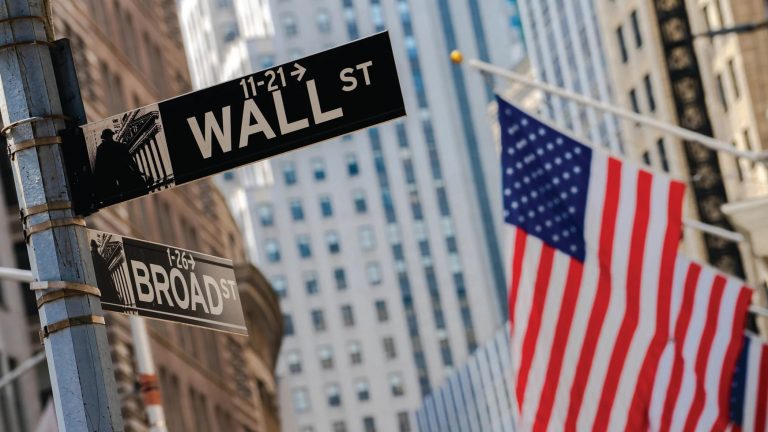
Wall Street’s record-breaking rally hit a pause on Monday as renewed concerns over the stalled U.S.-Iran peace process injected fresh uncertainty into markets already grappling with rising oil prices and the prospect of stickier inflation.
The pullback was modest, but it reflected growing investor caution after weeks of relentless gains that pushed the S&P 500 and the Nasdaq Composite to successive record highs.
Markets initially opened mixed after U.S. President Donald Trump swiftly rejected Iran’s response to a U.S. peace proposal, reviving fears that the 10-week-old conflict could drag on and prolong disruptions around the Strait of Hormuz, one of the world’s most critical oil shipping chokepoints.
Register for the next Tekedia Mini-MBA.
Register for Tekedia AI in Business Masterclass.
Join Tekedia Capital Syndicate and co-invest in great global startups.
Brent crude climbed sharply again, extending a run that has kept energy markets on edge and complicated the inflation outlook globally.
The market’s resilience, however, remains striking. Even with oil prices elevated and geopolitical risks intensifying, equities have continued to push higher in recent weeks, driven largely by surging enthusiasm around artificial intelligence, blockbuster technology earnings, and signs that the U.S. economy remains sturdier than many investors expected earlier this year.
By mid-morning trading, the Dow Jones Industrial Average was little changed, slipping just 3.54 points to 49,605.62. The S&P 500 gained 0.15% to 7,410.31, while the Nasdaq Composite edged up 0.04% to 26,257.27 after both indexes touched fresh all-time highs earlier in the session.

“The worry list is long, but the economy keeps proving the bears wrong,” said Robert Edwards, chief investment officer at Edwards Asset Management.
“Big tech has regained its leadership, backed by solid and growing revenue and earnings. These names sit at the center of every major secular theme.”
Oil shock collides with AI-driven optimism
The latest market tension underpins the increasingly fragile balance investors are trying to maintain between geopolitical risk and the AI-fueled growth narrative dominating Wall Street. For much of the year, investors have largely brushed aside concerns over war in the Middle East, betting instead that artificial intelligence investment, strong corporate profits, and resilient consumer spending would continue powering the economy higher.

That optimism has been reinforced by an earnings season that has broadly exceeded expectations. More than 80% of companies reporting results have beaten profit forecasts, with technology and semiconductor firms once again driving much of the upside momentum.
The AI trade remains the market’s dominant force. Shares of Intel rose another 3.5% Monday after surging nearly 14% on Friday following reports of a preliminary chip manufacturing agreement with Apple. Qualcomm jumped 8.6% to a record high, underscoring continued investor appetite for semiconductor and AI-linked names.
The gains reflect growing expectations that AI infrastructure spending will remain enormous for years, benefiting companies across the semiconductor supply chain, cloud computing, and networking sectors. Investors are also awaiting earnings later this week from Cisco and Applied Materials, while heavyweight reports from Nvidia and Walmart later this month could further shape sentiment.
Yet the longer the Iran conflict drags on, the greater the risk that energy prices begin undermining the broader economic expansion that has supported the rally. Investors increasingly worry that persistently high oil prices could reignite inflationary pressures just as markets had started pricing in eventual Federal Reserve easing.
Inflation data now becomes the market’s next major test
Attention is now shifting toward Tuesday’s U.S. consumer price index report, which could become the next major catalyst for markets. Economists expect inflation to edge higher in April as higher fuel and transportation costs begin filtering through the economy.
Additional producer price data and retail sales figures later this week will offer further insight into whether consumers and businesses are beginning to feel more strain from the geopolitical shock. The stakes are high because markets have already sharply reduced expectations for Federal Reserve rate cuts this year.
Strong payroll data released last week supported the view that the U.S. labor market remains resilient, giving the Fed more room to keep interest rates elevated if inflation remains stubborn.
But that dynamic is believed to have created a more complicated environment for investors. The economic resilience supports corporate earnings and stock valuations, while stronger growth combined with higher oil prices risks delaying monetary easing and tightening financial conditions.
Energy and materials stocks led gains Monday, reflecting those inflation concerns. The S&P 500 energy sector rose 1.5%, while the materials sector gained 1.3% alongside rising precious metal prices.
Airline stocks, however, came under pressure as investors worried that higher fuel costs would squeeze margins. Shares of Southwest Airlines, Delta Air Lines, Alaska Airlines, and United Airlines fell between 1.8% and 2%.
Geopolitics returns to the center of markets
Beyond inflation and earnings, investors are also closely watching preparations for Trump’s meeting later this week with Chinese President Xi Jinping. The summit is expected to cover Iran, Taiwan, artificial intelligence, nuclear weapons, and a possible extension of a critical minerals agreement between the two countries.
The discussions come at a time when global markets are increasingly being shaped by geopolitical fragmentation, supply-chain security, and industrial policy rather than traditional economic cycles alone.
The biggest question for Wall Street is whether the market’s AI-driven optimism can continue overpowering mounting geopolitical and inflation risks. So far, investors have repeatedly chosen growth over fear. But with oil climbing again, inflation data looming, and the Middle East conflict showing little sign of resolution, economists believe that markets may soon face a tougher test of that confidence.