

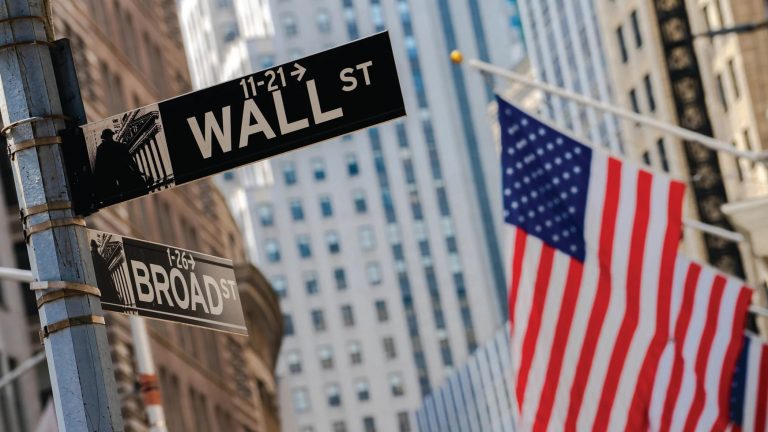
U.S. equities rallied sharply as investors piled back into risk assets on growing optimism that diplomatic channels in the Middle East may yet produce an off-ramp to the Iran conflict, while softer-than-expected inflation data and a strong start to the earnings season added fresh momentum to the advance.
The move pushed the Nasdaq nearly 2% higher and left the S&P 500 within touching distance of its all-time closing high, underscoring how quickly sentiment has shifted from war-driven panic to renewed risk appetite.
The rebound reflects a market increasingly willing to look beyond immediate geopolitical turbulence and price in a less severe macro outcome. After several weeks in which every headline from the Gulf sent stocks and oil sharply in opposite directions, investors are now seizing on even tentative diplomatic signals as justification to buy the dip.
Register for the next Tekedia Mini-MBA.
Register for Tekedia AI in Business Masterclass.
Join Tekedia Capital Syndicate and co-invest in great global startups.
That shift was evident across the major benchmarks.
The Nasdaq Composite climbed 1.96% to 23,639.08, marking its tenth consecutive daily gain, one of its strongest winning streaks in recent years. The S&P 500 advanced 1.18% to 6,967.38, ending just a few points below its January record close of 6,978.60, while the Dow Jones Industrial Average rose 0.66% to 48,535.99, its highest finish since early March.
The market’s rebound is being driven primarily by expectations that diplomacy may resume. Talks aimed at ending the Iran war could restart in Pakistan within days, according to comments attributed to President Donald Trump, after the collapse of weekend negotiations led Washington to impose a blockade on Iranian ports. At the same time, the U.S. State Department said Israel and Lebanon had agreed to begin direct negotiations at a mutually agreed time and place, offering another sign that the region may be moving, however cautiously, toward de-escalation.

This is of huge interest to investors because oil has been the key transmission channel between the war and broader financial markets. Volatile crude prices have dramatically altered inflation expectations in recent weeks, forcing markets to rapidly reprice the outlook for Federal Reserve policy and global growth. As fears of a prolonged supply shock eased, oil prices retreated sharply, dragging energy stocks lower but providing relief for the broader market.
The S&P’s energy sector fell 2.2%, the weakest among the major industry groups, as crude prices declined on optimism around diplomacy. That decline in oil helped reinforce another positive catalyst: inflation.
Tuesday’s producer price data came in softer than expected, with U.S. producer prices rising less than forecast in March as service costs were unchanged. The reading eased concerns that the conflict’s impact on energy prices would quickly spill over into broader inflation, giving investors greater confidence that the Federal Reserve may not need to maintain a tighter stance for longer.

Anthony Saglimbene, chief market strategist at Ameriprise, captured the mood well.
“The market is kind of moving past this concept of peak uncertainty. There’s been a lot of uncertainty in the market, whether that’s coming from the Iran conflict, AI disruption fears, inflation concerns or Federal Reserve policy concerns,” he said.
“Markets are starting to kind of walk away from some of the worst-case scenarios for these events and because valuations have improved over the last couple of weeks and months, investors are buying the dip right now.”
That point is central to the current rally because this is seen as not merely a headline-driven bounce. The recent war-driven selloff had compressed multiples across key growth sectors, particularly technology and semiconductors, leaving many investors convinced that prices no longer reflected underlying earnings resilience.
That view was reinforced by earnings. The first major batch of bank results provided fresh evidence that the U.S. economy remains sturdier than feared. BlackRock rose 3% after posting higher first-quarter profit, supported by strong ETF inflows and performance fees, while Citigroup gained 2.6% after beating profit estimates and reaching its highest level since 2008.
Even where the reaction was mixed, the broader read-through remained constructive. JPMorgan’s results received a more muted response, and Wells Fargo declined after missing expectations on net interest income. Still, investors largely interpreted the earnings season’s opening phase as confirmation that the economy has not materially weakened despite geopolitical stress.
As Burns McKinney of NFJ Investment Group put it, “We don’t have a resolution yet but investors don’t want to miss the rebound.”
However, technology once again led the rally. Software stocks gained 1.6% for a second straight session, while the Philadelphia Semiconductor Index rose 2% for its fifth consecutive record close, a remarkable signal that AI-linked optimism remains intact despite recent volatility.
This is particularly important because tech has become the market’s preferred expression of dip-buying sentiment. As concerns around AI monetization, war risk, and inflation begin to ease simultaneously, capital is rotating back into the highest-beta growth names.
Breadth also confirmed the strength of the rally. Advancing stocks outnumbered decliners by more than 2.6 to 1 on the NYSE and 2.2 to 1 on the Nasdaq, while the S&P 500 posted 20 new 52-week highs against just one new low.
The broader takeaway is that Wall Street is increasingly pricing a scenario in which the Middle East conflict does not spiral into a prolonged economic shock. With inflation showing signs of moderation, corporate earnings holding firm, and technology stocks regaining leadership, investors are positioning for the possibility that the worst-case macro scenarios are beginning to recede.
If diplomatic momentum continues, industry experts say the next milestone may not simply be recovery, but a push to fresh record highs.