

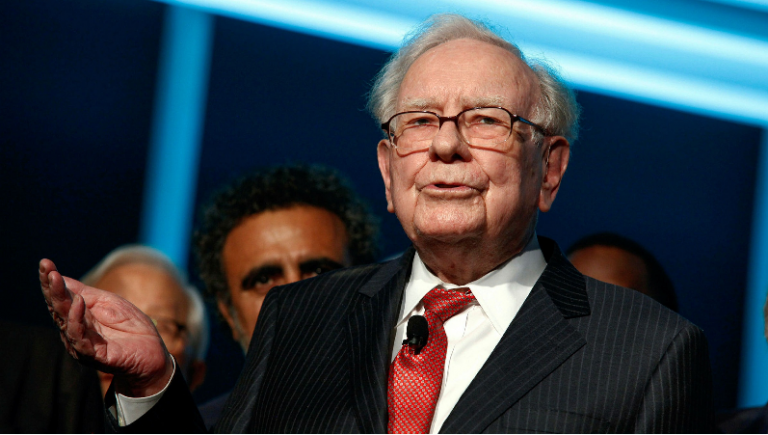
Warren Buffett has ruled out adding another railroad to Berkshire Hathaway’s vast portfolio, but he is looking for ways to make America’s freight rail system more efficient through partnerships.
Speaking with CNBC’s Becky Quick on Monday, the legendary investor confirmed that he and Berkshire CEO-designate Greg Abel met earlier this month with CSX CEO Joseph Hinrichs in Omaha, Nebraska, to discuss possible collaboration.
The August 3 meeting, which took place without advisors present, was candid. Buffett and Abel assured Hinrichs they had no intention of making a takeover bid for CSX. Instead, they suggested the two companies could reap many of the same benefits that consolidation might bring through closer cooperation. Buffett explained that coordination between rail operators could unlock efficiencies without the upheaval or costs associated with mergers.
Register for Tekedia Mini-MBA edition 20 (June 8 – Sept 5, 2026).
Register for Tekedia AI in Business Masterclass.
Join Tekedia Capital Syndicate and co-invest in great global startups.
Register for Tekedia AI Lab.
The market responded swiftly, with CSX shares falling about 5% to $32.81 after the news that Buffett was not interested in an outright purchase. Union Pacific dropped about 2%, Norfolk Southern lost more than 2%, and Berkshire Hathaway itself slipped less than 1%. The pullback reflected investors’ recalibration following a period of speculation that Berkshire might seek another transformative railroad acquisition.
That speculation was partly fueled by last month’s shock $85 billion takeover announcement from Union Pacific, which unveiled plans to acquire Norfolk Southern. The deal set off a wave of chatter across the industry, with CSX shares jumping 9% in July on hopes that Berkshire’s BNSF Railway could enter the fray. But Buffett’s latest remarks clarify that his strategy favors collaboration over consolidation.
Back in 2009, at the height of the financial crisis, Buffett stunned markets by spending $26 billion to acquire BNSF in what remains one of his boldest and most successful bets. He hailed the railroad then as an “all-in wager on the American economy.” The purchase gave Berkshire a permanent stake in the backbone of U.S. commerce, with BNSF now ranking among the conglomerate’s crown jewels. But that was a different era.

The shift is already visible in practice. On Friday, BNSF and CSX jointly announced a new coast-to-coast rail service designed to make freight movements more efficient by linking their networks. For Buffett, such a partnership accomplishes much of what a merger would achieve—greater reach, improved service reliability, and streamlined logistics—without Berkshire having to pay a steep acquisition premium.
While Buffett’s cautious approach bucks the wave of merger speculation in the U.S., it mirrors strategies seen among other major global rail operators. In Canada, for instance, Canadian National Railway (CN) and Canadian Pacific Kansas City (CPKC) have pursued different paths to growth: CN has leaned on selective acquisitions alongside operational discipline, while CPKC completed a historic $31 billion merger to form the first railway linking Canada, the U.S., and Mexico. That deal created sweeping efficiencies for cross-border freight but also came with regulatory scrutiny and integration risks—factors Buffett appears intent on avoiding.
In Europe, freight railroads have often turned to cross-border alliances rather than outright acquisitions to cope with the continent’s fragmented national networks. Operators such as DB Cargo in Germany and SNCF’s rail freight arm in France regularly cooperate on corridor access agreements, intermodal hubs, and technology sharing to keep costs in check while ensuring seamless freight flows across borders. Buffett’s BNSF-CSX partnership bears a resemblance to those European arrangements, where efficiency gains are pursued without the financial and political complications of mergers.

This emphasis on cooperation over consolidation also reflects Buffett’s long-standing investment philosophy: avoid overpaying for assets while focusing on long-term operational performance. Berkshire can expand its influence and achieve coast-to-coast service efficiencies by drawing CSX into BNSF’s orbit through partnerships, even as competitors like Union Pacific chase headline-grabbing acquisitions.
Buffett’s strategy underpins a divergence in the U.S. freight sector. While Union Pacific and Norfolk Southern prepare for a massive integration that could reshape the industry, BNSF and CSX are betting that voluntary collaboration will yield similar network-wide benefits.