


When news broke that Fuji legend Wasiu Ayinde Marshal, K1 De Ultimate, had been stopped at Abuja’s Nnamdi Azikiwe International Airport over an alleged breach of aviation rules, the incident seemed straightforward. The Federal Airports Authority of Nigeria (FAAN) issued its statement. The musician’s camp countered with its own version.
After analysing series of tweets that trailed the incident, our analyst notes that beneath the headlines, the episode has tapped into something deeper. It has stirred a long-standing crisis of public trust in Nigeria’s institutions and a widely held belief that power, not the law, determines outcomes.
FAAN’s account is unequivocal. The liquid was alcohol, the passenger resisted instructions, and security intervention was required. This is the language of official authority: procedural, technical, and certain. It carries the weight of institutional legitimacy. Yet in a society where officialdom is often suspected of bending to influence, even the clearest statements are met with scepticism.
Register for Tekedia Mini-MBA edition 20 (June 8 – Sept 5, 2026).
Register for Tekedia AI in Business Masterclass.
Join Tekedia Capital Syndicate and co-invest in great global startups.
Register for Tekedia AI Lab.
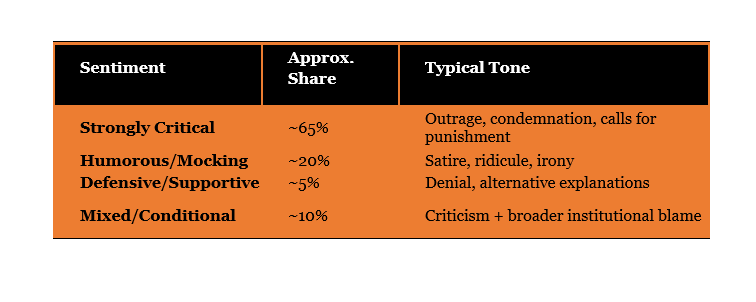
That scepticism found its sharpest expression in comments that framed the incident not as a matter of aviation safety but as a test of whether political connections outweigh public rules. One widely shared reaction read:
“If you attempt to hold a commercial aircraft hostage, it is an act of terrorism. If Wasiu does not spend a long time in jail, then we know why (obviously).”
The “why” here is shorthand for proximity to power. K1 is known to be a close friend of President Bola Ahmed Tinubu. For many Nigerians, that connection alone explains why a celebrity might expect to avoid consequences. Another voice was blunter still:
“Wasiu Ayinde, KWAM 1, abusing his closeness to Tinubu. Imagine if na one Igbo man, will they allow him to go?”
These remarks reveal more than frustration with one individual. They point to a broader perception that Nigeria operates under two systems of accountability: one for the connected and another for everyone else.

It is this perception that corrodes public trust. In healthy democracies, institutions maintain legitimacy by demonstrating that rules apply equally to all, regardless of status. In Nigeria, many believe that enforcement is negotiable for the powerful. This belief is reinforced not only by rumours but also by lived experiences and past incidents where the rich and well-connected have escaped sanction.
Even those who focused on the safety dimension could not avoid linking their arguments to the question of influence. One commentator argued:
“If an aircraft has been cleared for takeoff, the pilot has no business with noisemakers on the ground. The people that should be suspended are those helping Wasiu. They violated safety protocols.”
Here, the attention shifts from the celebrity to the system itself: ground staff, security officers, and even the pilot who, in the public imagination, may have acted differently because of who the passenger was.

This is the heart of the trust problem. When power is seen to distort process, the legitimacy of the process collapses. People no longer ask whether a rule was broken. They ask whether the person involved was powerful enough to bend the rule.
FAAN’s promise to investigate and hold all parties accountable is an opportunity to counter this cynicism. But promises alone are not enough. What will restore public trust is visible and proportionate enforcement that treats a friend of the president no differently than an unknown traveller.
Without such action, the incident risks becoming another example of how influence trumps law in Nigeria. Every such example chips away at the fragile contract between citizens and the state. That contract says institutions exist to serve the public, not the powerful.
Power in any society depends on legitimacy. When the public no longer believes that institutions act impartially, those institutions may retain formal authority but lose the moral authority that makes citizens willing to obey. The K1 airport saga is not only about a flask or a tarmac dispute. It is about whether Nigerians can still believe that the rules are indeed the rules.
Until that question is answered decisively, public trust will remain in short supply, and power will continue to be seen as a shield to escape the very laws meant to protect the people.