

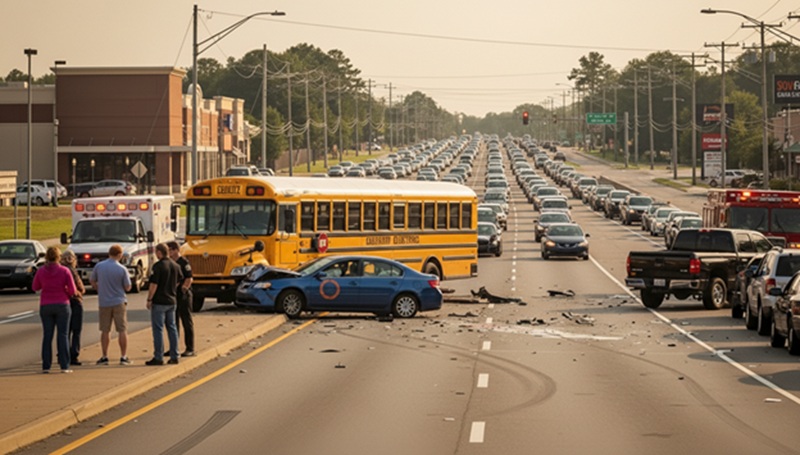
Lexington is a city shaped by constant motion. Each day, residents move between work, school, and home, relying on major corridors that keep Lexington County connected. With so much daily activity concentrated on a limited number of routes, certain roadways naturally carry heavier risks than others.
Understanding crash patterns requires looking beyond individual accidents to see how road design, traffic volume, and driver behavior interact. When fast-moving roads meet busy intersections or commercial areas, the risk of serious collisions rises, creating recurring danger zones throughout the city.
What Are The Top Danger Zones In Lexington For 2026?
Recent traffic reports reveal that a small number of Lexington streets account for most serious accidents, highlighting the city’s top danger zones for 2026. According to the South Carolina Department of Public Safety’s, Lexington County reported 47 people killed in traffic collisions in 2023, underscoring the ongoing severity of road safety challenges in the county
If you are hurt in a crash on one of these high-risk roads, a Lexington car accident lawyer from Stewart Law Offices can explain your legal options and help safeguard your rights. After a crash, knowing what steps to take and which evidence matters most can be overwhelming without guidance. Some of the city’s most dangerous zones include:
- Interstate 26 at Bush River Road: Known as one of Lexington County’s most dangerous intersections, this area has seen many crashes.
- Interstate 26 at Harbison Boulevard: High-speed traffic meets dense commercial activity here, making merging and exiting challenging. This intersection has experienced multiple serious collisions due to heavy interstate and local traffic interactions.
- Interstate 20 at Clemson Road: The mix of fast-moving interstate vehicles and slower local traffic creates a location where accidents occur more frequently. Drivers often struggle with adjusting speeds while entering or leaving the highway.
- Interstate 26 at Charleston Highway: This interchange has been the site of multiple collisions, including crashes causing injuries and property damage. The combination of commuter and commercial traffic contributes to its risk.
- Interstate 26 at Sunset Boulevard: Serving as a main route to retail and commercial areas, this intersection has been the site of several accidents. A significant number involve injuries, while many others result in property damage, highlighting the ongoing safety challenges in this busy corridor.
When Do Most Lexington Car Crashes Occur?
Looking at the clock is just as important as looking at the map when checking for road safety. Accidents are more likely during peak traffic hours.
- Morning rush hour between 7:30 AM and 9:00 AM.
- Evening commute times from 4:30 PM to 6:30 PM.
Which County Roadways Rank as the Worst for Drivers?
Lexington County, SC, contains several roadways with high traffic and recurring accidents, presenting challenges for drivers. Some of the county’s most dangerous roadways include:
- Two Notch Road: Stretching from Columbia into Lexington County, this busy artery carries both commuter and commercial traffic, creating frequent congestion and accident risk.
- Sunset Boulevard: Connecting I-26 to residential and commercial districts, this road handles heavy local traffic, making it a common hotspot for collisions.
- US Highway 1: Running north-south through Lexington, it passes numerous businesses and shopping areas, contributing to high traffic and crash potential.
- Charleston Highway (US 321): A major route from West Columbia into Lexington County, known for steady traffic and frequent incidents.
- SC Highway 6: Serving as a key east-west corridor, it links neighborhoods, retail areas, and interstate ramps, often experiencing heavy traffic flow and collisions.
Where Are Pedestrians Most at Risk in the City?
Areas near downtown and around the university see the highest pedestrian activity, making careful attention essential for both walkers and drivers.
State data from early 2025 highlights the ongoing safety concerns, reporting that 110 pedestrian and bicyclist deaths were recorded on South Carolina roads in 2024. Officials continue to focus on these high-risk zones to reduce accidents and improve safety for everyone on foot.
If you are dealing with the aftermath of an accident in Lexington, you can visit the Stewart Law Offices at 203-D West Main Street, just 2 minutes from Virginia Hylton Park, or call (803)-520-0003 to speak with a Lexington car accident lawyer who can help protect your rights.
How Can Drivers Lower Their Risk on Dangerous Roads?
Safety begins with simple, consistent choices whenever you drive. The latest statistics show that small habits can make a big difference: in 2024, 47% of fatalities involved unrestrained occupants, and 22% of crashes were caused by driver distraction. Wearing your seat belt and avoiding phone use are proven ways to reduce your risk of serious injury.
As Lexington Car Accident lawyer Stephen Vicari notes, “Staying alert, following traffic rules, and driving cautiously are the best ways to protect yourself. Even small habits, like buckling your seatbelt or putting your phone away, can make a big difference in preventing accidents.”
FAQs
- How does vehicle type affect crash risk?
Commercial vehicles and trucks are involved in a higher share of collisions at high-traffic intersections due to size, speed differences, and limited maneuverability.
- Are motorcyclists at higher risk on these roads?
Yes. Intersections and high-speed corridors are particularly dangerous for motorcycles because of visibility issues and the higher severity of injuries in crashes.
- How does traffic volume impact road danger?
Higher traffic density increases the likelihood of collisions, especially during rush hours or near busy commercial areas.